• TalkBass has been independent since 1998. Add your voice.
    Create a free account to reply to discussions, view embedded media, and browse with fewer display ads.
    Join freeLog in
    Want zero display ads or expanded classifieds tools? Compare plans.

First bass -- Ibanez, Squier, Cort or ESP

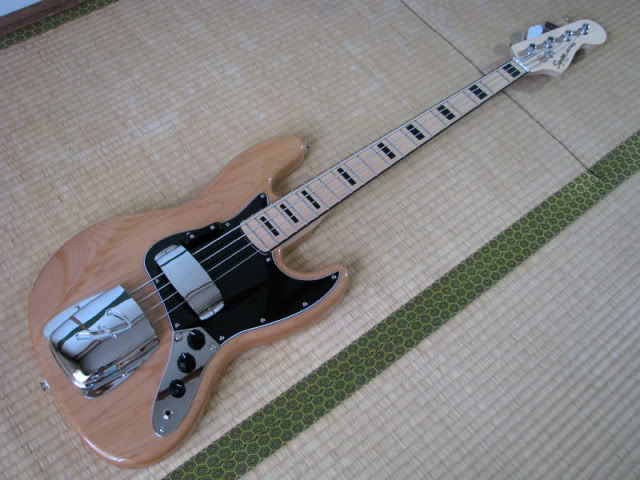
This is what it can look like with a small amount of $ :::
100_7540.jpg

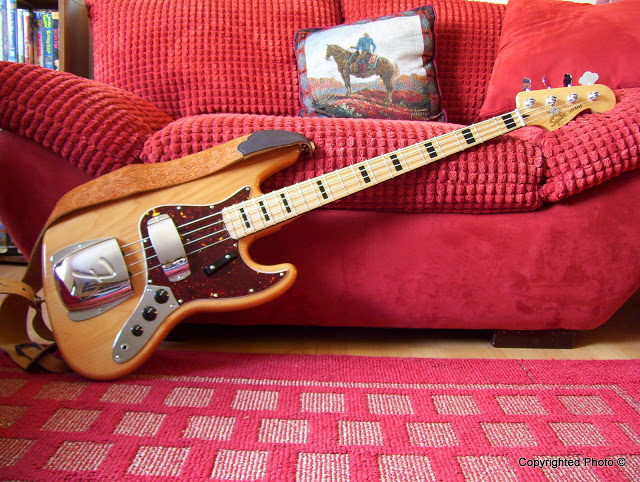
looks familiar..
sq1.jpg
 
Bling - and it doesn't affect playing....

I have those covers on mine and love them, and while they don't always get in the way, they actually do affect playing to a certain extent. For example, the very long bridge cover (sometimes called "the ash tray") makes it impossible to play those Jaco-like, nasal passages right next to the bridge. Players do pizz back there for two reasons: that nasal tone, and the quick snap-back of the strings for playing super fast. The neck pickup cover is less in the way, but does impact slap/pop and heel dampening, which is why some people call it a "funk filter." Still, you can basically play anything you like with both covers on, no problem.

As for their original purpose, well... I've never gotten a straight answer on that. Back in the early 60s, that was a visual style, and many "microphonic" pickups were covered on cheaper instruments. They are certainly not required, and most players removed them anyway. The "bell" or neck pickup cover on a P-bass is often used as a thumb rest (as Jamerson did with his one-finger "hook" RH technique).

I've always thought they were simply cool. Nice looking bass!

--Steve
 
I have those covers on mine and love them, and while they don't always get in the way, they actually do affect playing to a certain extent. For example, the very long bridge cover (sometimes called "the ash tray") makes it impossible to play those Jaco-like, nasal passages right next to the bridge. Players do pizz back there for two reasons: that nasal tone, and the quick snap-back of the strings for playing super fast. The neck pickup cover is less in the way, but does impact slap/pop and heel dampening, which is why some people call it a "funk filter." Still, you can basically play anything you like with both covers on, no problem.

As for their original purpose, well... I've never gotten a straight answer on that. Back in the early 60s, that was a visual style, and many "microphonic" pickups were covered on cheaper instruments. They are certainly not required, and most players removed them anyway. The "bell" or neck pickup cover on a P-bass is often used as a thumb rest (as Jamerson did with his one-finger "hook" RH technique).

I've always thought they were simply cool. Nice looking bass!

--Steve

Originally they were meant to be shielding, but it didn't really work. On pics of early P-basses with the covers removed, you can see a ground wire leading to the screwhole where the cover was attached. After they figured it didn't work as shielding, it was pretty much left as bling and a place to rest your wrist. Leo's thinking at the time was people would play with their thumbs, resting their wrist on the pickup cover while holding the so-called "tug-bar". Eventually even that changed when people started playing with their fingers, resting their thumb on the pickup, and they ended up removing the pickup covers because they got in the way.
 
Total and utter bollocks.
Explain then how there are so many people who comment on how great the fretwork on their Squiers is (including my own two, and I know as well all of SurferJoe's Squiers, even his Affinity, have great fretwork.)
If Fender sells a Squier, they make a profit. Better they make a little less profit than no profit at all. If someone is shopping for a nice bass, and they only have $300 bucks and their choice is between a (supposedly) crappy Squier Jazz for $300 and a fender Jazz for $1200, they are just gonna say ''screw this", and get an Ibanez instead. Fender wouldn't deliberately sabotage their budget lines, just so they could sell their more expensive models, because, as for the reasons I stated, it would not work , especially not in this weak economy. Your statement makes no sense whatsoever.


Since you're disagree entirely with my statement then, does that mean that Squier basses are not as good as, or better than, MIA basses because Indonesians are incapable of making them like that? Squier is value priced instrument, which means it takes shortcuts to keep the price down. If Fender wanted they could pay the Indonesians much more so the basses used better materials and had more detailed fretwork, but that would counter the original purpose of making them as inexpensive as they are, thus they are done purposefully like this. Squiers are definetly not pieces of crap, hell a Squier was my main bass for 4 years because it was all I could afford during high school. But that doesn't make them high quality basses. I don't know why people get so jumpy about this subject; don't buy a Daewoo and then get pissed when people point out that it's no Cadillac. People should really stop with the inferiority complex, and accept things the way they are.
 
I think you should decide based more on what type of music you want to play, since the quality of the instruments you listed are pretty equal.

Ibanez and ESP are going to most likely have big humbucker pickups (big rectangular things), they can get a range of tones but have a distinctly more modern sound. The Squiers are going to have either P or J pickups (or P+J?) and will have a more vintage vibe. If you want a bass that looks and feels like 90% of basses out there, go for the Squier... Fender-style basses seem to get alot of love, not sure why they dominate the scene so much though when theres so much crazy good stuff out there that doesnt look like everyone elses.
 
I also want to add, I own 4 basses: Ibanez SR400, Ibanez SR506, Ibanez ATK750, and Carvin LB75. All were bought used but in great condition for $300-$400. I trade alot of things in and out, and these 4 are the QUALITY instruments that I can not bare to let go of (and can't justify buying more since I already have 4, so I'm stuck in a catch22).

Now, I play these basses out in some different genres of music, but always pumping through an Ampeg SVT3Pro ($800 new) and Ampeg 4x10HE ($350 used) cab. Also, I have about $450 (Jesus, didnt even realize that until now) worth of pedals in between the bass and amp. So, on average, I gig a ~$350 instrument into $1600 worth of equipment. I honestly have not found a bass that I want to upgrade to, these forums often make me feel "obligated" to add a $1000 bass to the stack, but realistically there is no reason.

So, I 2nd the notion to hit the used market, and find a quality Ibanez SR model. It will take you far.

edit: from the other side of the spectrum, a $1600 bass through $450 worth of equipment (cheap amp+cheap cab+cheap pedals) would sound like garbage.
 

Latest posts