
The pole pieces on RIC pickups that take Allen keys are absolutely adjustable. In fact you can remove them, replace them with headless Allen screws, then put Toaster covers on them.

TalkBass has been independent since 1998. Add your voice.
Create a free account to reply to discussions, view embedded media, and browse with fewer display ads.
Join free Log in
Want zero display ads or expanded classifieds tools? Compare plans.
The adjustable pole pieces are actually long enough to go through small holes in the magnets, but you don’t wanna gar them so high they no longer make contact with them. RIC actually did address the lifting tailpiece with two extra screws on the 4003, but removed them after receiving complaints about the aesthetics. People could still add the screws now, but opt to spend over $150 on a HipShot, so go figure.That's good to know! I stand corrected, I've read that they were Non adjustable in multiple locations, including here on TB, so apparently it's a misconception that gained a lot of traction. How much travel can you get upwards on the pole pieces?
The "tail lift" pictured is extreme, but it was definitely an issue to a lesser degree on many 4001 basses of the 70's-80's, including my 78' 4001, which developed about 1/4" of lift in the 4 years I owned it. Ric was certainly aware of it, which is why they finally designed the V2 bridge with string anchors independent of the bridge. At any rate, no chance of tail lift on newer basses. It's unfortunate they let a known manufacturing defect fester for so long, which didn't help their reputation for QC. The V2 is also fully adjustable for individual string height and intonation, though I really never had much trouble with the V1, pretty much set and forget. I've had an Allparts aftermarket Ric style bridge on my clone build going on 8 years with no sign of lift, so I havent felt the need to upgrade it.
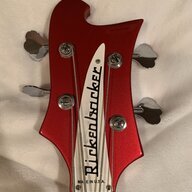
They changed the bridge and switched their basses to have 1 truss rod in 2022. That was when Ben Hall replaced his dad John as CEO. Ben is responsible for a lot of positive changes with more recent 4003 basses.Ah they changed it recently then! Good to hear.
This is why I have flats on one Ric and rounds on the other. More Ric bassists need to turn the tone knobs and experiment with their basses. The versatility of a Ric 4003 is truly something to behold.friendly reminder to all the people seeking geddy lee style tones: geddy lee himself hasnt used ricks regularly in decades.
Also with my rick at least… the Geddy and Squire tones everyone wants are lurking… SOMEWHERE in the bass.. it takes EQing and patience to coax them out. At least for me. Thats why geddy tried like a million different amps and preamps before finally abandoning his rick altogether… I believe there are other basses in the modern day that can get you in that territory with less tweaking. Nowadays I think the 4003 bass is actually more suited to traditional type stuff you’d stereotypically use a P Bass on. Maybe I’ll put flatwounds on mine.

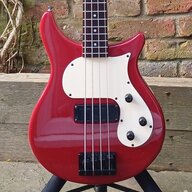
If that's true, then thank you for correcting me. However, even the genuine Ricky bridges were prone to lifting to some degree.That tailpiece bent at a right angle is on an Ibanez faker, so it’s not a fair comparison to an actual Rickenbacker part.

Speaking for myself,Yeah, the Hipshot seems like a solution in search of a problem, and they've gotten as pricey as a V2 at $190 or so, but the one problem they do solve is the mute teeth making palm muting behind the bridge pup effectively impossible.That custom bridge you made is an elegant solution, but most people don't have the skills, so they either live with it as-is or swap it out for a Hipshot. The Babicz insert just seems like an overpriced partial solution, and still doesn't allow palm muting. When these Ric threads surface every couple months, I always say the same thing: if you want the best basses they've ever made, buy a brand new 4003, single DA rod, better bridge, peeling finish issues solved, and back to thinner necks. Their "warranty" still sucks, but it is what it is. Having owned a 4001, I don't get the high regard, other than pure vintage appeal, people have for them.


You are kinda correct, the Hipshot did solve some issues I didn't realise my 4003SW had. Given the opportunity to buy my Hipshot bridge second hand for less than half retail, I got it mainly out of curiosity but was surprised how much it improved the tone, playing comfort and sustain. I can now adjust for perfect intonation with individual string heights and spacing to my exact preference.Yeah, the Hipshot seems like a solution in search of a problem, and they've gotten as pricey as a V2 at $190 or so, but the one problem they do solve is the mute teeth making palm muting behind the bridge pup effectively impossible.That custom bridge you made is an elegant solution, but most people don't have the skills, so they either live with it as-is or swap it out for a Hipshot. The Babicz insert just seems like an overpriced partial solution, and still doesn't allow palm muting. When these Ric threads surface every couple months, I always say the same thing: if you want the best basses they've ever made, buy a brand new 4003, single DA rod, better bridge, peeling finish issues solved, and back to thinner necks. Their "warranty" still sucks, but it is what it is. Having owned a 4001, I don't get the high regard, other than pure vintage appeal, people have for them.

The classic Squire tone is surprisingly difficult to emulate, at least for me. I haven't heard anybody do it better than Mark Walker, except maybe the Band Geeks guy, and he uses a fairly expensive Helix effects processor.
Ben Hall is not the CEO at RIC. John still holds that position.They changed the bridge and switched their basses to have 1 truss rod in 2022. That was when Ben Hall replaced his dad John as CEO. Ben is responsible for a lot of positive changes with more recent 4003 basses.
Ben is still leading the company. John retired in 2022.Ben Hall is not the CEO at RIC. John still holds that position.

...Sweet!My ‘76 RIC was my ‘main squeeze’ for 35yrsPlaying FrankenFenders now
(pic circa 1980ish)
 Do you still have that,(looks like), series 400 bass rig? Mine was just a single 2x15, and never got to run it @2ohms with another cab. Must have sounded monstrous~ Not super-high power, but essentially bullet proof!