
Enjoy the benefits of a premium membership!
Upgrade Account
-
TalkBass has been independent since 1998. Add your voice.
Create a free account to reply to discussions, view embedded media, and browse with fewer display ads.
Join free Log in
Want zero display ads or expanded classifieds tools? Compare plans.
You are using an out of date browser. It may not display this or other websites correctly.
You should upgrade or use an alternative browser.
You should upgrade or use an alternative browser.
Fix for Kramer/Bean bowed aluminum necks - Paul Unkert!
- Thread starter Mthakathi
- Start date
More options
Who Replied?
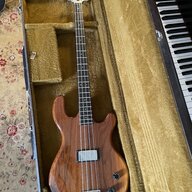
FINAL UPDATE: well kids, it looks like my little campaign worked. One week and multiple posts later, and I’ve we’ve had numerous inquiries (literally from around the world!) and 7 actual participants from around the country - Richmond, VA, Chicago, Boston, LA, PA., Asbury Park  - who have come on board to take advantage of Paul’s neck straightening offer. We even started our own little chat group and have gotten to know each other a bit (including sharing the pics of our Kramers below). The response has been strong enough that Paul has indicated that he’s decided to try to find a permanent setup for his arbor press without disturbing the shop so he can provide the service regularly for those that need it. So moving forward, it looks like this is no longer a one-off; anyone out there who needs this service - aluminum neck straightened, reassembly, frets dressed and full set up for an incredibly reasonable fee, just call Paul directly 732-270-1479. Thanks to all who spread the word! Cheers and peace all


- who have come on board to take advantage of Paul’s neck straightening offer. We even started our own little chat group and have gotten to know each other a bit (including sharing the pics of our Kramers below). The response has been strong enough that Paul has indicated that he’s decided to try to find a permanent setup for his arbor press without disturbing the shop so he can provide the service regularly for those that need it. So moving forward, it looks like this is no longer a one-off; anyone out there who needs this service - aluminum neck straightened, reassembly, frets dressed and full set up for an incredibly reasonable fee, just call Paul directly 732-270-1479. Thanks to all who spread the word! Cheers and peace all Attachments


That's the "yield point" - keep the stress below that and it will return to original shape/state (elastic). Go beyond, and you'll get "plastic deformation"....Aluminum is alike a lot of materials, where it has a linear region - if you apply stresses below a certain threshold, and then take the stress off, it goes back to precisely where it was - the stress of strings on an aluminum bar of that cross section are pretty minor - that should not bow a neck ever. I had 2 Kramers with strings tensioned on them for over 30 years, and never did either of the necks budge one iota.
The fact that it takes a huge industrial press to straighten it should tell you that the force to get past the linear region is substantial. I have straightened wood necks with heat and force - the force applied through a regular C clamp (and nowhere near the force capacity of even that C clamp). Even though you can straighten a wood neck with that kind of force, most never warp under the force of string tension.

I posted earlier in this thread, and with complete respect to to OP, I must say that I remain confused about all this. Of the seven individuals that want their bass necks straightened, are these all involving Kramer basses? Because, as a long time Travis Bean owner, I cannot imagine how it would be possible for its aluminum neck to bend, warp or twist, unless it was run over by a truck or burned pretty hot in a fire.
So, how do these Kramer aluminum necks become warped or twisted under normal (non traumatic) conditions? I am asking this with respect. I do not doubt that there are several instances of warped Kramer aluminum necks. I just can't understand how, or why.
Other than some brain cells, what am I missing here?
So, how do these Kramer aluminum necks become warped or twisted under normal (non traumatic) conditions? I am asking this with respect. I do not doubt that there are several instances of warped Kramer aluminum necks. I just can't understand how, or why.
Other than some brain cells, what am I missing here?

I’m a Physicist and an Engineer - I know all those terms - I chose to describe it in a way that more people would understand.That's the "yield point" - keep the stress below that and it will return to original shape/state (elastic). Go beyond, and you'll get "plastic deformation"....
you’re not missing anything . A bent Kramer or Bean neck has undergone some form of trauma. If it was a wood neck, it’d be splinters under that kind of force.I posted earlier in this thread, and with complete respect to to OP, I must say that I remain confused about all this. Of the seven individuals that want their bass necks straightened, are these all involving Kramer basses? Because, as a long time Travis Bean owner, I cannot imagine how it would be possible for its aluminum neck to bend, warp or twist, unless it was run over by a truck or burned pretty hot in a fire.
So, how do these Kramer aluminum necks become warped or twisted under normal (non traumatic) conditions? I am asking this with respect. I do not doubt that there are several instances of warped Kramer aluminum necks. I just can't understand how, or why.
Other than some brain cells, what am I missing here?
I'm neither a physicist or a mechanical engineer so my response here is anecdotal, but I've owned several aluminum neck Kramer basses. The difference between them and Travis Beans is that the Kramer necks have wooden inserts on either side of the T- spine on the back of the neck. Over time you’ll notice variations in the depth of the wood on the back too. The wood can shift and eventually (as hard as it is for you guys to believe) take that aluminum right along with it - I've had two that this has happened to and neither were ever under any severe stress or extreme temperature/ environmental conditions other than seasonal change. I can't explain it. I just know that me and a bunch of other Kramer owners who've responded to this campaign have had it happen too.I posted earlier in this thread, and with complete respect to to OP, I must say that I remain confused about all this. Of the seven individuals that want their bass necks straightened, are these all involving Kramer basses? Because, as a long time Travis Bean owner, I cannot imagine how it would be possible for its aluminum neck to bend, warp or twist, unless it was run over by a truck or burned pretty hot in a fire.
So, how do these Kramer aluminum necks become warped or twisted under normal (non traumatic) conditions? I am asking this with respect. I do not doubt that there are several instances of warped Kramer aluminum necks. I just can't understand how, or why.
Other than some brain cells, what am I missing here?
Wood can shrink over time (although it tends not to shrink a lot in the direction of the grain). If that is what has happened, you can relieve that stress by steaming the wood - sand off the poly first, so the moisture can get into the wood, and then steam the wood - that would relive any stress from shrinkage.The wood can shift and eventually (as hard as it is for you guys to believe) take that aluminum right along with it - I've had two that this has happened to and neither were ever under any severe stress or extreme temperature/ environmental conditions other than seasonal change. I can't explain it. I just know that me and a bunch of other Kramer owners who've responded to this campaign have had it happen too.
I had a couple Kramers for over 30 years, and never saw a hint of this, despite living in a climate where humidity varies a lot. Not sure why some would do it and others not, and I'd still have to see one to believe it.


Well...I am a Travis Bean TB2000 owner/player. I own a few basses and of those, the Bean is the only one where the neck does not change a bit with the seasons where I live. Bean necks are not ideal according to their design .... they have no relief and no radius .... flat as an aircraft carrier. So 1st position plays a little buzzy when you dig in and up above the 12th fret the action is a little higher than ideal. But after about 20 years of owning mine the neck has never moved, warped or twisted at all. I don't know how it could unless it was in a fire or run over by a truck. I suppose the rosewood fingerboard could warp, swell or twist, but I don't know what could cause that. under normal use.
On the Kramer aluminum necks there are wood inlays, right? Does the warping of that wood exert enough force/influence to warp or twist the aluminum?
I am asking this with respect .... not trying to argue with or challenge the existence of a warped aluminum neck. I just don't understand what could cause that, and have never heard nor read about this on this forum or anywhere else, until this post. I am interested to learn more and will follow this thread.
Obviously, I can't speak for every aluminum Kramer neck. However, I've had 4 Kramer aluminum necked basses - and one de-fretted long scale neck - in my possession. I still own 2; an '82 "The Duke" Deluxe, and a '78 450B. None of them needed straightening - or the relief adjusted. All of them have the Walnut wood inlays intact; and NO, the wood never seemed to make a bit of difference, as far as the Aluminum neck itself was concerned. As for the fretboards? All of mine are made of Ebonal; which is not bowling ball material, like some people think. That's "Ebonite". Ebonal is simply the brand name for black micarta; which is many layers of paper or linen (Ebonal uses linen) impregnated with a high strength, high resistance electrical insulation resin under immense pressure. Most of the micarta used for electrical insulation tasks is green; don't ask me why. But, it can be just about any color. As the fretboard on a Kramer neck? It's pretty much unaffected by much of anything...
As for the aluminum neck being warped? The Aluminum alloy Kramer used, coupled with the T- cross section, make them very stiff and strong. I suppose running over the neck, under the right conditions - by something very heavy - might do it. I suspect that most of them suffer from not being "bent" correctly at the factory. And, yes; "fixing" one would most likely require a serious arbor press - and somebody who knew how to use it...

I just got my ‘79 Kramer DMZ 6000B from Dave Petillo. If you recognize that name, his Dad was very instrumental in the design of those early Kramers. Dave himself is a master guitar builder with regular clients like Bruce Springsteen, Stevie Van Zandt and Johnny Depp. He just did a makeover of my bass. Had the neck in a press for a few weeks, very slow process. Than replaced all the frets with these stainless steel triangle shaped frets his Dad designed and patented. He did an amazing job on the bass and it plays beautifully! Highly recommend if you need work on your Kramer.
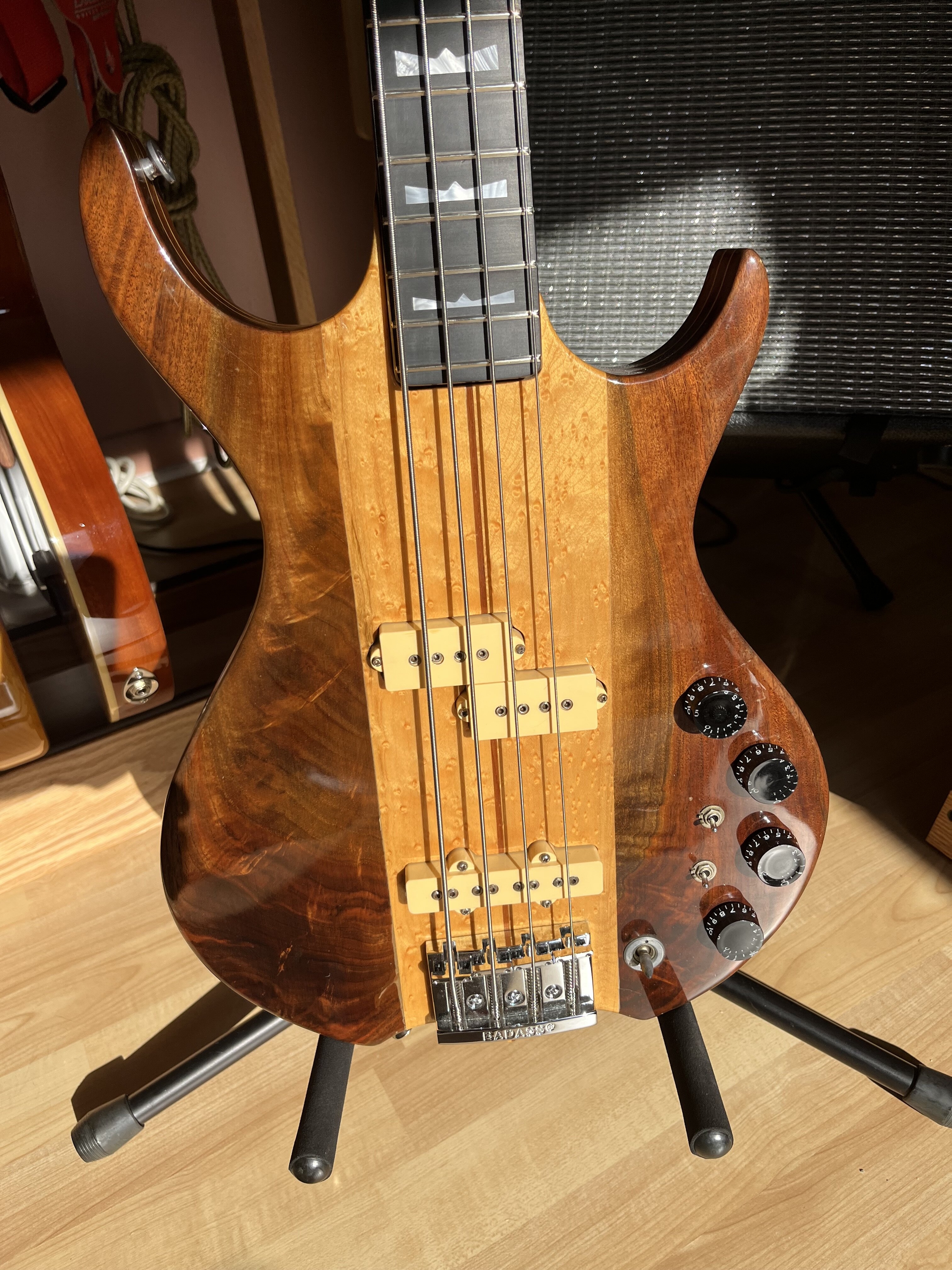
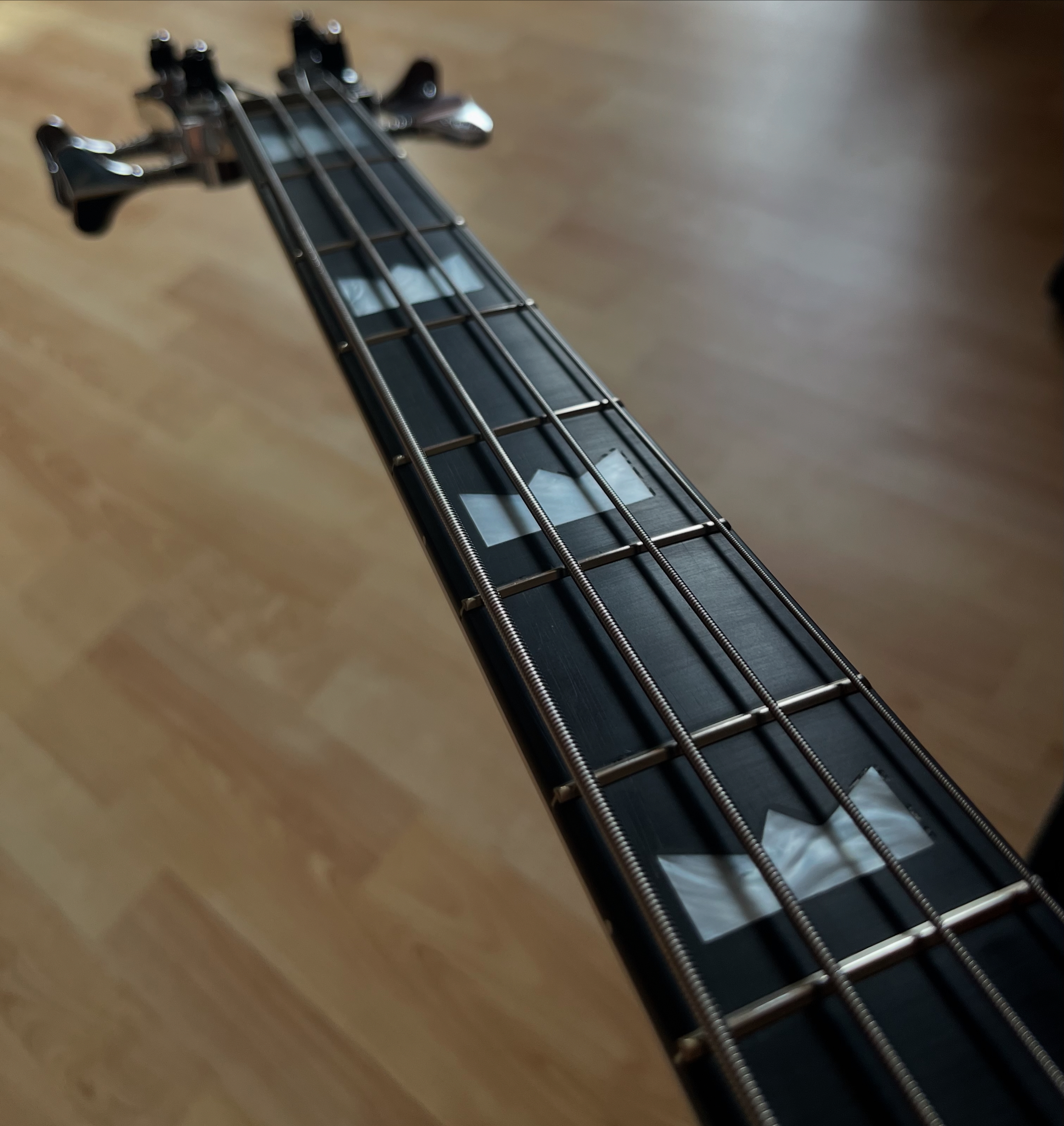
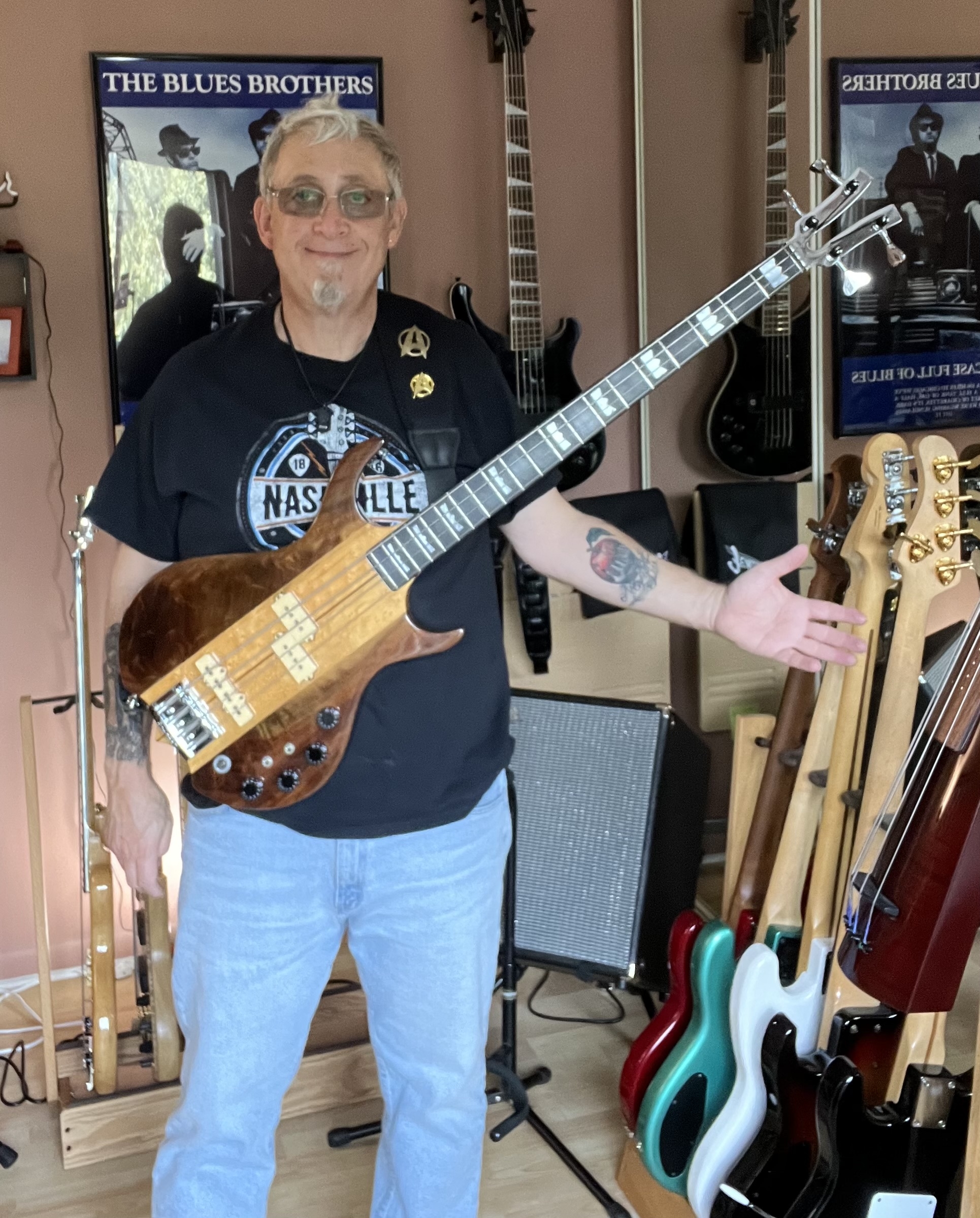

Great I found that thread.
Hey guys,
Is the topic still current?
I have one of the seldom factory fretless TB-2000. Once it was offered here at talkbass, then bought by a guy in the netherlands, then bought by me idiot.
This neck has a backbow.
Really would be great if those affected could get a repair.
I owned/own four TBs with straight neck. Don't know if fretted and fretless made a difference in construction of the aluminium. And I don't know if the rosewood fretboard has certain forces.
Best regards -
Michael from germany
PS: Travis Bean in germany - the new "owner? - seem to be uninterested in aluminium.
Hey guys,
Is the topic still current?
I have one of the seldom factory fretless TB-2000. Once it was offered here at talkbass, then bought by a guy in the netherlands, then bought by me idiot.
This neck has a backbow.
Really would be great if those affected could get a repair.
I owned/own four TBs with straight neck. Don't know if fretted and fretless made a difference in construction of the aluminium. And I don't know if the rosewood fretboard has certain forces.
Best regards -
Michael from germany
PS: Travis Bean in germany - the new "owner? - seem to be uninterested in aluminium.
Last edited:
But what if you have a backbow?Well...
Obviously, I can't speak for every aluminum Kramer neck. However, I've had 4 Kramer aluminum necked basses - and one de-fretted long scale neck - in my possession. I still own 2; an '82 "The Duke" Deluxe, and a '78 450B. None of them needed straightening - or the relief adjusted. All of them have the Walnut wood inlays intact; and NO, the wood never seemed to make a bit of difference, as far as the Aluminum neck itself was concerned. As for the fretboards? All of mine are made of Ebonal; which is not bowling ball material, like some people think. That's "Ebonite". Ebonal is simply the brand name for black micarta; which is many layers of paper or linen (Ebonal uses linen) impregnated with a high strength, high resistance electrical insulation resin under immense pressure. Most of the micarta used for electrical insulation tasks is green; don't ask me why. But, it can be just about any color. As the fretboard on a Kramer neck? It's pretty much unaffected by much of anything...
As for the aluminum neck being warped? The Aluminum alloy Kramer used, coupled with the T- cross section, make them very stiff and strong. I suppose running over the neck, under the right conditions - by something very heavy - might do it. I suspect that most of them suffer from not being "bent" correctly at the factory. And, yes; "fixing" one would most likely require a serious arbor press - and somebody who knew how to use it...
Expanding wood on TBs?
If the curvature of the aluminum neck is not "correct"; i.e., too much relief, or it's backbowed? About the only thing that will bend it back "Right" - is a multi-ton hydraulic press. Like they have in machine shops. It would most likely be a finicky, pain-in-the-ass thing to do, but... far as I know? That would be the only way. As for "expanding wood on TBs?" Not sure what you mean. I'm not sure if there's any wood at all on a Travis Bean neck; never been anywhere close to a Bean guitar or bass. I'm a lefty, and since all the original Travis Bean instruments were custom made? Left handed TB guitars are rare. The basses? Pretty sure there's only one lefty ever made. As for the wood inserts on a Kramer neck? There's no structural reason for it, to begin with. It's only there to make the neck feel good in your hand. And, the wood on all of my Kramer's necks has been just about as impervious to anything as the aluminum itself...But what if you have a backbow?
Expanding wood on TBs?

Great I found that thread.
Hey guys,
Is the topic still current?
I have one of the seldom factory fretless TB-2000. Once it was offered here at talkbass, then bought by a guy in the netherlands, then bought by me idiot.
This neck has a backbow.
Really would be great if those affected could get a repair.
I owned/own four TBs with straight neck. Don't know if fretted and fretless made a difference in construction of the aluminium. And I don't know if the rosewood fretboard has certain forces.
Best regards -
Michael from germany
PS: Travis Bean in germany - the new "owner? - seem to be uninterested in aluminium.
Hey Maikel, I read somewhere that certain Beans have "factory" back bow and that's a normal thing, but I don't know if that's true! My friend has a Travis Bean bass and as far as I remember it also has a slight back bow and it plays great!
Heavier strings should slightly correct the back bow... My Kramer was strung with really heavy strings by a previous owner and they bent the neck, then I put light set on it and they seem to correct the neck by a slight margin!
P.S. I think @Passinwind was the original owner of your fretless (@Passinwind sorry for the mention if that isn't true!).
P.P.S. Are you implying in your last sentence that you are willing to sell this bass? I might be interested...

I almost bought Travis Bean SN 505 from Germany earlier this year but was too slow!
Hey @Karlo.kc
I had a PC crash some years ago and I lost a lot of emails.
The first owner should have been Charlie Escher, a well known guy here at talk bass. Maybe Passingwind is his username.
The bass is serial 573.
It is true that stronger strings may balance the neck bit better. But this one is s fretless. So you can not play with sanding the frets. You only have the ebony or palisander. Of course you can flatten and fit them too, I think. I am not a mathematician, but I think sanding off 2 mm from a 5 mm thick fretboard should be possible.
The body once was painted in color ebony. Charly put thecolor off. Looking very nice now.
And yes, would sell it. Depends on price, as always. If we were to get together: Where do you live? I'm in Germany.
Best regards
Michael
PS: I'll even give away mine with serial number 333. It's in tip-top condition, but unfortunately I have no heirs.
I had a PC crash some years ago and I lost a lot of emails.
The first owner should have been Charlie Escher, a well known guy here at talk bass. Maybe Passingwind is his username.
The bass is serial 573.
It is true that stronger strings may balance the neck bit better. But this one is s fretless. So you can not play with sanding the frets. You only have the ebony or palisander. Of course you can flatten and fit them too, I think. I am not a mathematician, but I think sanding off 2 mm from a 5 mm thick fretboard should be possible.
The body once was painted in color ebony. Charly put thecolor off. Looking very nice now.
And yes, would sell it. Depends on price, as always. If we were to get together: Where do you live? I'm in Germany.
Best regards
Michael
PS: I'll even give away mine with serial number 333. It's in tip-top condition, but unfortunately I have no heirs.
Last edited:
It is backbowed.If the curvature of the aluminum neck is not "correct"; i.e., too much relief, or it's backbowed? About the only thing that will bend it back "Right" - is a multi-ton hydraulic press. Like they have in machine shops. It would most likely be a finicky, pain-in-the-ass thing to do, but... far as I know? That would be the only way. As for "expanding wood on TBs?" Not sure what you mean. I'm not sure if there's any wood at all on a Travis Bean neck; never been anywhere close to a Bean guitar or bass. I'm a lefty, and since all the original Travis Bean instruments were custom made? Left handed TB guitars are rare. The basses? Pretty sure there's only one lefty ever made. As for the wood inserts on a Kramer neck? There's no structural reason for it, to begin with. It's only there to make the neck feel good in your hand. And, the wood on all of my Kramer's necks has been just about as impervious to anything as the aluminum itself...
Seems, I have to look for a company which could do that service. Of course I could send it anywhere.
My idea was, if the ebony or palisander fretboard of a Bean bass could be strong enough to bend the alu back. All Bean fretboards are made of wood.
Sorry, but... no. Speaking as a retired Civil Engineer? Wood - any kind of wood - is nowhere near strong enough to do that. It is plenty strong in compression (unless it's something like Balsa wood), but as a beam in "flexure"(bending)? Size for size, nowhere near as stiff as a piece of aluminum alloy; especially if it's been expressly shaped to resist bending. Sorry, but you need a hydraulic press for that. Unless you want to try propping up both ends of the neck, and piling every barbell weight you can get your hand on, in the middle of it.... Seriously, though...It is backbowed.
Seems, I have to look for a company which could do that service. Of course I could send it anywhere.
My idea was, if the ebony or palisander fretboard of a Bean bass could be strong enough to bend the alu back. All Bean fretboards are made of wood.
Being left handed, along with the fact that there are very, very few lefty TB guitars - and only one lefty bass? I never paid a lot of attention to them, so I'm not very familiar with the structural shape of their necks. If they are anything like an aluminum Kramer neck (a T in cross section)? Then they are very, very stiff. And, if they are? Then, a press is your best bet...


