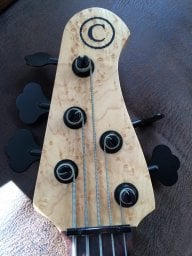
There's a lot to be said for using another instrument to recharge your approach to your initial instrument. Over the last three years I've been playing bass not only for the inherent pleasure of it, but also to try to "relearn" how to learn, in order to bring some new focus to my trombone playing.
On 'bone, I played well, but switched careers when synthesizers knocked a whole lot of horn and string players out of a lot of studio work in the mid-80's. I continued to gig for a few years, but rarely practiced and fell into a lot of bad habits before stopping completely. Over the past 10 years I've had a number of false starts, all unsatisfactory.
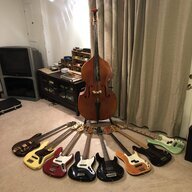
I played bass as a lark at several times --mostly garage band action in college, law school and a bit beyond -- but was never serious. However, three years ago my kid started playing bass, and while he has pretty much stopped, I got the point that it would be a great axe for me to get some musical jollies - given the day gig, I often can't practice except very late at night -- impossible with the 'bone, but doable on bass. It also dawned on me that if I took bass seriously for a while, I'd perhaps learn how to learn, and could then tackle the 'bone with a new perspective.
On bass, I turn out to be as spacey a student as I was on 'bone, but I have a few good books I work out of, I took a few lessons from a teacher with very refined technique and a great attitude, even though his path is not one I ultimately want to follow, and developed the following things:
focus on ergonomics
focus on fundamentals
more patience with the learning process
So now I've started bone again in the last 6-8 weeks, from pretty much ground zero. By focusing on ergonomics, I've now made some decisions on horns (which horn? which mouthpiece? which mouthpiece with which horn?) that needlessly tortured me for years, and am developing a practice routine that is facilitating some real progress in areas that have previously been a problem.
So I am a HUGE fan of taking up another axe in order to renew your relationship with your main instrument.
That said, your choice of a brass instrument does indeed demand a high level of commitment if you want to perform presentably. Blowing air through pursed lips, into a tube in order to amplify the lip vibrations, is a decidedly unnatural act! Your fingers get a workout through daily activities -- like blogging -- but I doubt your daily life contains any activity that would condition you for playing a brass instrument -- except for aerobic exercise, and you should consider that dimension of the brass experience as well -- I've had to acknowledge that my horn playing deteriorated as I allowed myself to get into crappy shape over the years, and I'm now also trying to attack that problem. But consider how rock-and-roll largely muscled brass instruments aside in the 1950's not only because of the new sound, but also because one can get to a passable performance level a whole lot faster on guitar or electric bass than on any wind instrument (perhaps tenor sax is the easiest of the horns to achieve a basic level, but it's still harder than on guitar). I think all axes are equally difficult to truly master, but it's no accident that bands rarely feature horn players -- it's just plain harder to get to an "acceptable" level on brass and winds!
If you are serious about this, and if your reading is not where you want it to be, it may make a lot of sense to stick with a bass-clef instrument - trombone and tuba come to mind, and I've always admired those who double on bass and tuba, as there is a natural synergy to that double.
But if you are really hearing another horn in your mind, then you should pursue it! One word of warning - flugelhorn is harder to play in tune than the trumpet, so you might want to consider starting with trumpet -- in fact, flugel is generally a double for trumpeters, and a trumpeter on a jazz or society gig will generally bring both.
Final piece of advice - DEFINITELY get a teacher, and pick the teacher carefully - ask brass players you know about who they like and why. Trumpet teachers can be particularly scary, as they often have rigid ideas about how the mouthpiece should fit on your face, how to direct your airstream, the extent to which pressure against your teeth should be present, and how to develop strength and the high register - it's not like just stringing your 5-string with a C on top, or copping an axe with 24 or more frets! And a lot of trumpeters have this weird, macho rigidity thing - I think it comes with the common obsession with power and high-range chops, as well as the fact that lead trumpet truly drives the train on group phrasing in many contexts, so it's not a gig for wallflowers. But many trumpeters have been screwed up by bad teachers who insist there is only one right way to play -- I've seen some so profoundly set-back, forced to play their teacher's way, as to have to abandon professional aspirations!
If you go down this road, I hope you find a good teacher, who acknowledges that we all have different mouth and airstream structures and helps you to develop technique that works for you. Here's a quick litmus test - ask them what they think of Carmine Caruso. If they've never heard of him, so be it. If they are dismissive, shine them on. If they know something about Carmine's approach and try to integrate it with their work, kiss your lucky stars and grab on. I've never googled Carmine, but would expect you'd find recognition of his role as patron saint to the NYC commercial brass community for 50 years before he passed at a ripe old age. Carmine used to say that he'd had students he hadn't helped, but he'd never hurt anyone. You'd be surprised by how many leading trumpet teachers can not make the same claim.
Good luck with this - I love the idea of the brotherhood of brass gaining a new member!