since we're on fingerboard sounds. doesn't someone (hou?) have a tulipwood fingerboard?
what's the story with that?
what's the story with that?

TalkBass has been independent since 1998. Add your voice.
Create a free account to reply to discussions, view embedded media, and browse with fewer display ads.
Join free Log in
Want zero display ads or expanded classifieds tools? Compare plans.
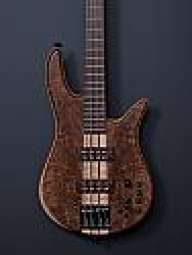
One other particularly interesting characteristic of his basses are the solid body wings. Do these bases tend to me more or less resonant or no difference from a bass with a layered construction?
Felix's bass is 33 scale without the extended B.
Jason - Do you know why he did go with that?
Hi, I am a new fodera owner...
I personally do not believe at all in this scale thing regarding B string...
I have heard sloppy B's with 35, and My sei bass 6 was a 33 and had a thunderous B string...
All in all, I think it's down to building... how do things or not...

It's not about 'better' vs 'worse'. Different scale lengths do sound 'different'. Some like one scale, some like another.
All good I'd say.
Thanks for the info, and sorry guys if am asking a lot of questions that have been asked before. Between the members in the Fodera forum and Jason's presence, I can't think of a better place on the planet to get information on tone woods for bass. With a new custom on the horizon I keep tearing it down and rebuilding it in my head.
nuwavedc said:How would you describe the difference between BRW and ebony as a fingerboard wood? And which is the harder / denser wood, I assumed ebony is.

The ebony has an airy ping to the top end. The brw board is warmer and much less compressed.


The other thing with the Sadowsky is the preamp (unless you run passive - I personally never run anything I have passive, though I normally am flat most of the time). That brings its own thing to the party. I'm not sure I'd describe ebony as compressed. It definitely has the airy sizzle up top, but I also find it has a strong fundamental and fairly even response. At the risk of generalizing between my two PJ Monarchs the ebony board has a flatter curve while the BRW is more of a frown - less high sizzle and a bit less fundamental but very punchy mids.
I'd love to get an MG with ebony board and do the comparison
 )
) 
Robin Ruscio said:I actually do run the Sadowsky passive sometimes, like when I'm playing in my fake country band. (Don't ask.
Still lots of sizzle and I'm pretty sure its because of the board. My first one had RW and had much softer attack. Maybe compressed is not the right word for the board, and perhaps ebony comes off that way because it often shows up on basses with lots of laminates and dense woods- i.e Ken smith.
One thing about this particular Fodera is that I was designing it for jazz, light pop, latin; nothing too aggressive with hard hitting drums and guitar distortion. It has loads of punch and groove still but not that harder edge of brighter boards. (Last night I was just playing with a piano and it was gorgeous.) I can see why Ebony or maple might fit some styles of music better.
I keep thinking Macassar ebony might be a nice in in between BRW and ebony if anyone is looking to split the difference between the two.
I thought Indian and Macassar ebony are the same wood?
Btw both KS basses I had had Macassar ebony FBs or maybe it was gaboon ebony. Can't remember.
It also depends on the strings. I only use nickel so the ebony sizzle never gets out of control to my ear. I think stainless strings are another story.
The reality is that it is only glaring when I swap back and forth. They all sound great, they just have a different character. And I still have a tough time putting the MGS down. Kinda rare that something exceeds expectations, especially when the expectations are so high.
Doing allot of Truss Rod adjusting these days Jason?
Robin Ruscio said:Invalid Link Removed
I'm pretty sure that jet black stuff is gaboon.
Good info, thanks. The ks basses use Macassar I checked the specs. I think lower cost instruments like carvin use gaboon. Fodera is probably using Macassar or east Indian (Ceylon).
Angus said:Except that gaboon is more expensive generally. It's not a "cheap instrument" wood.


