• TalkBass has been independent since 1998. Add your voice.
    Create a free account to reply to discussions, view embedded media, and browse with fewer display ads.
    Join freeLog in
    Want zero display ads or expanded classifieds tools? Compare plans.

Fodera Club Part XIV

Status
Not open for further replies.
Good info, thanks. The ks basses use Macassar I checked the specs. I think lower cost instruments like carvin use gaboon. Fodera is probably using Macassar or east Indian (Ceylon).

My Fodera has a gaboon ebony board, and there are tone differences between the two which yield reasons why one chooses one over the other. I really don't think one is considered inferior although Brad Johnson's remark about gaboon being slightly compressed sounding with a sizzling top end has something to it. Somethine I prefer.
 
lamarjones said:
My Fodera has a gaboon ebony board, and there are tone differences between the two which yield reasons why one chooses one over the other. I really don't think one is considered inferior although Brad Johnson's remark about gaboon being slightly compressed sounding with a sizzling top end has something to it. Somethine I prefer.

Got it. Ok so when we order an ebony board from Fodera we are getting gaboon by default or do we have to specify?
 
Until I start slapping - that is a pita for me on the MGS. Well, actually slapping is ok but popping I'm having a tough time with.

Ya, that is one thing that I'm not sure about with the MGS that I only started to think about after I ordered it, having never played a bass with so little room to slap, if I ordered an MG signature I would definitely have gotten 24 frets to have that extra room!
 
Except that gaboon is more expensive generally. It's not a "cheap instrument" wood.

I used to have some obsession about gaboon ebony and have been looking for a perfect piece of its kind for a very long time, because they are known (at least to me) for having a very fine texture with no visible open grains, which is different from the macassar ebony. All of my basses, except one with BEM, have macassar ebony fingerboards and they have visible open grains (or pores in the woods) on them. The most "serious" situation can be observed on a late 2009 Ken Smith with an otherwise beautiful brown-stripped macassar ebony board -- there are 5-7 tiny but crack-like "grains" on EACH a space between two adjacent frets.

Such obsession has been torturing me until recently when I get a new bass with macassar ebony (I can tell from the brown strips) fingerboard that has ZERO visible pores/grains.

Now I'm really confused about the two of them.
 
TheShape101 said:
Ya, that is one thing that I'm not sure about with the MGS, having never played a bass with so little room to slap, if I ordered an MG I would definitely have gotten 24 frets to have that extra room!

I actually like it better for slapping. Double thumping just works better at this tighter spacing for me. I've actually been doing it over the ramp, which makes a fatter tone, but good luck plucking over the ramp... There is enough space between the bridge pickup and neck though.
 
My understanding is that the really jet black stuff with no pores is gaboon, and that's the stuff you usually find on Fodera's and Ken Smith, Sadowskly etc unless otherwise specified.

Except that the really black stuff is harder to find and not very ethically harvested, so now it is coming with mottling and color. It might be harder to tell apart from Macassar at a glance, but the Macassar has a more open grain structure.

I got this info from Tim Cloonan at Callowhill, who likes macassar ebony and recommended it as an option for a bass for me. I told him I found ebony to bright, and explained that it's pretty different from the gaboon stuff.

I'm sure Jason can clarify this.

Here's an F bass with Macassar, much less black but sounds harder than RW. More like pau ferro.

 
Last week I received my MGS#7 and I feel to say that after owning some very nice basses from the best luthiers out there, well ... my search for "The One and Only" is officially over.
I must say that I was so lucky that the MGS went into production because the specs were incredibly similar to what I had the intention to custom order. I was between a Monarch 5 (E-C) and a custom MG, being a walnut body, 33' scale and dual coils my firm points. My original idea was to go for a buckeye burl top but when the MGS showed up I immediately felt I could live with the box elder burl, which is a NICE top wood, much better in person than on pictures.
The MGS was a godsend to me because from a price point a custom MG was out of my reach and I was in fact leaning towards a bolt-on Monarch 5. Thanks God the MGS hit the scene with 98% of the specs of my dream bass and now I'm enjoying this absolutely piece of art.
Let me say first that this isn't a "standard" instrument by any means: three piece neck, angled headstock, custom shop preamp, neckthrough construction really set this instrument apart from the other two on the Standard line (which, however, I didn't doubt to be very nice instruments).
As regarding construction this bass is a perfect execution of luthier artistry at its finest. None of the bass I've owned (look at my profile to see what I've owned in the past) could even touch it aside my now gone Sadowsky J. Similar levels of perfection there, down to the smallest detail but that was way a simpler instrument construction wise: a bolt-on Fender Jazz inspired instrument simply can't be compared to an original design neckthrough one.
For the very first time I am floored by the versatily of the instrument and about how good are ALL the sounds it's capable of. In the past it was common for me to fall in love with the passive voice of an instrument but not liking so much the active one or viceversa, or to enjoy the "both-pickups-full-on" sound and finding anaemic the soloed pickup one. This one KILLS no matter where knobs and switches are. Both pickups in dual coils mode call for a lush, warm, buttery sound; solo each pickup or blend to taste and you got a myriad of useful nuances. Same goes with the single coils mode which push you into a raw, more aggressive beautiful world of sounds.
And the Pope preamp... well, I am a passive guy at heart who thinks that the true voice of an instrument is in its passive tone but I've never, NEVER heard a circuit more respectful of the instrument passive voice which at the same time add a LOT of worderful tonal shaping capabilities. Bravo Mike!
I've read some comments about the MGS having not a deep bottom but to me this isn't the truth. This bass is setup with a very low action and is intended to be played with a very light touch. You can't attack it the way you do with other instruments: doin' that will choke your tone. Of course you can always set the bass with an higher action, change the strings type and gauge and ... bam! ... you're ready to dig in but then you'll miss the point of this bass. Instead, do yourself a favour and spend quality time working hard on your tecnique and adopt a very light touch: once you've done this you will be rewarded with a beautiful rich tone, deep in the lows, punchy in the mids and singin' in the high register.
Thanks to Jason for his support along the process and to all the guys and gals at the shop involved in the creation of this masterpiece.
I know that with such a list of celebrities in the Fodera family the guys in Brooklyn don't need Joe Nobody singin' the praise but all the above had to be said.
 
Last week I received my MGS#7 and I feel to say that after owning some very nice basses from the best luthiers out there, well ... my search for "The One and Only" is officially over.
I must say that I was so lucky that the MGS went into production because the specs were incredibly similar to what I had the intention to custom order. I was between a Monarch 5 (E-C) and a custom MG, being a walnut body, 33' scale and dual coils my firm points. My original idea was to go for a buckeye burl top but when the MGS showed up I immediately felt I could live with the box elder burl, which is a NICE top wood, much better in person than on pictures.
The MGS was a godsend to me because from a price point a custom MG was out of my reach and I was in fact leaning towards a bolt-on Monarch 5. Thanks God the MGS hit the scene with 98% of the specs of my dream bass and now I'm enjoying this absolutely piece of art.
Let me say first that this isn't a "standard" instrument by any means: three piece neck, angled headstock, custom shop preamp, neckthrough construction really set this instrument apart from the other two on the Standard line (which, however, I didn't doubt to be very nice instruments).
As regarding construction this bass is a perfect execution of luthier artistry at its finest. None of the bass I've owned (look at my profile to see what I've owned in the past) could even touch it aside my now gone Sadowsky J. Similar levels of perfection there, down to the smallest detail but that was way a simpler instrument construction wise: a bolt-on Fender Jazz inspired instrument simply can't be compared to an original design neckthrough one.
For the very first time I am floored by the versatily of the instrument and about how good are ALL the sounds it's capable of. In the past it was common for me to fall in love with the passive voice of an instrument but not liking so much the active one or viceversa, or to enjoy the "both-pickups-full-on" sound and finding anaemic the soloed pickup one. This one KILLS no matter where knobs and switches are. Both pickups in dual coils mode call for a lush, warm, buttery sound; solo each pickup or blend to taste and you got a myriad of useful nuances. Same goes with the single coils mode which push you into a raw, more aggressive beautiful world of sounds.
And the Pope preamp... well, I am a passive guy at heart who thinks that the true voice of an instrument is in its passive tone but I've never, NEVER heard a circuit more respectful of the instrument passive voice which at the same time add a LOT of worderful tonal shaping capabilities. Bravo Mike!
I've read some comments about the MGS having not a deep bottom but to me this isn't the truth. This bass is setup with a very low action and is intended to be played with a very light touch. You can't attack it the way you do with other instruments: doin' that will choke your tone. Of course you can always set the bass with an higher action, change the strings type and gauge and ... bam! ... you're ready to dig in but then you'll miss the point of this bass. Instead, do yourself a favour and spend quality time working hard on your tecnique and adopt a very light touch: once you've done this you will be rewarded with a beautiful rich tone, deep in the lows, punchy in the mids and singin' in the high register.
Thanks to Jason for his support along the process and to all the guys and gals at the shop involved in the creation of this masterpiece.
I know that with such a list of celebrities in the Fodera family the guys in Brooklyn don't need Joe Nobody singin' the praise but all the above had to be said.


sounds like you've found the one... congratulations
 
michele said:
Last week I received my MGS#7 and I feel to say that after owning some very nice basses from the best luthiers out there, well ... my search for "The One and Only" is officially over.
I must say that I was so lucky that the MGS went into production because the specs were incredibly similar to what I had the intention to custom order. I was between a Monarch 5 (E-C) and a custom MG, being a walnut body, 33' scale and dual coils my firm points. My original idea was to go for a buckeye burl top but when the MGS showed up I immediately felt I could live with the box elder burl, which is a NICE top wood, much better in person than on pictures.
The MGS was a godsend to me because from a price point a custom MG was out of my reach and I was in fact leaning towards a bolt-on Monarch 5. Thanks God the MGS hit the scene with 98% of the specs of my dream bass and now I'm enjoying this absolutely piece of art.
Let me say first that this isn't a "standard" instrument by any means: three piece neck, angled headstock, custom shop preamp, neckthrough construction really set this instrument apart from the other two on the Standard line (which, however, I didn't doubt to be very nice instruments).
As regarding construction this bass is a perfect execution of luthier artistry at its finest. None of the bass I've owned (look at my profile to see what I've owned in the past) could even touch it aside my now gone Sadowsky J. Similar levels of perfection there, down to the smallest detail but that was way a simpler instrument construction wise: a bolt-on Fender Jazz inspired instrument simply can't be compared to an original design neckthrough one.
For the very first time I am floored by the versatily of the instrument and about how good are ALL the sounds it's capable of. In the past it was common for me to fall in love with the passive voice of an instrument but not liking so much the active one or viceversa, or to enjoy the "both-pickups-full-on" sound and finding anaemic the soloed pickup one. This one KILLS no matter where knobs and switches are. Both pickups in dual coils mode call for a lush, warm, buttery sound; solo each pickup or blend to taste and you got a myriad of useful nuances. Same goes with the single coils mode which push you into a raw, more aggressive beautiful world of sounds.
And the Pope preamp... well, I am a passive guy at heart who thinks that the true voice of an instrument is in its passive tone but I've never, NEVER heard a circuit more respectful of the instrument passive voice which at the same time add a LOT of worderful tonal shaping capabilities. Bravo Mike!
I've read some comments about the MGS having not a deep bottom but to me this isn't the truth. This bass is setup with a very low action and is intended to be played with a very light touch. You can't attack it the way you do with other instruments: doin' that will choke your tone. Of course you can always set the bass with an higher action, change the strings type and gauge and ... bam! ... you're ready to dig in but then you'll miss the point of this bass. Instead, do yourself a favour and spend quality time working hard on your tecnique and adopt a very light touch: once you've done this you will be rewarded with a beautiful rich tone, deep in the lows, punchy in the mids and singin' in the high register.
Thanks to Jason for his support along the process and to all the guys and gals at the shop involved in the creation of this masterpiece.
I know that with such a list of celebrities in the Fodera family the guys in Brooklyn don't need Joe Nobody singin' the praise but all the above had to be said.
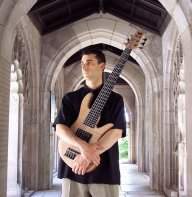
Good for you! Congrats on the new bass, it's quite an instrument.
 
I've read some comments about the MGS having not a deep bottom but to me this isn't the truth. This bass is setup with a very low action and is intended to be played with a very light touch. You can't attack it the way you do with other instruments: doin' that will choke your tone.

Fwiw my comment is not that is doesn't have a deep bottom, but that it doesn't have quite the same booty as my YYD. Both have low action and the same gauge strings so it is a pretty comparable setup. Whether it is the dual coils (I think they are a bit more mid forward) or something else I'm not sure. But my wife can tell from the other room which bass I'm playing and the YYD is always described as "the deep one" between the 3 Foderas. The koa/alder Monarch also doesn't have quite the same deep voice as the YYD.

Zero knock against the MGS. I freakin' love the bass. But if you want to talk deep bottom, my Rob Allen crushes all my Foderas on that count :D
 
nostatic said:
Fwiw my comment is not that is doesn't have a deep bottom, but that it doesn't have quite the same booty as my YYD. Both have low action and the same gauge strings so it is a pretty comparable setup. Whether it is the dual coils (I think they are a bit more mid forward) or something else I'm not sure. But my wife can tell from the other room which bass I'm playing and the YYD is always described as "the deep one" between the 3 Foderas. The koa/alder Monarch also doesn't have quite the same deep voice as the YYD.

Zero knock against the MGS. I freakin' love the bass. But if you want to talk deep bottom, my Rob Allen crushes all my Foderas on that count :D

ya know, i was wondering if it has something to do with the ramp changing the way one's fingers strike the strings. if you can take the ramp off, it might be worth a quick a/b to see if there's a discernible difference.
 
My bass arrived today. I can't believe I waited SO long to buy it. I may start a thread detailing the whole experience. It was worth it, in every aspect.

Cheers, blessing and congratulations on a work of art to the Fodera team!
 
Status
Not open for further replies.