• TalkBass has been independent since 1998. Add your voice.
    Create a free account to reply to discussions, view embedded media, and browse with fewer display ads.
    Join freeLog in
    Want zero display ads or expanded classifieds tools? Compare plans.

Fodera Club Part XXVII

That's a great looking bass. I'm not a fan of Lane Poor pickups though. I found them to be very inconsistent, where some of the same model would sound great, others would not. Hopefully you got a good set.
From what I been told by the previous owner.

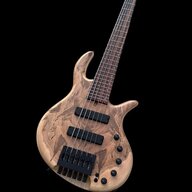
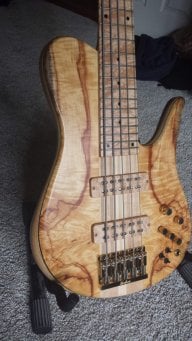
Cherry body with birdseye maple top. 1996 build with lane poor jazz pickups, 3 band preamp with passive tone, active passive switch, mute switch. Birdseye maple fretboard, dovetail construction, no tone block, 8.5lbs.
 
  • Like
Reactions: JonKim
That's a great looking bass. I'm not a fan of Lane Poor pickups though. I found them to be very inconsistent, where some of the same model would sound great, others would not. Hopefully you got a good set.

Hhhmm. I have never found the inconsistency between same models that you've seen. The problem I've seen most with them is a) losing signal over time or outright dying because the wire internally becomes dislodged from the pickup, b) people are not used to the very low output from the pickups (they're very quiet).

I still use them in every bass I can, though, because I love the sound...
 
  • Like
Reactions: Lugzy
so one could get rich from selling poors?

what-you-did-there-i-see-it.thumbnail.jpg
 
  • Like
Reactions: Leo Smith
So I got it today!! My 2nd fodera and boy o boy! This thing plays effortlessly. The 3 band preamp, not sure what kind, is very powerful with the slightest of touch and i am glad I sold my Sadowsky to purchase this!
I still love my Sadowsky's but this bass has a different vibe and the pickups/preamp sound amazing.

I have noticed that in passive mode the output is stupid low. I don't ever see myself playing this in passive anyways. The tone control knob is pretty sweet. Reminds me of the Sadowsky VTC.

Now my only test is playing it in a live band situation. I can already tell I can get a good mix out of this. It sounds really fat and punchy with the bass and treble knob up a bit.

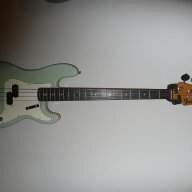
between this bass my 68' P, and my Sadowsky NYC I think I'm good for now...


IMG_0919.JPG
IMG_0920.JPG
IMG_0921.JPG
IMG_0922.JPG
IMG_0923.JPG
IMG_0924.JPG
IMG_0925.JPG
IMG_0926.JPG
 
So I got it today!! My 2nd fodera and boy o boy! This thing plays effortlessly. The 3 band preamp, not sure what kind, is very powerful with the slightest of touch and i am glad I sold my Sadowsky to purchase this!
I still love my Sadowsky's but this bass has a different vibe and the pickups/preamp sound amazing.

I have noticed that in passive mode the output is stupid low. I don't ever see myself playing this in passive anyways. The tone control knob is pretty sweet. Reminds me of the Sadowsky VTC.

Now my only test is playing it in a live band situation. I can already tell I can get a good mix out of this. It sounds really fat and punchy with the bass and treble knob up a bit.

between this bass my 68' P, and my Sadowsky NYC I think I'm good for now...

You'd bet:)ter check the inside - I'm sure there's a Trim-pot that allows you to get the volume of the Passive mode close to the Active mode
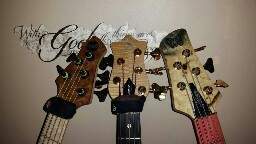

 
More about CITES.... sorry.

As of January 2nd, 2016, changes to CITES anyone selling an instrument internationally
that includes any amount (i.e. fingerboard, body, tone block, etc.) of Dalbergia (rosewood of any kind, including cocobolo) or the other newly regulated woods (some, but not all kinds of bubinga) out of your country as part of a commercial transaction, must first accompanied by a CITES re-export certificate. The existing restrictions on Brazilian rosewood remain unchanged.

Even if the instrument was made with Dalbergia or the other newly-regulated woods that were acquired before January 2, 2017 - such as a used or vintage instrument - it still must be accompanied by a CITES certificate and marked pre-convention when shipping internationally. if you ship and instrument without the required certificate and a customs inspector believes that it contains any of the newly – protected wood species, the instrument may well be impounded and the burden is on the seller to prove that the instrument may lawfully be sold internationally.

For sellers in the United States, CITES re-export certificates must be applied for through the US Fish and Wildlife Service. You can download the application here. Be aware that it can take a month or two for the agency to process your application.
 
  • Like
Reactions: J._M.
now that fodera is actively marketing guitars, can they still be on talkbass?

;)
I know it sounds selfish,but all it would take is a huge household name guitar player to jump on a Fodera and there goes the friendly bass neighborhood :smug:! Fodera would be making ten guitars to one bass. This happened to Kennneth Lawrence when James Hetfield had Ken build him a guitar. Great for Kenneth but a very long wait for his basses. The Fodera guitars look great though.
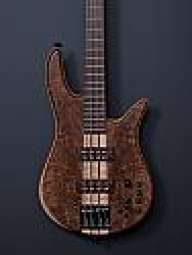
 
I know it sounds selfish,but all it would take is a huge household name guitar player to jump on a Fodera and there goes the friendly bass neighborhood :smug:! Fodera would be making ten guitars to one bass. This happened to Kennneth Lawrence when James Hetfield had Ken build him a guitar. Great for Kenneth but a very long wait for his basses. The Fodera guitars look great though.

Thanks for the kind words about the Guitars. We will NEVER lose sight of our Bass Guitar heritage and have worked incredibly hard to get our wait time down from the 39 months that it was when I first became a partner here to our current wait of roughly 8 months for Customs and 3-4 months for Standards. The last thing we want to do is reverse that trend!