• TalkBass has been independent since 1998. Add your voice.
    Create a free account to reply to discussions, view embedded media, and browse with fewer display ads.
    Join freeLog in
    Want zero display ads or expanded classifieds tools? Compare plans.

Found a song that’s better on 4 string

I’ve been playing my six string exclusively, and I love it so much I couldn’t imagine picking up my four string. Anything I want to play, I can play on my six, right?

Well, that’s what I thought, and while it’s technically true, I found recently it’s not the whole story. I’m learning Alanis Morissette’s You Oughta Know so a guest singer could sing it. I just couldn’t really get it. Something wasn’t right.

Then I picked up my four string and it was just there. The song, not so much a bass line as a groove that drives the song (I guess it was Flea), just worked on a four string where my six string kind of gets into n the way.

I still love that 6, and for most of what I do, that’s what I’m gonna pick up. But it’s interesting to know that I’ll always have a place for my four string.
 
This might sound nuts, but I play four stings exclusively because the tactile exercise needed to play some passages makes me feel more connected to the instrument rather than taking the easy route. If the lines are played without testing my skills I tend to get bored and mail in the performance rather than stay involved. This is easier to accomplish in genres with a limited register range. Some extended range pieces require extended range instruments, but most popular music can be played on a four. By stretching yourself to your limit you open the door to improving on it and expanding your ability. Whatever type of instrument you choose should be the one that makes you the best musician possible.
 
This really hits home for me. I've been playing modulus quantum six fretless and fretted for quite awhile. Moved to a new town and joined a old school funk band recently. I've never been comfortable slapping on a six so I just avoided it. At a gig the drummers wife asked me if I could slap. I couldn't really answer the question and after some soul searching decided I needed to play a four to be stylistically correct for the band. Nothing I owned was really right. Found a 2013 natural ash with maple neck music man classic stingray on reverb. Got it 5 days before a gig and went through the song list to get the 4 string positions under my fingers. I hadn't slapped for a long time but the bass basically begs to be slapped and it was easy to pick up where I left off. I never owned a stingray so don't know if this is typical but this bass is acoustically the loudest bass I have ever owned and very resonate & just sounds amazing through an amp. I love the slab body and birds eye maple neck. On the gig it was a winner all round with lots of positive comments from audience members and smiles from band members. Now that we are on lockdown I'm rediscovering the joys of the four string in heavy practice.
 
I played six string exclusively for ~10 years while gigging full time. When my band split up, I sold all my gear and joined the military. Didn’t touch a bass for several years. Then got deep into upright for several years. Eventually went full circle back to electric. I have many electrics now and they’re all four string. I’ve tried here and there to add a five or six but they never stick. The four string just feels “right.“
 
Most of the time when I hear things like this, I look at the ER-basses in question and the pickup heights are set to favour the bridge.

Raise that neck pickup a bit, and even dial your pickup selector towards the neck - and you'll get back to where you want to be. You can get the pickups fairly close without affecting the strings in most cases.
 
  • Like
Reactions: thabassmon
I’ve been playing my six string exclusively, and I love it so much I couldn’t imagine picking up my four string. Anything I want to play, I can play on my six, right?

Well, that’s what I thought, and while it’s technically true, I found recently it’s not the whole story. I’m learning Alanis Morissette’s You Oughta Know so a guest singer could sing it. I just couldn’t really get it. Something wasn’t right.

Then I picked up my four string and it was just there. The song, not so much a bass line as a groove that drives the song (I guess it was Flea), just worked on a four string where my six string kind of gets into n the way.

I still love that 6, and for most of what I do, that’s what I’m gonna pick up. But it’s interesting to know that I’ll always have a place for my four string.

Excellent share. The intangibles around us always seem to offer up small surprises. I guess our assumptions are never safe?

I'm a 4-stringer of several years, but it's encouraging to hear your experience and also cool to know that playing mostly with a 6 didn't convince you to get rid of your 4. I might go the other way and eventually add a 6 to the couple of other instruments I have now. And every time I sample one of those Ibanez Gio 6's, the list of reasons for not getting one keeps on shrinking. Cozy layout, very nice sound, and bananas affordable.

Ten years from now I might be wondering how I ever got along without an accordion...
 
  • Like
Reactions: JCooper
I try to play every gig with the fewest strings that get the job done. Less strings to mute, thinner necks, usually lighter. I bust out the 5 only if I need it. I’ve never needed a 6.
+1 and well said.

Play what is appropriate. The vast majority of material that gets played in cover situations was recorded on a 4. Dealing with transpositions etc can make the 5 more practical in some gigs. And, a great 6 may not be required; but they can be a joy to own and play as well; when appropriate. Instruments are tools to practice a craft. The musician is the most important factor.
 
  • Like
Reactions: Clutchcargo
Actually I've found this to be the case with several songs from Rage Against the Machine. The songs can be played on 5 string, but feel more natural when downtuned on a 4... Which makes sense, since that's how Tim Commerford plays them.
 
  • Like
Reactions: JCooper
I've spent time with 4, 5 and 6-string basses, but though the 5-string is home for me, there is nothing quite like slapping the open E string with reckless abandon on my 4-string.

I heard an interview with Henrik Linder who said he prefers slapping better on a 4 string even though he plays a 6 all the time.

Nathan East also records his with 5 strings tuned BEADG and EADGC instead of his 6.
 
  • Like
Reactions: Randy Ward
I’ve been playing my six string exclusively, and I love it so much I couldn’t imagine picking up my four string. Anything I want to play, I can play on my six, right?

Well, that’s what I thought, and while it’s technically true, I found recently it’s not the whole story. I’m learning Alanis Morissette’s You Oughta Know so a guest singer could sing it. I just couldn’t really get it. Something wasn’t right.

Then I picked up my four string and it was just there. The song, not so much a bass line as a groove that drives the song (I guess it was Flea), just worked on a four string where my six string kind of gets into n the way.

I still love that 6, and for most of what I do, that’s what I’m gonna pick up. But it’s interesting to know that I’ll always have a place for my four string.
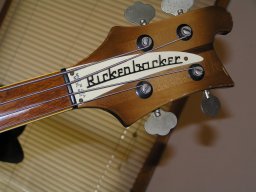
Glad you are reconnecting to your four.
For some reason, it's in the back of my mind that Flea played "you oughta know" on his five not four.
Can't recall why I think that, maybe he mentioned it in an interview at the time.
 
Inside every six string bass,there's a four and a five string bass conveniently tucked inside.

Actually....inside every six-string bass is two five-strings (BEADG, EADGC) and three four-strings (BEAD, EADG, ADGC). Hard not to love.

I use my six for everything. In fact, I bought a four thinking I'd use it to hone in on position shifts and "reconnect", etc.....but I don't. It's a great-sounding bass (arguably better than my six, due to the Nordstrands), but I simply don't really use it. I guess I'll have to try the same exercise and see if there's anything that I'd like to play that feels better on the four.

Slapping though, yes - definitely better on a four simply due to muting duties.