Yes, I mostly get the fretting right, it's the plucking that's trickier, especially with the pickNot long at all for the fretting hand. I had begun to feel that I was "missing" and looking for those lower notes so when they showed up on the 5th string (say, below the 7th fret) I welcomed them into my playing hardly missing a beat.
Technique with the plucking hand took a couple of weeks to smooth out because of the wider distance between the 1st and 5th strings. I use a floating thumb for muting and that meant more horizontal hand movement and coordinating that with the forearm.

Enjoy the benefits of a premium membership!
Upgrade Account
-
TalkBass has been independent since 1998. Add your voice.
Create a free account to reply to discussions, view embedded media, and browse with fewer display ads.
Join free Log in
Want zero display ads or expanded classifieds tools? Compare plans.
You are using an out of date browser. It may not display this or other websites correctly.
You should upgrade or use an alternative browser.
You should upgrade or use an alternative browser.
Four to Five, how long to adapt?
- Thread starter RG55
- Start date
More options
Who Replied?Took me a month but I did have some bad habits to correct as I wasn't doing the floating thumb technique correctly. I only played my 5 during that time, relearning all the songs I play to find more efficient ways to play them on the 5.
This video help me the most with floating thumb if you were curious.
At the time, I had five 4's and one 5. now, I have four 5's and zero 4's.
Good Luck!
Thanks, mate


Initial adaptation - 5 minutes.
Making it 2nd nature - 6 months.
Making it 2nd nature - 6 months.

OP.....I made the move to a 5 string after 10 years on various 4 strings. It took me 3 or 4 years before 5 strings felt normal.
But then again, it depends on what you mean by "adapt". For me, being able to play songs correctly on a 5 string happened pretty quick - after a month or two of solid playing. However, my muscle memory didn't set in on the 5 strings until 3 or 4 years. Also, I sold all my 4 strings to pay for the 5 string, so I never went back and forth.
Now, today, when I pick up a 4 string, it feels like a toy. The neck is way to small and my hands keep searching for the missing string.
I know some people can switch between 4, 5, and even 6 strings. Kudos to them. I can't.
If you really want to move to a 5 string, like many others have said here, give it time.
But then again, it depends on what you mean by "adapt". For me, being able to play songs correctly on a 5 string happened pretty quick - after a month or two of solid playing. However, my muscle memory didn't set in on the 5 strings until 3 or 4 years. Also, I sold all my 4 strings to pay for the 5 string, so I never went back and forth.
Now, today, when I pick up a 4 string, it feels like a toy. The neck is way to small and my hands keep searching for the missing string.
I know some people can switch between 4, 5, and even 6 strings. Kudos to them. I can't.
If you really want to move to a 5 string, like many others have said here, give it time.

Hard to say. Depends if you are a pattern player or a note player. Pattern player is 1, 4, 5, 2. Note player is G, C, D, A. I am a pattern player and have no issue going between the. 2.


Clearly, it'll take more than just 2 days to adapt to 5 strings -- 2 weeks? 2 months? I hope it's not 2 years
Not long. Put the 4s away and practice a lot on the 5 exclusively. And stop being angsty about it.How long did it take you to adapt?
Go back to fundamentals and run scales etc on the 5 and stop thinking in the 4 string mindset. You only really learn something when you get out of the comfort zone.
I learned to drive on an automatic car as it was all my family had. I bought a manual the next week and after messing around in back streets and closed parking lots for a couple of hours, took it out in traffic. I soon learned as the annoyed honking when I stalled was a strong prompt to get it right. That and if I couldn't get it right, I was back to being a pedestrian with an empty bank account.

I started on a 4-string in 1993, and got my first 5-string (which I still have) in 1995 or maybe 1996. I guess I’m lucky—it made sense instantly, maybe because I had plans for those lowest notes before the instrument even came to me. I even had the same experience with my 7-string guitar after decades of only playing 6-strings, though I have really only recently thought of myself as a competent guitarist. I don’t use the 7-string guitar often, but not because it throws me off; I switch between 4- and 5-string basses all the time. About the only trouble I ever had was grabbing the wrong tuning keys here and there. That still happens 
Sitting down with a 6-string bass with the added higher-pitched string, however, has never felt natural. I can only guess, but it might come down to never feeling like I needed additional room at the top end of the range or playing across the fretboard even more than I do with a 5-string. I’ve recently gotten an itch to try one tuned BEADF#B and play it like a bass baritone guitar kind of thing, though
Sitting down with a 6-string bass with the added higher-pitched string, however, has never felt natural. I can only guess, but it might come down to never feeling like I needed additional room at the top end of the range or playing across the fretboard even more than I do with a 5-string. I’ve recently gotten an itch to try one tuned BEADF#B and play it like a bass baritone guitar kind of thing, though
Last edited:

I started with 4, transitioned to 5, and then transitioned to 6.
When you first start the transition, your overall playing ability can be significantly degraded. It took me a couple of weeks to get comfortable approaching the instrument as a 4 with an extra string. I had to be very purposeful about how I used the extra string. Within a few months I was reasonably comfortable, but still could get lost/confuse on the fingerboard from time to time.
The extra strings tend to have certain benefits in the way you navigate the fretboard. More strings allow you to cover a wider range of notes with less shifts. So over time the logic you use changes. Rather than shifting up and down the neck, you tend to play across the strings more. Ideally the finger patterns you use work on a subconscious level and are essentially automatic, I.E. you don't have to think about them.
If you play the 5-string exclusively and practice enough, it will eventually become your native instrument. You will think as a 5-string player, rather than as a 4-string player with an extra string. I never made it this far on the 5, and it took about a decade for me to get to this point on the 6. Staying there remains practice.
I have one 6-string in my collection and a variety of 4s and 5s. The 6 is my #1. I find that I can pickup a 4 or 5 and play very well. But if the music is technical, I have to stop more and figure out how to play the line without all 6 strings. I find that if you play 4 or 5 too much that it degrades my proficiency on the 6, because it starts to modify my subconscious mental processes.
If you want the transition to go as smoothly and quickly as possible, pay the 5 exclusively until you get really proficient. After that, make a decision on which instrument you think is most import.
When you first start the transition, your overall playing ability can be significantly degraded. It took me a couple of weeks to get comfortable approaching the instrument as a 4 with an extra string. I had to be very purposeful about how I used the extra string. Within a few months I was reasonably comfortable, but still could get lost/confuse on the fingerboard from time to time.
The extra strings tend to have certain benefits in the way you navigate the fretboard. More strings allow you to cover a wider range of notes with less shifts. So over time the logic you use changes. Rather than shifting up and down the neck, you tend to play across the strings more. Ideally the finger patterns you use work on a subconscious level and are essentially automatic, I.E. you don't have to think about them.
If you play the 5-string exclusively and practice enough, it will eventually become your native instrument. You will think as a 5-string player, rather than as a 4-string player with an extra string. I never made it this far on the 5, and it took about a decade for me to get to this point on the 6. Staying there remains practice.
I have one 6-string in my collection and a variety of 4s and 5s. The 6 is my #1. I find that I can pickup a 4 or 5 and play very well. But if the music is technical, I have to stop more and figure out how to play the line without all 6 strings. I find that if you play 4 or 5 too much that it degrades my proficiency on the 6, because it starts to modify my subconscious mental processes.
If you want the transition to go as smoothly and quickly as possible, pay the 5 exclusively until you get really proficient. After that, make a decision on which instrument you think is most import.
Once you adapt, and try to go back to a four, you find yourself missing that low B stringI have just got a second-hand Ibanez SR305EB.
Clearly, it'll take more than just 2 days to adapt to 5 strings -- 2 weeks? 2 months? I hope it's not 2 years (or never).
Especially tricky is when I have to use the G string -- it seems like a string too many.
It also seems easier to play fingerstyle than with a pick.
How long did it take you to adapt?
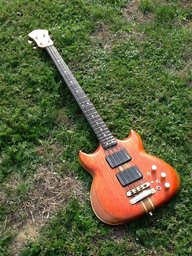
I had to have a few goes until I finally gelled with a 5er.
It wasn't until I learned the "Floating thumb" technique before I got it together. I bought and sold some really nice 5ers first though...
It wasn't until I learned the "Floating thumb" technique before I got it together. I bought and sold some really nice 5ers first though...

It took me a couple months before I was comfortable enough to play a gig - As I don't really look at my hands much, that's a relatively big hurdle. A couple years later, I've transitioned, and it's home for me - I just donated my one remaining 4 string, so I'm now committed to playing just 5's. I think the transition would take longer if you keep going back and forth.

Smooth_bass88
vaxx!
- Oct 31, 2006
- 12,122
- 16,793
- Disclosures
- have been on nationally released albums, charting on the Billboard 200
not long at all because it was a very comfortable, playable neck [StingRay5]. A few weeks maybe a month.

No problem there, I let my thumb roam free.
String spacing is supposedly 16.5 mm. It's not that it's too far away, it's that it isn't supposed to be another string there, you see...
That's fairly narrow, I'd have more trouble getting used to that lol
In fact, my first 5'er was an Ibanez with spacing like that, definitely took a bit. I got tripped up more at the first couple of frets than higher up. My next one was a Music Man Stingray 5'er and that felt generous.
The G is where it always was, think the other way around.



Funny story - I took a gig that required me to use a fiver so I borrowed a bass and learned all the material (50 min) and played the gig all in a week..Couple of years later, I purchased a fiver and took me six months to be comfortable flipping between 4s and 5s. Not sure what the lesson is here other than I should have bought my buddy's bass.

Took me about a week… but I was also 19 and played 2 jazz gigs and a bunch of playing at home during that initial break-in period.


