• TalkBass has been independent since 1998. Add your voice.
    Create a free account to reply to discussions, view embedded media, and browse with fewer display ads.
    Join freeLog in
    Want zero display ads or expanded classifieds tools? Compare plans.

frets and slap

well, i've posted this in here because it is a question about frets.

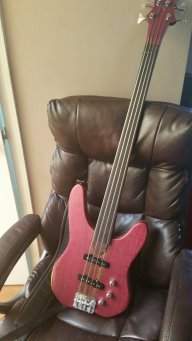
i didn't own a fretless bass until i made one for me, its build is posted here if you are interested look for pine neck.

well my question is: are frets related to the sound of slap? i ask that question because when i slap my fretless it doesn't sound the same specially when i pull off strings.

i have another question, if i make a soft curve in the fret board in a way that since 12th fret to 22 or 24 is a little bit (just a little bit) slimmer thna the rest of the fretboard it wil be better to avoid fretting after 12th fret?

thanks a lot.

 
Slap tones change a lot when there are frets/no frets. You can install a single very low fret near the end of the board to get some of that sound back, if you miss it. Needs to be filed very low though, so as not to interfere with fretless intonation in the upper registers...
 
  • Like
Reactions: erbesoderpayaso
i have another question, if i make a soft curve in the fret board in a way that since 12th fret to 22 or 24 is a little bit (just a little bit) slimmer thna the rest of the fretboard it wil be better to avoid fretting after 12th fret?

I'm not sure i get it, but if you have problems with notes dying too fast or buzzing too much in high positions, loosening the truss rod should help. Tune down the string, loose the rod about half a turn, tune up again and try. Repeat if necessary. The fingerboard should be a slight 'U' shape, so that when you fret 1st and last "fret", you get about a 1-2mm string-neck distance in the middle. If your action gets too high when loosening the truss rod, lower the strings on the bridge. This is the same on fretted or fretless, but on fretless it's a bit of alchemy.
 
I'm not sure i get it, but if you have problems with notes dying too fast or buzzing too much in high positions, loosening the truss rod should help. Tune down the string, loose the rod about half a turn, tune up again and try. Repeat if necessary. The fingerboard should be a slight 'U' shape, so that when you fret 1st and last "fret", you get about a 1-2mm string-neck distance in the middle. If your action gets too high when loosening the truss rod, lower the strings on the bridge. This is the same on fretted or fretless, but on fretless it's a bit of alchemy.
yes that could be the solution but i have non adjustable trussrod, i used bars of steel to keep the neck straight.
 
Yes, the percussive sound you hear when you slap a note is affected by the contact the string makes with the frets. Slapping a fretless bass is a legitimate effect but will sound different.

A couple people already mentioned Les Claypool, who used slap on a fretless bass on lots of the Primus albums. That sound is laid out pretty bare in "My Name Is Mud" on Pork Soda, for example. Listen to that and then listen to almost anything by Marcus Miller to hear the difference the frets make.
 
  • Like
Reactions: erbesoderpayaso