• TalkBass has been independent since 1998. Add your voice.
    Create a free account to reply to discussions, view embedded media, and browse with fewer display ads.
    Join freeLog in
    Want zero display ads or expanded classifieds tools? Compare plans.

Fretted vs fretless bass without looking

I have a visual condition that impacts my hand-eye coordination. In short, I would like to rely on vision as little as possible while playing an instrument.

I am wondering if you all think it is easier to play a (fretted) bass guitar or a fretless BG/EUB without looking. I tried BG but my teacher/YouTube did not really clearly teach how to play it without looking. So I have actually been learning EUB because the basic pedagogy for double bass (like the rest of the violin family) does not involve looking much at all, and it's been easier to get started. But I'm still wondering if it is the better choice at higher skill levels.

To me, advantages of a fretless instrument are: if my finger placement is slightly off, then I will only be a little sharp or flat (and the finger can be rolled to correct it). On a fretted instrument, if my finger placement is off, I could get fret buzz or worse put my finger on the fret and then get no sound. In particular, shifting without looking seems scary on a fretted instrument.
 
Get a real teacher. YouTube is economical but theres no feedback. while students can approximate what they see, they
miss the subtly, nuance, or reasoning in hand positioning. (Im constantly telling my students about thumb placement—they feel it's not important till I show them how to shift. ;) )

If you've done 'your work' learning proper scales/fingerings, fretless isnt hard to adapt to—but it's not a mindless endeavor. DB playing helped me more with the concept of adapting to fretless but you can easily move from EB to fretless. The bottom line: a disciplined hand plays all well.
 
Last edited:
  • Like
Reactions: Les Fret
Thanks for the replies. Glad that I am not the only one who thinks fretless is easier than fretted, if one cannot look at the instrument.

Fretted is easier, not even a close call. Frets are so much more forgiving with finger placement.
I think beginner BG players are often taught to put their finger just behind the fret, so that it's easier to press down. Then the margin of error seems small, in case I accidentally put a finger on the fret itself. Maybe I could try to put the finger a bit farther back from the fret - don't have a BG to test this out at the moment.

Also I was curious if there are any well-known blind BG players. I have had difficulty searching for this, which makes me wonder if it's possible (to play fretted BG at a high level without looking).
 
Thanks for the replies. Glad that I am not the only one who thinks fretless is easier than fretted, if one cannot look at the instrument.


I think beginner BG players are often taught to put their finger just behind the fret, so that it's easier to press down. Then the margin of error seems small, in case I accidentally put a finger on the fret itself. Maybe I could try to put the finger a bit farther back from the fret - don't have a BG to test this out at the moment.

Also I was curious if there are any well-known blind BG players. I have had difficulty searching for this, which makes me wonder if it's possible (to play fretted BG at a high level without looking).
I think it's all in the margin of error, and therefore down to the amount of practice one has had with their instrument and the muscle memory.
Some people will find fretted better because their margin of error is already within, say, half a fret width or less, so that their finger will land between the fret itself and mid-way to the previous fret. Then fine, fretted gives you the right note each time.
Now as you said, if one sucks like I do, and has a wider landing area, then fretless becomes somehow better for damage control purpose. For example if on a fretted I had landed just past the fret it would have been a disaster, but on fretless it is just sharp. Much better. It adds character to my glorious performance. What is this little something that spices the song up? I hear the audience wonder.
 
  • Like
Reactions: Wannabebass
Nah..... that aint right. With a fretted instrument I rarely miss by "so much" that I land on the fret. If I do, I feel it and adjust just as you mention by rolling the finger. Same process with or without frets. Now with a fretless you have to be pinpoint accurate or make the adjustment on the fly and I rarely nail the sweet spot dead on - in the dark. Regardless of all that.... lights on / off whatever..... the odds of me sounding bad is 10x on a fretless as opposed to a fretted
 
  • Like
Reactions: iqi616
I have a visual condition that impacts my hand-eye coordination. In short, I would like to rely on vision as little as possible while playing an instrument.

I am wondering if you all think it is easier to play a (fretted) bass guitar or a fretless BG/EUB without looking. I tried BG but my teacher/YouTube did not really clearly teach how to play it without looking. So I have actually been learning EUB because the basic pedagogy for double bass (like the rest of the violin family) does not involve looking much at all, and it's been easier to get started. But I'm still wondering if it is the better choice at higher skill levels.
onlayn o‘yin platformasi
To me, advantages of a fretless instrument are: if my finger placement is slightly off, then I will only be a little sharp or flat (and the finger can be rolled to correct it). On a fretted instrument, if my finger placement is off, I could get fret buzz or worse put my finger on the fret and then get no sound. In particular, shifting without looking seems scary on a fretted instrument.
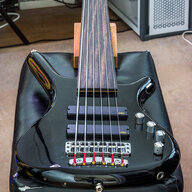
That’s a really thoughtful question. Honestly, both can be played without looking, but they rely on slightly different skills.
Fretted bass gives you physical reference points (frets, dots, muscle memory), which can make it more forgiving once your hands “know the distances.” Fretless, on the other hand, really trains your ear and position shifts, so what you’re experiencing with EUB makes a lot of sense.