
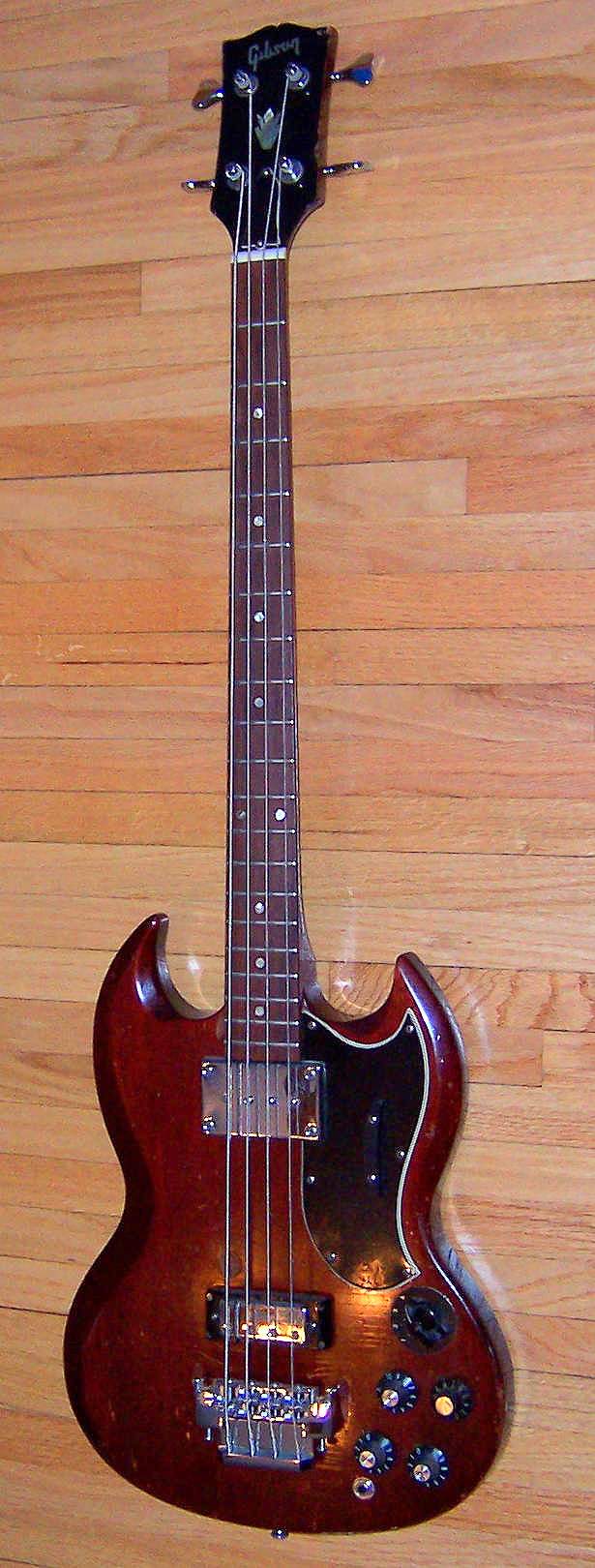
I would love to see a reissue of the classic Gibson EB-3. Like the one shown in the picture below.

Enjoy the benefits of a premium membership!
Upgrade Account
-
TalkBass has been independent since 1998. Add your voice.
Create a free account to reply to discussions, view embedded media, and browse with fewer display ads.
Join free Log in
Want zero display ads or expanded classifieds tools? Compare plans.
You are using an out of date browser. It may not display this or other websites correctly.
You should upgrade or use an alternative browser.
You should upgrade or use an alternative browser.
Gibson basses. When Burt calls.
- Thread starter SteffanB
- Start date
More options
Who Replied?

My specific complaints about it are incredibly common. I don't ever complain about weird "ergonomic" issues & neck-dive or mudbuckers like everyone else does - but if you like the 3 point bridge then that's your good fortune.
Fine. But you didn’t answer my question. I’m not calling you out. I’m looking to be educated in case there’s something you know about the 3-point bridge that I’m clueless about. Because it happens. So I’m never one to pretend I know all the answers. And I’ll readily admit I’ve been wrong about several things (e.g. hi-mass bridges are better, the superiority of neck through construction, that set necks
are superior to bolt-ons, “tone wood,” and a dozen other beliefs I once held) in the past. That’s why I’m asking.
Here’s my take. A standard bridge (by which I mean a bridge and tail stop) has two functions. First, to securely anchor the strings. Second to provide for string height and intonation adjustments, and be able to hold those adjustments. So if the bridge on a bass does that, then it’s a perfectly good bridge. All the other bells & whistles may (and I only say may) be nice to have. But they don’t necessarily bring anything of significance or value to the party.
I’m not going to get into the “higher mass is better” debate. There’s been enough creditable tests that have shown it doesn’t improve tone or sustain. A Fender bent metal bridge compares favorably to the much heavier BadAss II and overdesigned Babicz bridges. The conclusion was that these high tech/mass bridges are solving a problem that doesn’t exist.
So if there’s anything supported by concrete evidence that shows there’s an actual real problem with Gibson’s 3-point bridge that you’re aware of, I’d in all sincerity like to learn more about it.


Do you have any links to hand (not asking you to go out of your way)? I'm curious is all. Cheers.There’s been enough creditable tests that have shown it doesn’t improve tone or sustain.
Last edited:

Not an actual problem - just a preference I guess. No accounting for taste, to a degree. I don't have comparative stats on the physics of sound transference. Hi mass is a little snake-oily IMO, and I don't mind the Fender bent plate design. Some guys leave the bridge stock on a Ric 4003 and some guys like the upgrade. If you get along with the 3 point bridge that's a good thing. I don't mind hearing your reasons for that, but I don't require evidence that supports your preference.Fine. But you didn’t answer my question. I’m not calling you out. I’m looking to be educated in case there’s something you know about the 3-point bridge that I’m clueless about. Because it happens. So I’m never one to pretend I know all the answers. And I’ll readily admit I’ve been wrong about several things (e.g. hi-mass bridges are better, the superiority of neck through construction, that set necks
are superior to bolt-ons, “tone wood,” and a dozen other beliefs I once held) in the past. That’s why I’m asking.
Here’s my take. A standard bridge (by which I mean a bridge and tail stop) has two functions. First, to securely anchor the strings. Second to provide for string height and intonation adjustments, and be able to hold those adjustments. So if the bridge on a bass does that, then it’s a perfectly good bridge. All the other bells & whistles may (and I only say may) be nice to have. But they don’t necessarily bring anything of significance or value to the party.
I’m not going to get into the “higher mass is better” debate. There’s been enough creditable tests that have shown it doesn’t improve tone or sustain. A Fender bent metal bridge compares favorably to the much heavier BadAss II and overdesigned Babicz bridges. The conclusion was that these high tech/mass bridges are solving a problem that doesn’t exist.
So if there’s anything supported by concrete evidence that shows there’s an actual real problem with Gibson’s 3-point bridge that you’re aware of, I’d in all sincerity like to learn more about it.
Do you have any links to hand (not asking you to go out of your way)? I'm curious is all. Cheers.
I’ll have to look. The one that I thought most interesting was a paper I saw back in 2014 or thereabouts by some audio engineer types. IIRC it was for a paper they were planing in submitting for a graduate degree requirement.
They tested four high mass bridges and a Fender bent metal bridge. All were installed on the same guitar. They also put on a new set of strings with each bridge change to reduce the variables as much as possible. And they also came up with a mechanical plucking mechanism to remove that human variable from the equation.
They tested for sustain and overtones using a scope and related test gear, after which they compared the graphs that were generated. And they found no significant differences. The biggest surprise came when the bent metal bridge actually had slightly better sustain characteristics than one of its high mass counterparts.
From there they went over to subjective blind listening tests and discovered that no listener could reliably distinguish the sound of one bridge from another. Nor could they consistently pick the same bridge as their favorite in repeated listening tests.
The conclusion suggested that the bridge made no significant difference, either in actual physical measurements or real world subjective listening tests.
I’ll ask my SO to see if she can find the paper since her websearch skills (she has a grad degrees in experimental psych) are far greater than mine when it comes to running down academic source materials.

I'd say bring back the EB3L bass, with the neck, pickup mounted like they did in the 1973-74 years, and maybe with the slotted head stock.
I'd also say bring back the double cutaway Les Pauls ( Money$ Bass ), but in more colors,
And bring back the first version of EB bass, but with better finishes, ( mainly fill the grain )
Last bring back the carved top Les Pauls ( LPB-3 ), with the TB+ pickups, granted, they were heavy, but they sure sounded good.
Oh ... the Midtown Bass
And the most important request, DON"T use that 3 point bridge, there's better ones
I'd also say bring back the double cutaway Les Pauls ( Money$ Bass ), but in more colors,
And bring back the first version of EB bass, but with better finishes, ( mainly fill the grain )
Last bring back the carved top Les Pauls ( LPB-3 ), with the TB+ pickups, granted, they were heavy, but they sure sounded good.
Oh ... the Midtown Bass
And the most important request, DON"T use that 3 point bridge, there's better ones
Not an actual problem - just a preference I guess. No accounting for taste, to a degree.
Ok. I’m good with that. Personal preferences are entirely personal whether it’s for your favorite brand of coffee or the person you choose to marry.
My question (and objection too I suppose) is the constant thing I see where somebody presenting their preferences as if they’re established fact. As in: the 3-point bridge is the worst engineered bass bridge on the planet; or all Gibson basses sound muddy, neck dive, are extremely heavy, etc.
For the record, I don’t consider myself a Gibson fanboy despite having played one since dinosaurs like myself roamed the earth. I also just as regularly (and happily) play my PB, JB, Spector fiver, and Saber VL fretless. And I doubt you’ll find a more vocal critic of Gibson on TB. Or at least in those situations where I feel there’s legitimate grounds for criticism.
But what does bother me is the number of half truths, assumptions, and flat out wrong information about Gibson basses I routinely see get trotted out in many Gibson oriented threads here. And it’s often by people who will tell you they've never played a Gibson and never will as if it’s a badge of honor or something. And that bothers me because I think it does a disservice to the larger TB community by potentially scaring off players who might have otherwise considered trying out a Gibson, and might have discovered they found their dream bass. And I think that’s unfortunate.
Ok. End of rant. Sorry for being so prickly. I probably should have passed on that fourth cup of coffee (St. Joe’s Nutty Irishman - highly recommended!) this morning. My apologies if I came across as being confrontational.
still friends?
Last edited:
No apology needed at all my friend, but thank you for it nonetheless. I love my old EB4L because I've had it since I was 16. More sentimental reasons than practical. When I was 18 I had an original Badass bridge installed and I never looked back. But admittedly, my reasons for doing ANYTHING at that age were mainly libido-driven. Right or wrong, Zeus knows how I found the time to give a rat's *ss about a bridge design.Ok. I’m good with that. Personal preferences are entirely personal whether it’s for your favorite brand of coffee or the person you choose to marry.
My question (and objection too I suppose) is the constant thing I see where somebody presenting their preferences as if they’re established fact. As in: the 3-point bridge is the worst engineered bass bridge on the planet; or all Gibson basses sound muddy, neck dive, are extremely heavy, etc.
For the record, I don’t consider myself a Gibson fanboy despite having played one since dinosaurs like myself roamed the earth. I also just as regularly (and happily) play my PB, JB, Spector fiver, and Saber VL fretless. And I doubt you’ll find a more vocal critic of Gibson on TB. Or at least in those situations where I feel there’s legitimate grounds for criticism.
But what does bother me is the number of half truths, assumptions, and flat out wrong information about Gibson basses I routinely see get trotted out in many Gibson oriented threads here. And it’s often by people who will tell you they've never played a Gibson and never will as if it’s a badge of honor or something. And that bothers me because I think it does a disservice to the larger TB community by potentially scaring off players who might have otherwise considered trying out a Gibson. And I think it’s unfortunate.
Ok. End of rant. Sorry for being so prickly. I probably should have passed on the fourth cup of coffee this morning. Apologies if I came across as being confrontational.
still friends?
I agree with every word of this.I'd say bring back the EB3L bass, with the neck, pickup mounted like they did in the 1973-74 years, and maybe with the slotted head stock.
I'd also say bring back the double cutaway Les Pauls ( Money$ Bass ), but in more colors,
And bring back the first version of EB bass, but with better finishes, ( mainly fill the grain )
Last bring back the carved top Les Pauls ( LPB-3 ), with the TB+ pickups, granted, they were heavy, but they sure sounded good.
Oh ... the Midtown Bass
And the most important request, DON"T use that 3 point bridge, there's better ones
I love my old EB4L
EB4L??? With the first pickup and tonestack Bill Lawrence did for Gibson? Now how cool is that? Talk about a rare bird!

Thanks for the synopsis, and if your SO can find the paper, wonderful, but please don't go to any effort on my part.I’ll ask my SO to see if she can find the paper since her websearch skills (she has a grad degrees in experimental psych) are far greater than mine when it comes to running down academic source materials.
Basvarken
Commercial User
- Dec 3, 2010
- 1,743
- 10,606
- Disclosures
- Hobby Luthier / Gibson Bass Book
As someone that knows and follows Gibson basses it continually surprises me at how little most people that post about them know....wow.
Want to know about Gibson basses? Start here: https://www.thegibsonbassbook.com/
Written by our fellow TBer @Basvarken, it's a great reference with pictures of at least 80 different Gibson basses.
Thank you Mark! And agreed.
When Burt calls I'll ask him for a faithfull re-issue of the 1969 Les Paul Bass.

And ask him to put out that cheap Epiphone Flying V bass again .
Those things were not all that expensive , and really are a hoot to play .
Guilty pleasures .
Those things were not all that expensive , and really are a hoot to play .
Guilty pleasures .

I saw something similar like this as well - thought it was on Youtube TBH - I've often said tap the top side on a thin pc of metal and then tap on a pc 4X as thick - do you feel the same vibration under it - tap=vibration. I never fully understood the theory behind the thicker bridges. Sure some LOOK cooler then the original thin Fender bent ones - but, meh. Strings to me make the biggest 'change' in my ear perception. I am likely wrong. lolI’ll have to look. The one that I thought most interesting was a paper I saw back in 2014 or thereabouts by some audio engineer types. IIRC it was for a paper they were planing in submitting for a graduate degree requirement.
They tested four high mass bridges and a Fender bent metal bridge. All were installed on the same guitar. They also put on a new set of strings with each bridge change to reduce the variables as much as possible. And they also came up with a mechanical plucking mechanism to remove that human variable from the equation.
They tested for sustain and overtones using a scope and related test gear, after which they compared the graphs that were generated. And they found no significant differences. The biggest surprise came when the bent metal bridge actually had slightly better sustain characteristics than one of its high mass counterparts.
From there they went over to subjective blind listening tests and discovered that no listener could reliably distinguish the sound of one bridge from another. Nor could they consistently pick the same bridge as their favorite in repeated listening tests.
The conclusion suggested that the bridge made no significant difference, either in actual physical measurements or real world subjective listening tests.
I’ll ask my SO to see if she can find the paper since her websearch skills (she has a grad degrees in experimental psych) are far greater than mine when it comes to running down academic source materials.
Also, discussing Grabber(?) basses - wish they would do a re-issue with all the new technology, thinner necks, better hardware - and many said the moveable pickup was a gimmick and didnt make much of a tonal change - that too baffles me on why it didnt. Some guys notice a 1/2" pickup placement on a jazz bass, how can a pickup that moves 3 inches not change lol
Thanks for the synopsis, and if your SO can find the paper, wonderful, but please don't go to any effort on my part.
Not a problem. I want a copy of it myself. Thought I downloaded it previously. But it's not showing up in my Dropbox or Mega storage accounts where I would normally save something like that.
I saw something similar like this as well - thought it was on Youtube TBH - I've often said tap the top side on a thin pc of metal and then tap on a pc 4X as thick - do you feel the same vibration under it - tap=vibration. I never fully understood the theory behind the thicker bridges. Sure some LOOK cooler then the original thin Fender bent ones - but, meh. Strings to me make the biggest 'change' in my ear perception. I am likely wrong. lol
Yeah. It wasn't on YT though. It was a PDF about 30-35 pages long that I bumped into on a Google search for something entirely different.
I'll be the first to admit I used to think high mass made a huge difference because...well...it just seemed logical at one point. I was one of those people who would routinely slap a BadAss bridge on any new bass I got back in the late 80s and 90s. Probably bought six or seven of them during that period until one day I really listened to a bass before and after... and I noticed it didn't amount to a hill of beans soundwise. I was floored. So I grabbed a JB I had already modded with one and put the bent metal bridge it came with back on. And I noticed the same thing - no difference. At which point I realized I had probably wasted $600-$700 over the years on Leo Quan's block o' zinc.
Some other illusions I held bit the dust shortly afterwards. It was a period of personal discovery and enlightenment for me. Because that was when I stopped believing in bass myths and started (finally) trusting my ears.
Some other cherished notions of mine that bit the dust:
- Myth: Through-neck construction is superior to a set neck. And a set neck is superior to a bolt-on. Discovery: a properly constructed and attached neck is a good neck. Period. If done well, the method of attachment doesn't matter. There is no improvement in tone or sustain regardless of the method of attachment. All a through-neck does is make a bass nearly impossible to repair if the neck gets damaged. All a set neck gets you is a bass that's expensive to repair if the neck is damaged.
- Myth: Zero frets are a cheap compromise deigned to make poorly made necks marginally playable. Discovery: Zero frets are actually a far better way to go. And there's no compromise in your action height or sound by having one. Quite the opposite in fact. It's a pity more guitars and basses don't come with one.
- Myth: Composition of your tone cap has a marked impact on your tone. Discovery: The value of your capacitor directly affects your sound. What it's made out of, and how it's made, makes absolutely no difference in an extremely low voltage passive circuit such as is you'll find in a passive bass instrument.
- Myth: tonewood. (I'll skip saying anything further in order to not start the ball rolling on that topic (again) since it's already been done to death here. Besides that, tonewood "discussions" invariably produce far more heat than light anyway.

- Myth: Boutique pickups will significantly improve the sound of any bass they're installed in. Discovery: Sometimes. They can sound better. But that's not a given. A lot depends on what you're already using, your strings, your amp, and your playing technique. And even more importantly - what you like. Small surprise pickup makers don't claim any guaranteed improvements - or accept returns.
Last edited:
^^ I agree with your myths, but I still like NT basses best, and set necks for guitars. It's a look and feel thing.
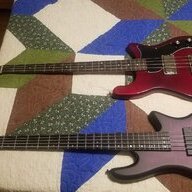
Oddly enough, I own an EB-5, and your headstock statement is correct... They might as well have thrown a Tobias heastock on it, and called it a day. But, the growl from the Swamp ash/Maple combination with those furnace hot coil tapped humbuckers make the sound worth looking at the headstock mis match.The problem with that bass is the headstock, IMO. The Tbird headstock just doesn’t belong there. That bass needs the V/Grabber style 2 on a side arrowhead headstock. It’s just not a “giant headstock” style bass. It’s like putting a big ‘ol Fender headstock on a Hofner. It looks out of place as all get out.
Gibson really needs to bring back the Grabber with a Babicz bridge. I really do not see them reissuing the Grabber with a bridge improvement in my lifetime. That would be what the Gibson Bass Fans would want... Leo owns this street corner I guess.

Fortunately a Babicz or Hipshot would be a direct drop-in.Gibson really needs to bring back the Grabber with a Babicz bridge. I really do not see them reissuing the Grabber with a bridge improvement in my lifetime. That would be what the Gibson Bass Fans would want... Leo owns this street corner I guess.


