
Enjoy the benefits of a premium membership!
Upgrade Account
-
TalkBass has been independent since 1998. Add your voice.
Create a free account to reply to discussions, view embedded media, and browse with fewer display ads.
Join free Log in
Want zero display ads or expanded classifieds tools? Compare plans.
You are using an out of date browser. It may not display this or other websites correctly.
You should upgrade or use an alternative browser.
You should upgrade or use an alternative browser.
Gibson Thunderbird - worth the price?
- Thread starter Kapettit67
- Start date
More options
Who Replied?
- Oct 7, 2000
- 18,619
- 38,939
- Disclosures
- Endorsing artist: Musicman basses
If you're under 50 and want the name on the headstock, go for it. YOLO.
If you're over 50 the time may soon be coming where you won't want to hang a 12 lb bass around your neck . You may very well start being attracted to different basses.
If you're over 50 the time may soon be coming where you won't want to hang a 12 lb bass around your neck
. You may very well start being attracted to different basses.
I would go with one of the newer Epiphone models. If you wanna spend Gibson-level money on something, I would actually go to Cataldo Basses. They initially made high-end Fenderbird clones, but now have a variety of original Thunderbird-inspired models, with pickups from Thunderbucker Ranch. Plus a good number of custom options for number of strings, number of pickups, scale length, etc. They're not exactly the same as their inspiration, but they nail the vibe, and to me they're interesting.I'm thinking about investing in a Gibson Thunderbird. I've played Epi Thunderbirds for two decades, but I'm thinking of biting the bullet for the real thing. I'm just wondering if anyone has any input on this. My Epi's generally cost less than $500 and Gibsons are at least $1500 used.


I wish they'd comeIt is and better imho! Love them so much I bought three! You have fine taste
As much as I like the Epiphone Vintage Pro Thunderbird, I think the Thundergun is more bass for the bucks, even at $1,000 plus.I've only played one briefly, as well as a Reverend Thunder Gun which is based on a Thunderbird.
IMO, they are great if you a pick player....but as a strictly finger style player, i couldn't get them to "cut" or "sit" right in the mix. It may have just as much to do with "set necks", which don't have as much of the the upper mid snap of a bolt on.
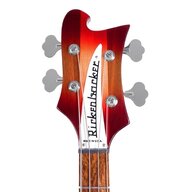
I've had both. First one was the Gibson that I got in a trade for a Ric 4003.
Second one was the Epiphone. Moving to short scale basses, these are both gone now.
The Epi tone was good, for sure, but ultimately I'd pick the Gibson every time if I were to get another T-Bird. I don't care about the specs or details of the hardware from model to model; I just know that the Gibson felt and played like a top shelf instrument.
BTW, the Gibson was purchased (back) to the guy I traded with. He missed it so badly! can't blame him.
That's my 2 cents on all this.
Second one was the Epiphone. Moving to short scale basses, these are both gone now.
The Epi tone was good, for sure, but ultimately I'd pick the Gibson every time if I were to get another T-Bird. I don't care about the specs or details of the hardware from model to model; I just know that the Gibson felt and played like a top shelf instrument.
BTW, the Gibson was purchased (back) to the guy I traded with. He missed it so badly! can't blame him.
That's my 2 cents on all this.

For what you'll be paying for a new epiphone you might as well shell out for the actual gibson. Lemons happen at every price point of instrument, you're just as likely to find an epiphone with shoddy fretwork or minor finish flaws. Personally, I think some of the older gibson models with ebony fretboards blow all the new epis out of the water, and I could never bring myself to pay nearly a grand for something that at the end of the day is just an epiphone.

- Mar 13, 2008
- 18,898
- 142,247
- Disclosures
- Endorsing Artist Mike Lull T Bass pickups, The Bass Shop, Seattle WA.
I'm thinking about investing in a Gibson Thunderbird. I've played Epi Thunderbirds for two decades, but I'm thinking of biting the bullet for the real thing. I'm just wondering if anyone has any input on this. My Epi's generally cost less than $500 and Gibsons are at least $1500 used.
Unlike some who post here - I own at least one Gibson Thunderbird of EVERY significant era ('60s, '70s '90s, '00 and '20s) along with Birds from Lull, Greco, Orville, Jackson, Ibanez and Epiphone. Truth is, while the new Epi '60s version is nice, the neck far bigger than a Gibson with the exception on the new Non Reverse. For me, that alone makes it a much better choice than the Epi, I also did not find the Epi '60s pickups to be all that great thru my rig, a bit thin with not much lo mid or bass presence. Were I buying a Non Gibson Bird for me the only choice would be a Greco, they are Light Years better than any Epi and much closer in tone to the original '60s Gibson than ANY other Thunderbird - I own both. Any Post 1988 Gibson will have a nice, thin neck, there are quite a few variations of pickups used on them, to my knowledge at least 6, that's not counting those used on the new Rex Brown or Gene Simmons Sig models. Were I buying a Gibson I would suggest one from the early years of the reissue, say '88 to maybe 2000, the woodwork is good, the neck is a thing of slender beauty and it has a very shallow pitch, if you didn't care for the tone of the pickups there are good vintage repros out there from quite a few places.
BTW anyone that says a Thunderbird weighs 12lbs doesn't own one, mahogany just isn't that heavy the heaviest one I own is a '76 that comes in at 9.5lbs, and that's with all the original chrome pickup and bridge covers on it.

Gaolee
Official leathers tester and crash dummy
Thunderbirds only look heavy. The lightest bass I own is a 2015 Gibson Thunderbird. Go figure! My Epiphone Vintage Pro is about the heaviest one at 9.5 lbs. It's a heavier one relative to others of its ilk.If you're under 50 and want the name on the headstock, go for it. YOLO.
If you're over 50 the time may soon be coming where you won't want to hang a 12 lb bass around your neck
I'm a heretic amongst Thunderbird players. I don't really like the VP and will be selling it. Others love them. I love the sound and feel of Gibsons. I have to admit, that for $2000 or more, that love evaporates pretty fast. I have three Gibsons and didn't pay anywhere near that much for them back when I bought them. One was less than $1000 and the other two came along at around $1000 to $1200. No more than that. They are all light, and depending on the strings and amp, they can sound like all kinds of things. The 2015 has stock pickups. They are different from any other Thunderbird's pickups so don't consider them in the same thought. The 1991 has Thunderbuckers, so aftermarket pickups. It's been modified, refinished, and generally used and abused to the point it's the one I play all the time. The 2001 is the pixie-dust bass. It's not 100% stock, but close, since I'm afraid to break the spell. There's some magic to it that makes it just an eyelash better than anything else. I can't explain it. Beats me why I don't play it all the time. Except that I really like the refinished 1991, the Flamingo. (It is Burgundy Mist Metallic instead of the standard burst and has Thunderbuckers and I can thrash it and not worry much.)
For nearly everyone, an Epiphone is as good or maybe better than a Gibson. If I were buying a Thunderbird now, what with prices the way they are, I would probably only consider an Epiphone. Finding any of them used, which is how I buy everything, is pretty tough. In general, people who buy Thunderbirds know what they are getting into and do it on purpose, not on a whim. That makes used ones a bit rarer. Keep an eye out, though.
They pop up. An Epiphone Classic Pro, which is a Gibson in all but name and with a poly finish instead of nitro, turned up at the GC locally a few years ago for $100. They obviously didn't know what it was. It was pretty beat up, and I'm sure that was part of the low price. I played it for a while and commented on it to the guy who worked there. It was pretty funny, because his ears perked up, and he played it when I put it down. I noticed that he took it back behind the counter instead of putting it back on the wall. My guess is that it ended up going home with him.
The muddiest I ever got was a Precision through a Verellen amp. It sounded like the sound had been swallowed by a whale. Go figure.
From my experience, Gibson had some magic going right around 2000 to 2002 with Thunderbirds. If you find a good one in that range, it will be a real keeper.
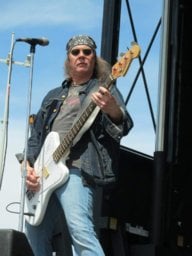
godofthunder59
Life is short, buy the bass.
- Feb 19, 2006
- 9,059
- 38,415
- Disclosures
- Endorsing Cataldo Basses, Whirlwind products, Thunderbucker pickups
Veronica I hold your opinion on Thunderbirds in the highest regard. We differ on where the Epi Vintage Pro fits in the pantheon Thunderbirds and thats just fine I like a good debate but there really is no right or wrong, best or better. Every players point of reference is different not to mention playing style.Unlike some who post here - I own at least one Gibson Thunderbird of EVERY significant era ('60s, '70s '90s, '00 and '20s) along with Birds from Lull, Greco, Orville, Jackson, Ibanez and Epiphone. Truth is, while the new Epi '60s version is nice, the neck far bigger than a Gibson with the exception on the new Non Reverse. For me, that alone makes it a much better choice than the Epi, I also did not find the Epi '60s pickups to be all that great thru my rig, a bit thin with not much lo mid or bass presence. Were I buying a Non Gibson Bird for me the only choice would be a Greco, they are Light Years better than any Epi and much closer in tone to the original '60s Gibson than ANY other Thunderbird - I own both. Any Post 1988 Gibson will have a nice, thin neck, there are quite a few variations of pickups used on them, to my knowledge at least 6, that's not counting those used on the new Rex Brown or Gene Simmons Sig models. Were I buying a Gibson I would suggest one from the early years of the reissue, say '88 to maybe 2000, the woodwork is good, the neck is a thing of slender beauty and it has a very shallow pitch, if you didn't care for the tone of the pickups there are good vintage repros out there from quite a few places.
BTW anyone that says a Thunderbird weighs 12lbs doesn't own one, mahogany just isn't that heavy the heaviest one I own is a '76 that comes in at 9.5lbs, and that's with all the original chrome pickup and bridge covers on it.
The one thing that puts the Epi VP ahead of the 2021 Gibson NR for me is the notes on the upper register of the D and G string just leap out on the Vintage Pro where on the '21 NR they just don't have that presence. All great basses and different flavors, enough for everyone.
Last edited:
a photo of them. BTW the bodies each fit the Gibson case exactly the same.I've had both. First one was the Gibson that I got in a trade for a Ric 4003.
Second one was the Epiphone. Moving to short scale basses, these are both gone now.
The Epi tone was good, for sure, but ultimately I'd pick the Gibson every time if I were to get another T-Bird. I don't care about the specs or details of the hardware from model to model; I just know that the Gibson felt and played like a top shelf instrument.
BTW, the Gibson was purchased (back) to the guy I traded with. He missed it so badly! can't blame him.
That's my 2 cents on all this.
Attachments


Epiphones by and large (I hear there are exceptions) have their necks made the right way - with a scarf joint. If you know anything about working with wood, you know that's how you should make a neck with an angled headstock. When you make things, it makes sense to make them so they'll be around a while and reliable. It's part of pride in workmanship.
But.....
You don't want, you want a neck made like a real Gibson - the excitement of anticipating your first broken headstock, and the knowledge that you would have gotten a D minus in shop class if you'd made something like that, bring a thrill to a Gibson that just can't be had on an Epiphone.
Playing a Gibson is like running with scissors - it's living on the edge.
But.....
You don't want, you want a neck made like a real Gibson - the excitement of anticipating your first broken headstock, and the knowledge that you would have gotten a D minus in shop class if you'd made something like that, bring a thrill to a Gibson that just can't be had on an Epiphone.
Playing a Gibson is like running with scissors - it's living on the edge.
Last I checked there is a really nice Gibson Thunderbird, a Red one, up for grabs on EBay. Would be a great “First Bird” if you want to separate yourself from the pack color wise. Don’t wait too long because that image you are looking at in your rear view mirror is the Gibson Victory. FYI, give it your best shot, if you snooze, you loose. LOL!
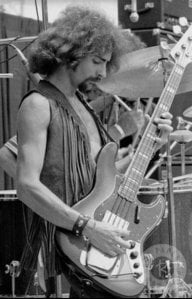
I’ve owned a ‘93 Gibson T-Bird for about 18 years. I didn’t buy it new, but it definitely wasn’t old when I got it. I traded a ‘73 Telecaster bass (big chrome humbucker version in the light tv yellowish color). Yes, I would undo that trade if it was possible.
The Tbird is what it is. Mine is heavy (which I didn’t notice much 18 years ago, but I do now). I would guess it to weigh over 10 lbs, but I haven’t weighed it. I have 13 electric basses, a couple acoustic basses and an upright. The TBird is No.1 in weight. I do like the neck profile. It’s a 1.5” nut width, but a little thicker front to back than a Fender Jazz. Fretwork is good and the truss rod is very responsive.
It had the three point bridge, but I changed that. The original bridge was set off-center of the fingerboard where the G string would roll off the end of the frets. I sent it to Gibson to have that addressed and they sent it back with new saddles with the slots cut off to one side. I eventually installed a super tone bridge. That resolved bridge issues. I still can’t believe Gibson put the bass out with the bridge off center of the neck. It was minor, hardly noticeable, or I wouldn’t have traded for it, but I would think it would be something caught / measured during manufacturing, especially since their MSRP in the mid ‘90s was over $2.5k
Tone; there are several discussions on TB about Tbirds having a dark tone. Mine fits that description. The brightest stainless steel strings sound more like pure nickel strings when new and lose brightness from there. I once had a Lace Sensor bass bar in the bridge position that sounded pretty good, but it looked strange. I reinstalled the stock pickup. Overall tone is not bright in any way, but that doesn’t mean it doesn’t sound good. A few different guitarists I’ve played with since I’ve owned it liked the tone over several other basses I’ve have. I’d describe the tone as similar to other basses with humbuckers. One very noticeable trait of my TBird and I assume others is that it has power / volume on notes above the 12th fret. Some basses seem to have less volume / punch lwhen playing notes above the 12th fret. Not my TBird.
Neck dive; any bass I’ve owned that didn’t have an upper body “horn” to which the strap could be attached, and also had the strap button on the back of the body where the neck and body meet, had some degree of neck dive. The Tbird was no exception, but I figured out that putting the strap coming from the bridge-end strap button over the top of the body / upper “fin”, and that helped a lot. It’s not uncomfortable to wear on a strap, except for the weight.
I believe Tbirds from the mid 80s to late 90s would be of similar design / construction / features as the ‘93, but I’m not positive of that.
To truthfully answer your question if a Tbird is worth the price, I’d have to say it depends. If you want the look, there are probably TBird copies that are better quality and tone, but they might be as high or higher priced.
I haven’t played an EPI Bird, but they seem like a much better value based on descriptions in this thread. If you want a Gibson TBird, I would buy “used”, not new, because they are expensive by comparison to other basses of similar or higher quality. If you want a “new” bass, I’d look at options other than a “Gibson” TBird.
The Tbird is what it is. Mine is heavy (which I didn’t notice much 18 years ago, but I do now). I would guess it to weigh over 10 lbs, but I haven’t weighed it. I have 13 electric basses, a couple acoustic basses and an upright. The TBird is No.1 in weight. I do like the neck profile. It’s a 1.5” nut width, but a little thicker front to back than a Fender Jazz. Fretwork is good and the truss rod is very responsive.
It had the three point bridge, but I changed that. The original bridge was set off-center of the fingerboard where the G string would roll off the end of the frets. I sent it to Gibson to have that addressed and they sent it back with new saddles with the slots cut off to one side. I eventually installed a super tone bridge. That resolved bridge issues. I still can’t believe Gibson put the bass out with the bridge off center of the neck. It was minor, hardly noticeable, or I wouldn’t have traded for it, but I would think it would be something caught / measured during manufacturing, especially since their MSRP in the mid ‘90s was over $2.5k
Tone; there are several discussions on TB about Tbirds having a dark tone. Mine fits that description. The brightest stainless steel strings sound more like pure nickel strings when new and lose brightness from there. I once had a Lace Sensor bass bar in the bridge position that sounded pretty good, but it looked strange. I reinstalled the stock pickup. Overall tone is not bright in any way, but that doesn’t mean it doesn’t sound good. A few different guitarists I’ve played with since I’ve owned it liked the tone over several other basses I’ve have. I’d describe the tone as similar to other basses with humbuckers. One very noticeable trait of my TBird and I assume others is that it has power / volume on notes above the 12th fret. Some basses seem to have less volume / punch lwhen playing notes above the 12th fret. Not my TBird.
Neck dive; any bass I’ve owned that didn’t have an upper body “horn” to which the strap could be attached, and also had the strap button on the back of the body where the neck and body meet, had some degree of neck dive. The Tbird was no exception, but I figured out that putting the strap coming from the bridge-end strap button over the top of the body / upper “fin”, and that helped a lot. It’s not uncomfortable to wear on a strap, except for the weight.
I believe Tbirds from the mid 80s to late 90s would be of similar design / construction / features as the ‘93, but I’m not positive of that.
To truthfully answer your question if a Tbird is worth the price, I’d have to say it depends. If you want the look, there are probably TBird copies that are better quality and tone, but they might be as high or higher priced.
I haven’t played an EPI Bird, but they seem like a much better value based on descriptions in this thread. If you want a Gibson TBird, I would buy “used”, not new, because they are expensive by comparison to other basses of similar or higher quality. If you want a “new” bass, I’d look at options other than a “Gibson” TBird.
Last edited:
godofthunder59
Life is short, buy the bass.
- Feb 19, 2006
- 9,059
- 38,415
- Disclosures
- Endorsing Cataldo Basses, Whirlwind products, Thunderbucker pickups
I'm up to five Vintage Pro Thunderbirds now.I've owned just about every Gibson or Epiphone Thunderbird ever made. While I don't hold the bolt on neck Epi Thunderbird in very high regard I do have a exceptionally high regard for The Epiphone Classic Pro and Vintage Pro Thunderbirds. In particular the Vintage Pro now called the 60s Thunderbird is absolutely stellar. I have dozens of Thunderbirds both Gibson and Epi. My Gibsons range from the 60s, 70s, 90s and 2000s. I have three Vintage Pro Thunderbirds that are equal to if not better than most of the Gibsons.
I'm not saying don't buy Gibson, hell I bought two of the 2021 Nonreverse, both have finish issues btw (my three Vintage Pros are perfect). Between the Vintage Pro and the '21Gibson Nonreverse I like the Epiphone VP better. The choice is yours of course but a higher price doesn't necessarily reflect higher quality.View attachment 4821844 View attachment 4821845 View attachment 4821846


The Rex Brown Signature Gibson Thunderbird has dropped from $2.8k to $2.3k!
Active/passive with hipshot D tuner. I think there's an Epiphone version, too.
Active/passive with hipshot D tuner. I think there's an Epiphone version, too.
I just recently purchased a Gibson non reverse. Got it for under $1800. I have previously owned Epiphone thunderbirds (from the actives, passives and vintage pro) but I agree the Greco ones were better than the Epi but regrettably sold the Greco a year ago so decided to get a non-reverse. I do like the look of the non reverse more. I just wish they had the larger headstock or used the same headstock like on the reverse version. I went Gibson because of the nitro finish, nice case and the original chrome pickups which sound great.
Last edited:
Would you recommend putting a strap button on the back of heel on a non-reverse btw? seen it done but just was curious if you have tried it?I'm up to five Vintage Pro Thunderbirds now.
Btw, the headstocks on these recent non-reverse are more stronger to prevent snapping correct?
Attachments


Those OEM pups on the recent NRs do sound great. Vintage Pro pups are also great. I only replaced one of my OEM Gibsons on my NR with a Lollar because it died.I just recently purchased a Gibson non reverse. Got it for under $1800. I have previously owned Epiphone thunderbirds (from the actives, passives and vintage pro) but I agree the Greco ones were way better but regrettably sold the Greco a year ago and regretted it so decided to get a non-reverse. I do like the look of the non reverse more. I just wish they had the larger headstock or used the same headstock like on the reverse version. I went Gibson because of the nitro finish, nice case and the original chrome pickups which sound great.
How did it die? Isn't it a newer bass?Those OEM pups on the recent NRs do sound great. Vintage Pro pups are also great. I only replaced one of my OEM Gibsons on my NR with a Lollar because it died.
Would you recommend putting a strap button on the back heel btw?
Yes, it was less than a year old.
The neck pup- the little wire coming out from within the potted spool broke off. I dont know if it was a poor install, or my thumb leaning on the pup that caused it.
I did move the strap button to the neck heel and it sat perfectly on me.
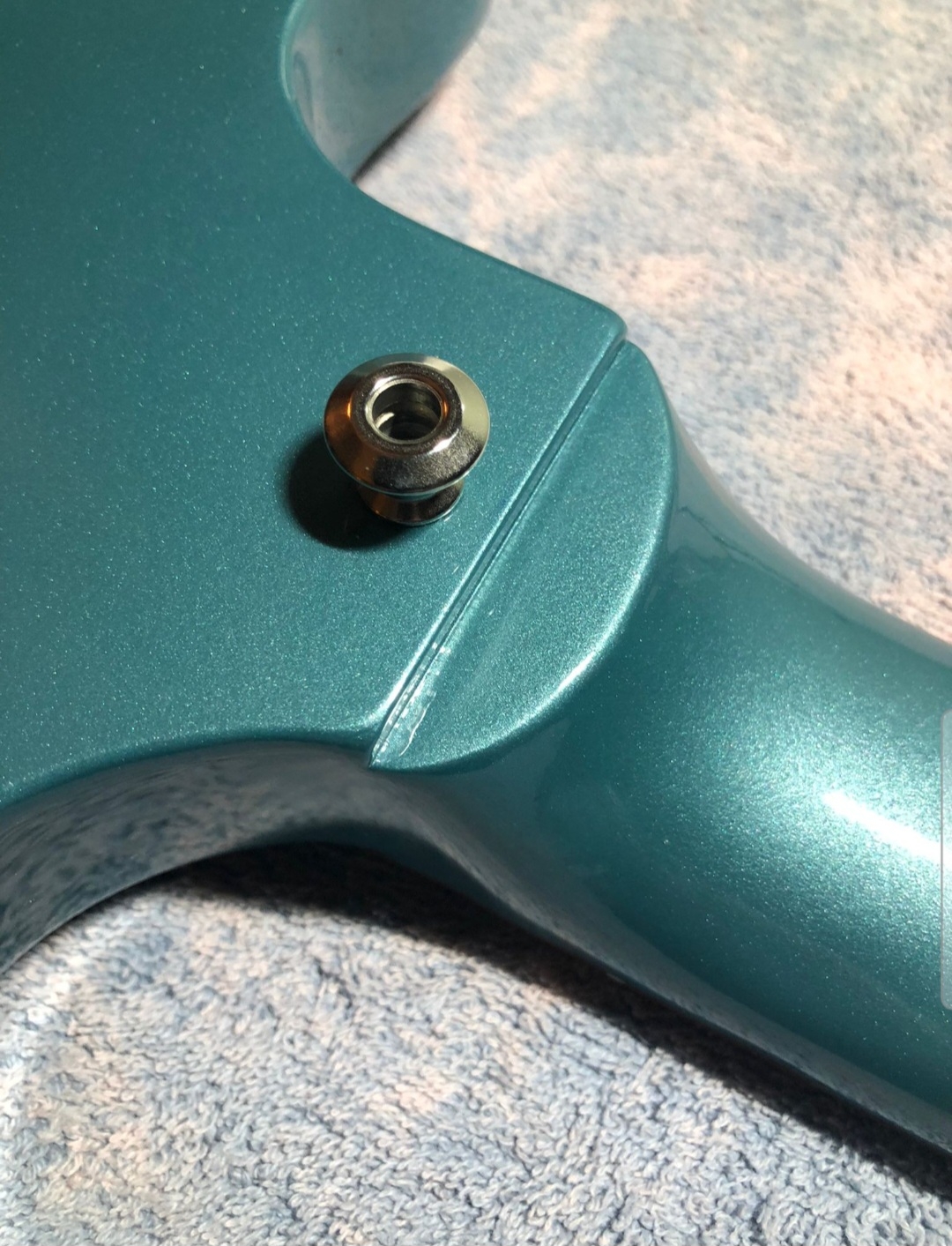
The neck pup- the little wire coming out from within the potted spool broke off. I dont know if it was a poor install, or my thumb leaning on the pup that caused it.
I did move the strap button to the neck heel and it sat perfectly on me.


