Enjoy the benefits of a premium membership!
Upgrade Account
-
TalkBass has been independent since 1998. Add your voice.
Create a free account to reply to discussions, view embedded media, and browse with fewer display ads.
Join free Log in
Want zero display ads or expanded classifieds tools? Compare plans.
You are using an out of date browser. It may not display this or other websites correctly.
You should upgrade or use an alternative browser.
You should upgrade or use an alternative browser.
Going from 4 to 6 stings?
- Thread starter AmstaffsnIbanez
- Start date
More options
Who Replied?
Practice a lot. Like about twice as much as you think necessary. If you're wise, you'll keep playing 4s and 5s too, to give you the ability to switch back and forth easily. Need to take my own advice - I'm good on 4s and 5s pretty equally, but I till sometimes stumble on the high C on the 6s. (Actually, it's more that the presence of the high C makes me stumble on the other strings. just needs more practice time...)
Last edited:


Low B/high C?How do I do it haha! How could I start to incorporate the the additional strings?
I played 6 string acoustic so the transition was pretty seamless. The only issue I had was less about my playing, and more about how the 2 guitarists felt about my incorperating it. They swore up and down that a Bass VI wasn't a bass. Eventually I caved and only brought it out when I wanted to ruffle some feathers. Made a fair profit, to get it I traded a $100 synth I repaired and turned the Bass for $1200. The guy I sold it to had it for sale a month later for $200 more. (Good for him  )
)
BTW...Bholder pretty much nailed it, practice... If possible I'd go with the low B and High C as Michedelic questioned.
A side note... in the movie Spinal tap, the guitar that Nigal didn't want the interviewer to touch, or even look at, was actually a 1966 bass VI.
)BTW...Bholder pretty much nailed it, practice... If possible I'd go with the low B and High C as Michedelic questioned.
A side note... in the movie Spinal tap, the guitar that Nigal didn't want the interviewer to touch, or even look at, was actually a 1966 bass VI.
Yeah
That's my main thing now is not plucking the right string cause I've never play 5 either just jumped straight to 6.Practice a lot. Like about twice as much as you think necessary. If you're wise, you'll keep playing 4s and 5s too, to give you the ability to switch back and forth easily. Need to take my own advice - I'm good on 4s and 5s pretty equally, but I till sometimes stumble on the high C on the 6s. (Actually, it's more that the presence of the high C makes me stumble on the other strings. just needs more practice time...)
kinda two big steps at once, but it's do-able, just takes time and effort...Yeah
That's my main thing now is not plucking the right string cause I've never play 5 either just jumped straight to 6.

Your question makes me wonder what your reason is for moving to a 6. Are there things that you want to play that require, or would benefit from, having two more strings?

really depends on your current skill level.
i've taught quite a few students over the years who were in this exact predicament. learning triad voicing for the upper strings is always useful. using D G and C strings voicing R 3 5, 3 5 R, and 5 R 3 across different chords. then leading smoothly from one chord to the closest voicing of another ( I - IV - V - I, or I - ii6 - V - I) is a very practical goal that will expand most peoples musical understandings.
if you are just figuring things out, just learning some melodies or scales can be nice. pick a melodic tune and learn (reading or by ear) the melody in the upper register of your 6 string bass.
another intermediate step is playing scales in 10ths between the A and C strings.
enjoy!!!
i've taught quite a few students over the years who were in this exact predicament. learning triad voicing for the upper strings is always useful. using D G and C strings voicing R 3 5, 3 5 R, and 5 R 3 across different chords. then leading smoothly from one chord to the closest voicing of another ( I - IV - V - I, or I - ii6 - V - I) is a very practical goal that will expand most peoples musical understandings.
if you are just figuring things out, just learning some melodies or scales can be nice. pick a melodic tune and learn (reading or by ear) the melody in the upper register of your 6 string bass.
another intermediate step is playing scales in 10ths between the A and C strings.
enjoy!!!

Have you mastered 4 strings?



The way I did it was to get used to the presence of the extra strings without using them. So basically I used the inner 4 strings for a couple of weeks. After I got reasonably comfortable, I started adding the extra strings as appropriate. Initially it didn't necessarily work out to try and use the extra strings impromptu in a playing situation. Rather I had to figure out and practice how I would use the extra strings before actually adding them in a live situation.
If you really think you want to play 6, my advice is put your other basses away and play the 6 exclusively for an extended time. The transition will be a lot slower and harder if you constantly change the number of strings.
Expect that your playing ability will be degraded at first. I would say it took me about 2 years to get my proficiency back were it was before I added strings. Also the 6 string will most likely require you to expand and modify your muting technique. My 4-string muting technique seemed to work fine with a 5, but was inadequate for a 6.
For years I felt like a 4-string bassist with a few extra strings. It took about a decade before I really started feeling like a naturalized 6-string bassist. At this point, I feel most at home on the 6 and play it almost exclusively in order to maintain the highest proficiency. I have 4s and 5s and could easily use them if I had a good reason. However, I find that if I play a 4 or 5 for an hour or so, that it starts degrading my fluency on the 6, which I don't like. So I play the 6 even when I don't expect to use the low B or high C. At this point, they are not in the way and I miss them when they are absent.
Good luck!
If you really think you want to play 6, my advice is put your other basses away and play the 6 exclusively for an extended time. The transition will be a lot slower and harder if you constantly change the number of strings.
Expect that your playing ability will be degraded at first. I would say it took me about 2 years to get my proficiency back were it was before I added strings. Also the 6 string will most likely require you to expand and modify your muting technique. My 4-string muting technique seemed to work fine with a 5, but was inadequate for a 6.
For years I felt like a 4-string bassist with a few extra strings. It took about a decade before I really started feeling like a naturalized 6-string bassist. At this point, I feel most at home on the 6 and play it almost exclusively in order to maintain the highest proficiency. I have 4s and 5s and could easily use them if I had a good reason. However, I find that if I play a 4 or 5 for an hour or so, that it starts degrading my fluency on the 6, which I don't like. So I play the 6 even when I don't expect to use the low B or high C. At this point, they are not in the way and I miss them when they are absent.
Good luck!
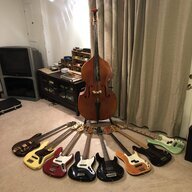
I went from 4 to 6. Musically, play material that if you play it like the record, requires you to play the low B string, and integrate that into your expanding concept. When the low B seems like a natural extension when played across the neck AND up and down as the music and part dictates, THEN think about adding in the high C string in music and moments where that fits and is musical. Generally speaking there are MANY more moments that require the low B than the high C, so approach it like that.How do I do it haha! How could I start to incorporate the the additional strings?
Depending on what you listen to, you may never hear a 6-string bass on a recording, and for whatever music that is, and just as I'd say with the low B string: Use it cautiously, sparingly if necessary and always tastefully. I think with that additional string/strings, the notes are available, and it increasingly becomes about how you use it tastefully, and what voicings of chords can be found, instead of simply being able to play both higher and lower for it's own sake. And nobody's putting a gun to your head to use ALL of the strings, at some point in EVERY song. So don't. I gig with a 5 string very often. More often than not. There are some/many songs that don't have ANY use of a low B string. So I too DO NOT use the low B string, and so it sounds more like the record that way. Self-control. A 6 string bass will (and should) test your level of self control, taste and musicality.
Last edited:

It’s doable. You should commit to playing the new 6 full time. It takes weeks to get comfortable on one. And going back and forth will throw you off.
Make sure you focus on muting. It’s vital and a huge PITA on a 6, so the faster you get that technique down, the better. Practice with headphones so you can hear the strings ringing out.
Make sure you focus on muting. It’s vital and a huge PITA on a 6, so the faster you get that technique down, the better. Practice with headphones so you can hear the strings ringing out.

FullumMusic
Commercial User
- Oct 13, 2022
- 2,008
- 5,683
- Disclosures
- Audio/Music software developer, contracted with a company you've heard of and deving my own stuff.
A 4 string is tuned to perfect 4ths. The 6 string is tuned to perfect 4ths. All the scale patterns you're used to on the 4 are on the 6, you just have more room to keep them going. All the intervals are exactly where you expect them to be relative to the note you're playing.
The hardest part of going from 4 string to 5 or 6 isn't the notes. It's learning how to play cleanly while muting the extra strings that you're not playing.
The hardest part of going from 4 string to 5 or 6 isn't the notes. It's learning how to play cleanly while muting the extra strings that you're not playing.
My feeling is the Low B tends to be more valuable than the high C. The original bassline in a lot of songs actually goes below the open E. Also singers frequently can't sing songs in the original keys, so it useful to be able to lower the bass part without having to invert various intervals. I have come across some songs I thought were originally played on the high C, but they have been pretty rare. So for most people, the high C will not be very useful.
My job entailed playing jazz trio and I was expected to solo over changes. For this type of work I think the high C can be extremely useful. You can play a solo that sounds like a bass, but I am sure most of you have heard the old joke: "Bad things happen when the drums stop...bass solo." The high C gives you easy access to a higher, more vocal range.
Some heavier forms of music feature 6 string bass quite a bit. Search for videos of Nolly Getgood.
My job entailed playing jazz trio and I was expected to solo over changes. For this type of work I think the high C can be extremely useful. You can play a solo that sounds like a bass, but I am sure most of you have heard the old joke: "Bad things happen when the drums stop...bass solo." The high C gives you easy access to a higher, more vocal range.
Some heavier forms of music feature 6 string bass quite a bit. Search for videos of Nolly Getgood.

This. Play the 6 exclusively until it feels comfortable, and mute like hell.It’s doable. You should commit to playing the new 6 full time. It takes weeks to get comfortable on one. And going back and forth will throw you off.
Make sure you focus on muting. It’s vital and a huge PITA on a 6, so the faster you get that technique down, the better. Practice with headphones so you can hear the strings ringing out.
Practice practice practice.
The B string and C string give you the option of playing more across the strings and less across the neck. Make use of that wherever you can while you're training.

Brandon Shea
Commercial User
Your muting technique is going to be really important if you're serious about making this jump. Start with your right hand, and try to play some stuff you already know. This video helped me a ton, and I think it'll serve you well no matter how many strings you have:
So... that's part of it. Good muting technique will let you use any of the six strings when you need them. With that said, how do you know when you need them?
For me, a lot of times it's a matter of convenience. One of my absolute favorite things about bass guitar is the way the fretboard lets us visualize a lot of musical concepts as shapes and patterns. The patterns will reveal themselves on a four string bass as well, but in my opinion it's a little easier to notice them with at least one extra string since it reduces the need to shift around the neck.
Simple example: say you're playing in fifth position on the neck, and you're playing C with your pinky on the E string. If you want to play a fifth lower, you no longer have to shift down to third position to hit that G – just jump down a string and play the 8th fret on your low B string and you're good to go. Your left hand should be able to keep the other strings quiet while you're doing that.
So... that's part of it. Good muting technique will let you use any of the six strings when you need them. With that said, how do you know when you need them?
For me, a lot of times it's a matter of convenience. One of my absolute favorite things about bass guitar is the way the fretboard lets us visualize a lot of musical concepts as shapes and patterns. The patterns will reveal themselves on a four string bass as well, but in my opinion it's a little easier to notice them with at least one extra string since it reduces the need to shift around the neck.
Simple example: say you're playing in fifth position on the neck, and you're playing C with your pinky on the E string. If you want to play a fifth lower, you no longer have to shift down to third position to hit that G – just jump down a string and play the 8th fret on your low B string and you're good to go. Your left hand should be able to keep the other strings quiet while you're doing that.

Begs the question of whether ANY of us (the famous ones included), have ever truly "mastered" 4 strings, MEANING: Nothing more left to learn or place to develop as a player with 4 strings?Have you mastered 4 strings?
I think even those that are presumed "masters" find ways to indicate in both a self-deprecating way, but also a very honest way that they too are ALSO still learning, developing and finding new pathways and expressions on the instrument which they hadn't found or expressed before.
"Masters" and "mastery". I think both terms are overused and those who truly achieve it are incredibly rare.

Don't overthink it. With standard tuning the intervals and patterns are all the same. You just have to get used to where the extra roots are, which is trivial if you've already internalized how the circle of fifths is laid out on the fingerboard.
On the other hand if you don't yet have it as second nature where the thirds, fourth, fifth (and sixth, sevenths etc) are for every note you play on a four string, maybe work on that a little bit first
On the other hand if you don't yet have it as second nature where the thirds, fourth, fifth (and sixth, sevenths etc) are for every note you play on a four string, maybe work on that a little bit first