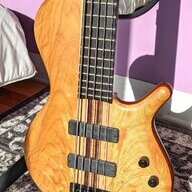
I do not actually play groove notes on the C string. I play lead solo notes on it and chordal stuff. I find that an E-C 5-string is easier to Navigate,
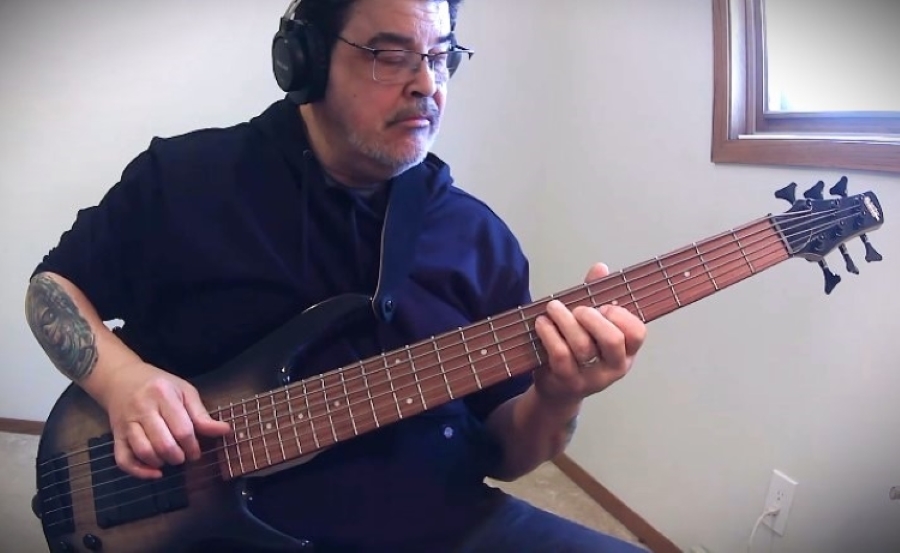
I am a multi instrument guy, so my patterns are note and chord phrases in my head, not patterns on a fingerboard although that helps as a start.. so it really did not faze me when switching. I got my six string 28 years ago. sold in 2004, then came back to it in 2015. I a scrunchie to calm the B some. Before you guys give me a hard time, it's a 36 inch scale with 19m spacing and I do not have large hands. For chordal work the E-C 5 makes more sense. That is 35 scale also 19mm spacing.
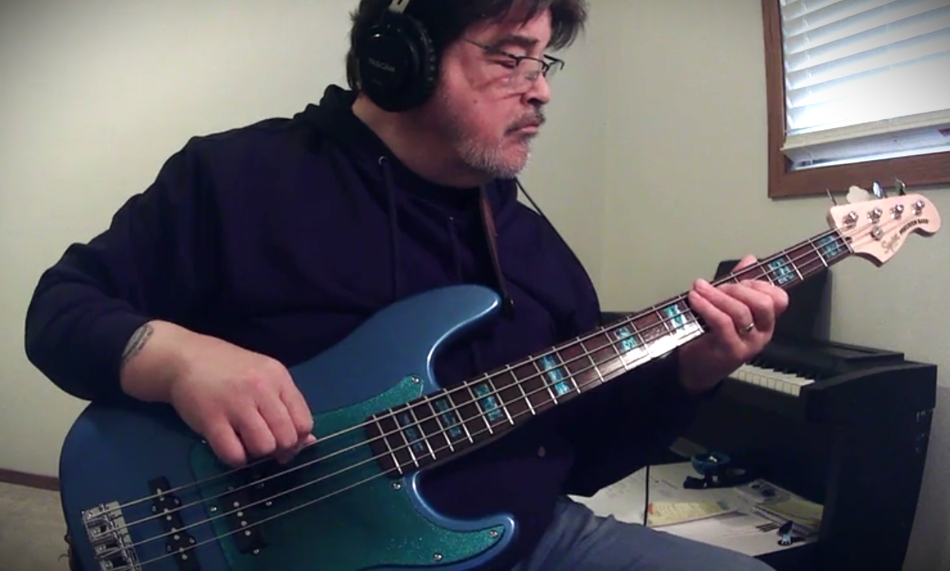
If you really want to be proficient know the fingerboard. And the ticket is one string scale exercise , major, dominant, all the minors, penta and diminished. The limit arpeggios to only 2 strings. Although everybody says, the advantage of a 6 is less shifting, that will limit you and makes going back and forth 4.5 and 6 challenging . Heck I play a 3 string bass tuned up a minor third and the trick is that one string scale and arpeggio exercise. This comes from Mr. Patitucci who is the one who inspired me to play a 6. My shifting does not diminished whether I am playing a 6 or 4. Sometimes the C is just too thin for groove support work.
I play my 6 in my improv and fusion bands and in any jam band ivitations or subs. And I unashamedly solo on it like a guitar. That's the reason I got it in the 1st place. For support duties 5 or 4. I am still a 4 string 20 fret FSO guy.. It's like an old Ford truck with 4 speeds and I happen to have a 1977 that I like to drive for short jaunt's that doesn't require to be driving a minimum of 70 mph.