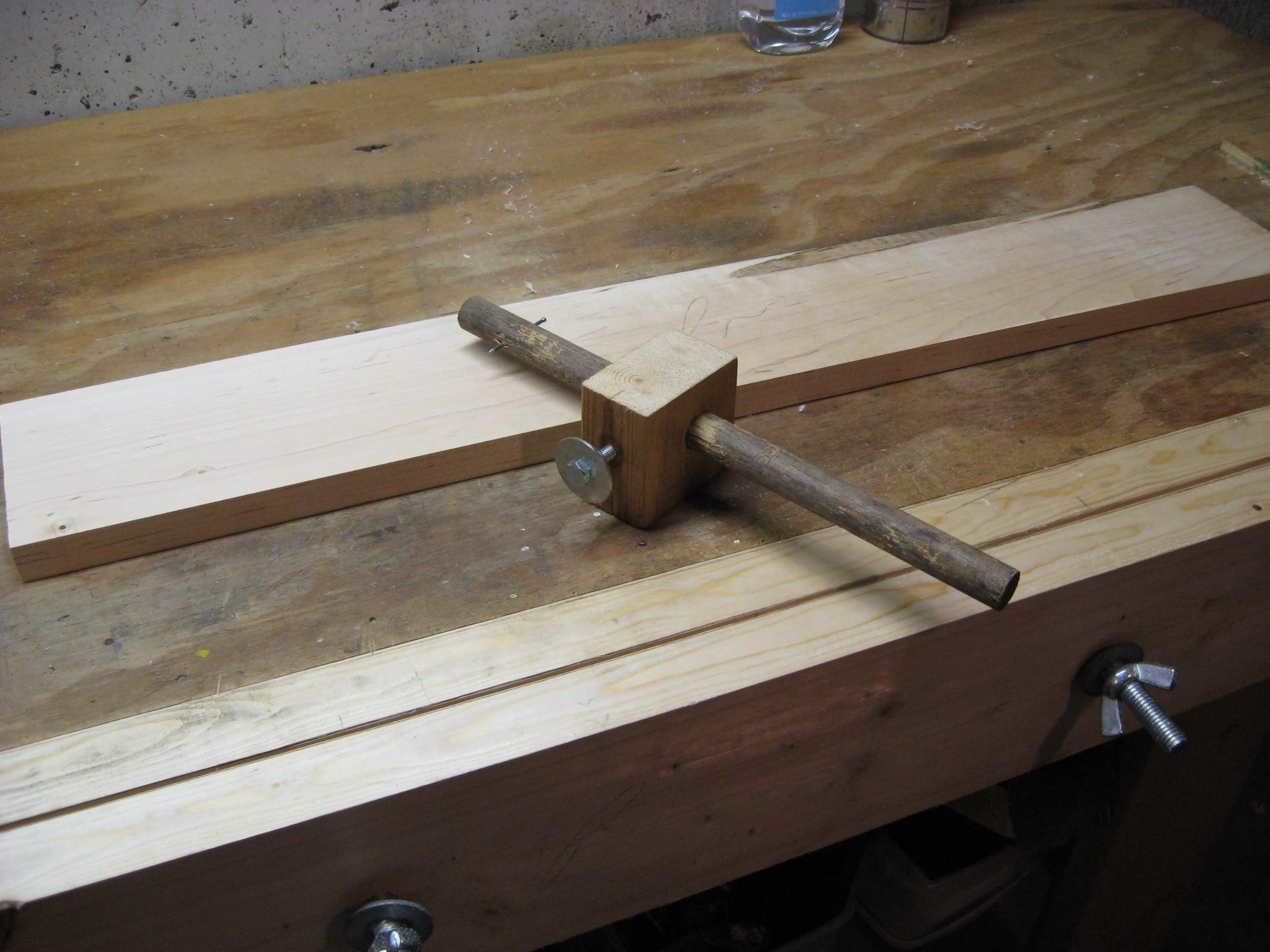
Speaking of
drawing lines, I personally never got into using marking knives. I have a couple somewhere in the drawers, but I never liked scratching lines in the wood. They are hard to see, and you can't erase them. I use fine 0.5mm and 0.7mm mechanical pencils for all my marking on wood. On dark woods, I use the Fons & Porter Mechanical Fabric Pencil; a mechanical pencil that uses special white lead:
https://www.amazon.com/Porter-Mecha...ords=fons+and+porter+mechanical+fabric+pencil
On metal, I scribe the lines using a standard Starrett 70A Scriber, one that I found at a flea market many years ago.
Lee Valley has lots of fine tools, but those are what I consider to be high end. I wish I could order half their catalog, but I'm not in that financial class.
Most of my favorite chisels I bought for a buck or three at flea markets. Good old name brands that I cleaned up and carefully sharpened. I do have some Sandvik chisels that I bought new for under $10 which are very nice. And I have a set of Marples gouges that I bought new many years ago.
I have a row of decent Stanley planes that I bought used at flea markets and on ebay (back in the day). I don't think I spent more than $20 for any of them. They are nice old ones, a little too battered to be collector grade. I tuned them up and they work great, but I really rarely use them.
Same with spokeshaves and drawknives and many of the other classic hand woodworking tools. Over the years, I've acquired a bunch of them, but they don't get much use. Collecting and messing around with old woodworking tools is a hobby in itself. And selling fine woodworking tools to men who have hobby money to spend is a big business. But in the practical world of manufacturing wood products as a business, they are usually too slow for most jobs. I mostly build basses with power saws and routers.
My main hand tools are files. If you want to spend some money on hand tools, I recommend that you buy a good collection of files.