• TalkBass has been independent since 1998. Add your voice.
    Create a free account to reply to discussions, view embedded media, and browse with fewer display ads.
    Join freeLog in
    Want zero display ads or expanded classifieds tools? Compare plans.

Gotoh 206: Rants and raves

It's a discontinued and somewhat rare bridge. I got one nearly 10 years ago for a Warmoth build, and liked it, but didn't love it. It has more parts than any bridge I'd ever seen:

(Borrowed pic)
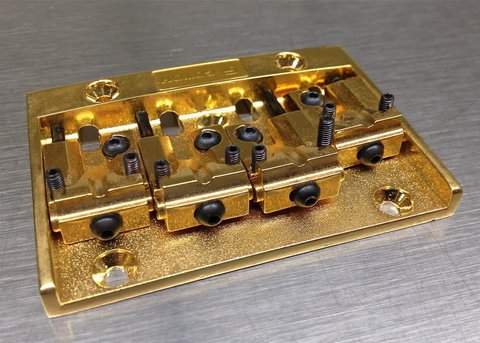
IMG_1472.jpg


If you look at the saddles, there is actually a bonus piece that lays on top of the saddle. Apparently it's there to help (?) raise the action. I had trouble getting the action low enough. I tweaked, shimmed the neck, shimmed more... no success. Took me a while to figure out that they're removeable:

(my pic)
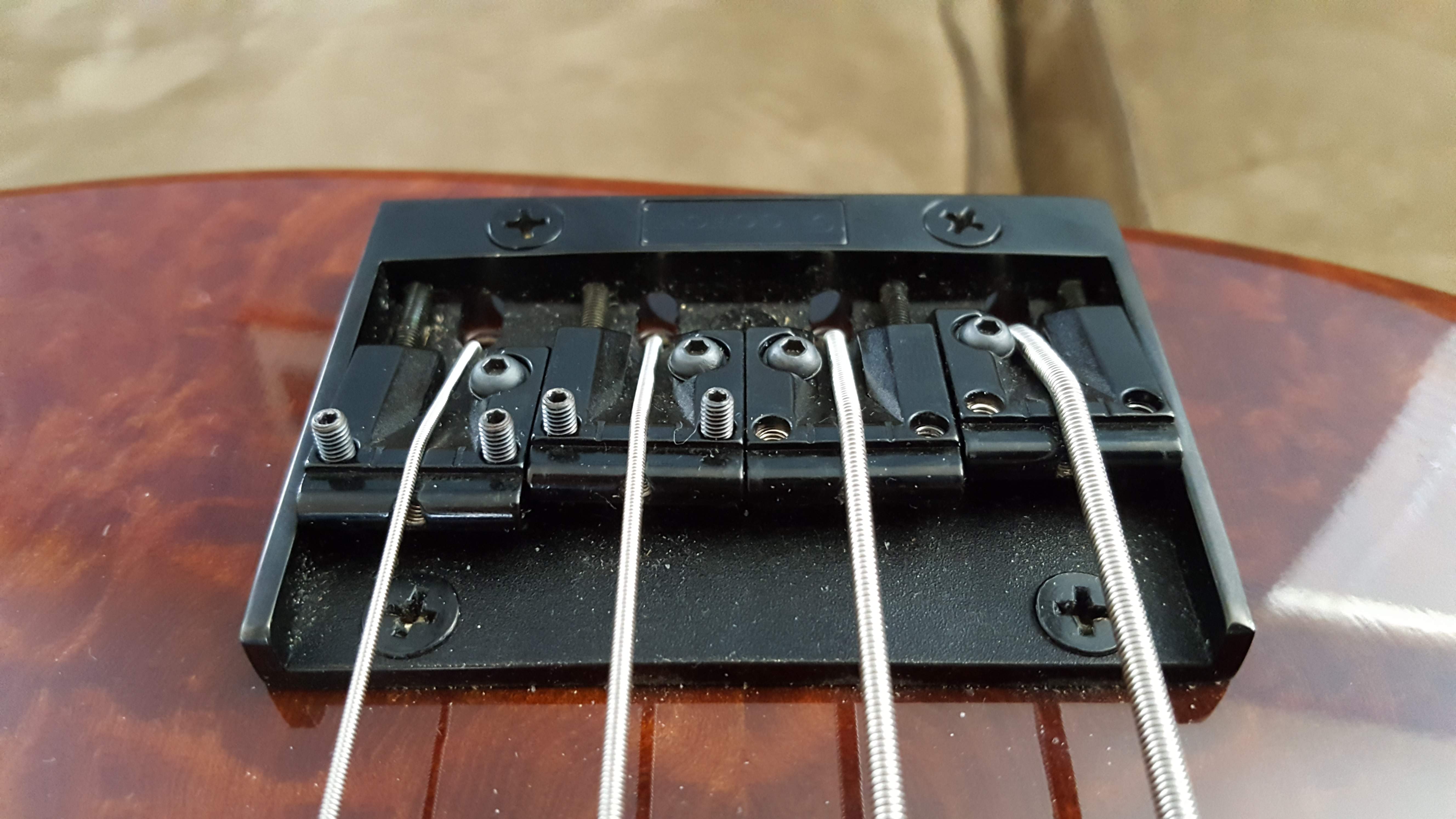
20170304_124601.jpg


Removing that piece corrected the action.

They're not terribly visible, but there are 3 notches per saddle to adjust spacing. Also, the removeable piece is fully adjustable for spacing. This saddle is mind-numblingly adjustable. And it's smooth and elegant.. and heavy. Except for one thing... look at those giant honkin' grub screws! They're sharp and uncomfortable. They cut me. They pull threads out of my shirts. I filed, sanded, and even chucked them into my drill press to try to smooth them out. No improvement. So I finally got around to figuring out their size (M3 x .5) and ordered smaller ones from eBay, for less than 5 bucks shipped. The pic above shows the E and A saddles with them in place. Massive improvement. Finally, I'm satisfied with the bridge.

Look at the size difference:
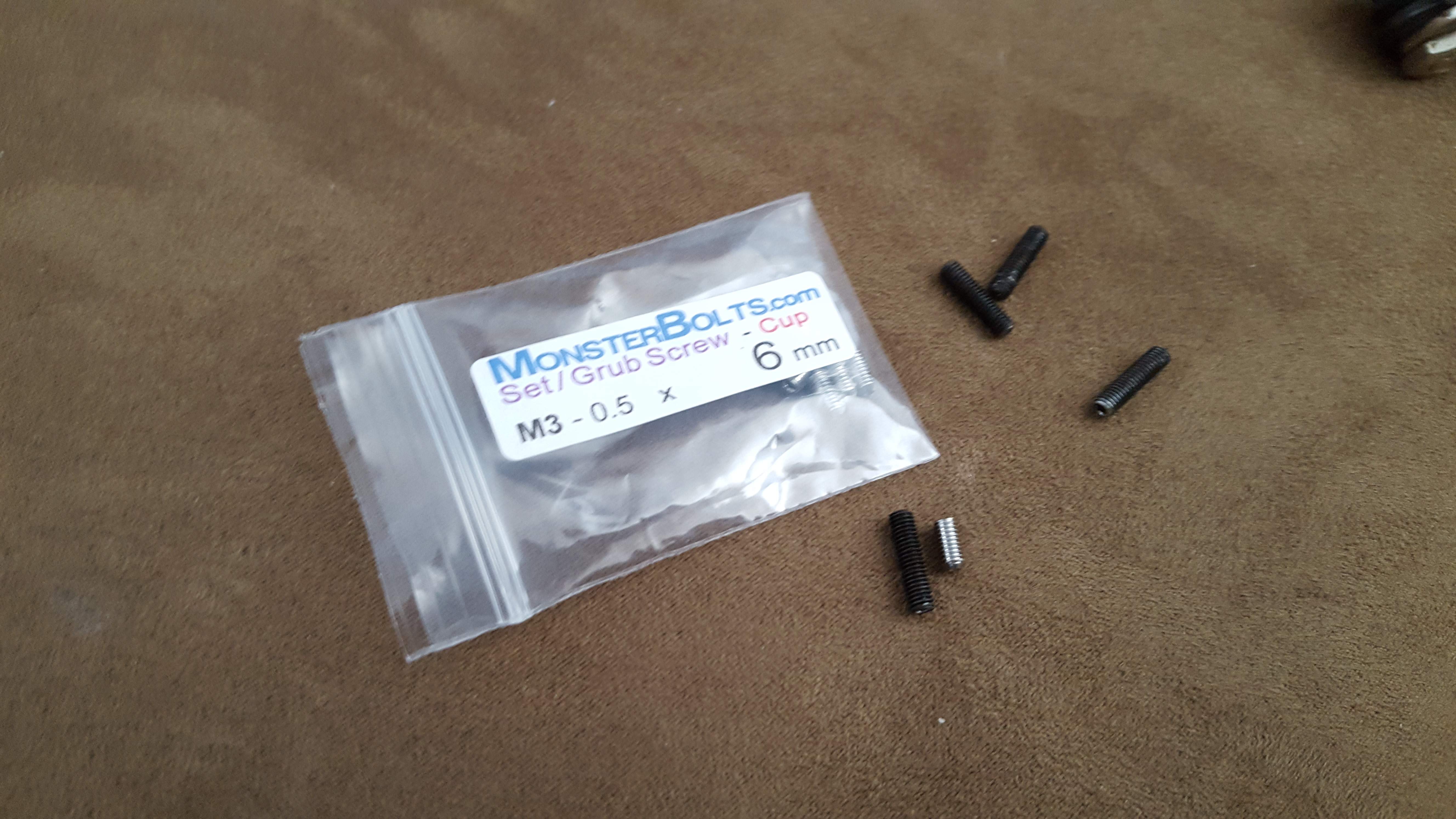
20170304_124536.jpg


I can't recommend this bridge enough, if you want a modern bridge that's highly adjustable. But good luck finding one. Hopefully this thread helps someone; I struggled finding information about the 206 online.
 
  • Like
Reactions: Zooberwerx
The pieces you removed are the saddles. You now have the string resting on the saddle carrier where the witness point is ill-defined. You say you shimmed the neck and shimmed it more without success - then I am pretty sure you are not shimming it properly. My best advice is to learn how to shim it properly and put the saddles back in. Or use an entirely different bridge - you are negating the features of this one.
 
  • Like
Reactions: kodiakblair and JLS
Well, if you're gonna comment on here and tell me I'm doing it all wrong, then I'm going to- uh, listen and pick your brain. :woot:

The saddle carrier has 3 notches on it that seem to have no function with respect to the (underside of) the saddle. This is what led me to believe resting the string on it was an option. The notch holds the string securely, i.e. I have to really yank to dislodge it. It certainly seems as secure as a bent plate bridge threaded saddle.

The string break angle over the saddles looks nearly identical to the Gotoh 201 I have on another bass. The 206 is strung through body and that definitely helps tighten up that angle. Is there a reason this setup is bad if the sound isn't compromised? I've played and listened to the bass both ways, and the only difference is the action is uncomfortably high with the proper saddles installed.

As for the shimming, I've done a strip of business card, and then 2, tucked in the back of the pocket to induce some angle, and then some full pocket shims to raise the fretboard to the strings. Neither were effective. I can hardly believe that Warmoth body + Warmoth neck + Gotoh 206 can't result in a straightforward setup with low action.

The truss rod setup is fine, btw.

Thoughts?
 
I've used that bridge on a number of basses, and in all cases a shim was necessary. But I've never had to go beyond about 15 thou. at the butt end of the pocket to get plenty of adjustment room on the saddles , right down to laying on the frets. Perhaps your parts were cut differently.

If the bridge works for you without the saddles in place, go for it. The grooves you speak of were not intended as string-spacing grooves, but once again, if it you wish to use them that way that's fine. I think you could get better functionality from that bridge, but if you are happy with it the way it is, leave it that way.
 
They're not terribly visible, but there are 3 notches per saddle to adjust spacing.
yeah, i barely see them there, and i assume your strings are resting on the center ones.

the key question is, does the string rest only on that notch or does it also contact the area of saddle in front of it?

also, if so than it would mean the witness point is way further back than before; can the bridge saddles be moved far enough forward to still intonate right?

if it safely clears that area in front of the notch and the strings themselves are firmly staying in place and if it intonates, then i'd say you have a pretty viable solution here.
 
Why am I paraniod. I suspect the saddles you took off are steel and the carriers are pot metal that will get eaten alive by the strings. Is it my imagination or are the witness points on those strings well behind the carriers.
 
The biggest issues I saw with these bridges were the lock-down hex screws - often people would overtighten and the saddle would tilt upwards. So you'd set the height perfectly, go to lock it down, then suddenly the saddle is too high. All it needed was to be tightened just "snug". Similarly, I've seen some damage from people trying to adjust the saddle without first LOOSENING the hex screw.
 
The pieces you removed are the saddles. You now have the string resting on the saddle carrier where the witness point is ill-defined. You say you shimmed the neck and shimmed it more without success - then I am pretty sure you are not shimming it properly. My best advice is to learn how to shim it properly and put the saddles back in. Or use an entirely different bridge - you are negating the features of this one.
Old post but does need to be addressed......The pieces removed are NOT the saddles. They are the saddle height adjustment screws.
 
This was great idea actually. I have an old Ibanez sr1000e with the Ibanez gotoh bridge. Action was too high and the neck is a little messed up. I removed the saddles. Much better action and the tone is the same. Thanks for the idea!
 
This decent bridge is over complicated, and many people crack the saddle carrier back end by over tightening the hold down screw while the intonation screw thread pivot half-moons rotate so they are not flat on the bridge plate and thusly push up on the hollow underneath the saddle slide. Quite fiddly, but the time it takes to set up is often worthwhile, as there is zero play or rattle.