
Enjoy the benefits of a premium membership!
Upgrade Account
-
TalkBass has been independent since 1998. Add your voice.
Create a free account to reply to discussions, view embedded media, and browse with fewer display ads.
Join free Log in
Want zero display ads or expanded classifieds tools? Compare plans.
You are using an out of date browser. It may not display this or other websites correctly.
You should upgrade or use an alternative browser.
You should upgrade or use an alternative browser.
Graphic or Parametric eq?
- Thread starter zultimatez
- Start date
More options
Who Replied?
Yup. Often you can do with a single parametric filter what would take 2-3 or more to accomplish with a 1/3-octave graphic.i've used a real parametric EQ for my PA system for years now.
it does sound better, mainly because it forces you to mix with your ears, not your eyes. too many people just grab sliders on the graphic and "sculpt" them into a curve that they expect to sound good, without even listening as they do so.
Once I saw what a parametric EQ could do, I slowly but surely ended up trading out all the 1/3- and 2/3-octave graphics I was using for various applications. I now use parametrics exclusively, no matter what the application, for everything from PA to my home theater - even on my computer system.
Yup a super-tight filter or two to kill any feedback with surgical precision is usually all thats needed.done properly, you'll be surprised how much of the sound you can just leave alone. with my system, most of the parametric's 5 bands are usually bypassed!
Ill have to part company with you on that one LOL! Im using a vintage Yamaha digital stereo parametric unit in my bass rack now (replacing an analog parametric and graphic). Ive used its memory settings for fine-tuning both of my basses to our bands PA system, basically to ensure that all notes from the lowest to the highest come through a relatively equal volume. Did the same thing for the system at a church I play at a lot, and the 2-15 cabinet I use for practicing at home. Much better sound quality in all instances!the rane PE17 is a good EQ that can be scored used for a couple hundred bucks.
(it's totally overkill for an electric bass..
Regards,
Wayne A. Pflughaupt
Pedulla Club #45
I find parametric EQs extremely easy to use:
1) Crank gain to max
2) "Sweep" the frequency slowly through from bottom to top until the frequency you want to boost (or cut) jumps out at you (and it will)
3) Adjust the gain to provide the degree of boost (or cut) on that frequency.
+1. Really helps you to adjust the exact frequencies that need to be adjusted to get the sound you're looking for.
That being said, graphic EQs are more intuitive.
Jazzdogg
Less barking, more wagging!
As a bassist, I think it’s my responsibility to understand my instrument, the electronic signal path, the loudspeaker/listening room interface, and how to select and use the right tools for each job. My first priority is the sound produced by my bass, and my second priority is to achieve a workable balance between the sound produced by my bass cabinets and the listening environment - in cooperation with the soundman.
I think of instruments and human voices in terms sonic territory and timbre. When I’m running FOH sound, I like the surgical precision of parametric equalization. But as a bassist, I find it’s easier to adjust the rotary controls on my B1500 than it is to adjust the parametric EQ on my iAmp800 while playing.
I like graphics for FOH is because I’m used to thinking about room and loudspeaker response depicted graphically, and it’s easier to learn to use a graphic EQ than a parametric; I learned how to pink out a room long before I got a chance to run the board. After I'd spent some time developing my ears and learning about center frequenciess, it was easier to learn how to use a parametric.
On my PA setup I use parametric or semi-parametric EQ to tweak sources, and 1/3-octave graphics to EQ loudspeakers in the venue. Lately, I've been considering an all-in-one digital signal processor, like the dBX Driverack, or the Carvin XD88 for FOH:
Invalid Link Removed
I think of instruments and human voices in terms sonic territory and timbre. When I’m running FOH sound, I like the surgical precision of parametric equalization. But as a bassist, I find it’s easier to adjust the rotary controls on my B1500 than it is to adjust the parametric EQ on my iAmp800 while playing.
I like graphics for FOH is because I’m used to thinking about room and loudspeaker response depicted graphically, and it’s easier to learn to use a graphic EQ than a parametric; I learned how to pink out a room long before I got a chance to run the board. After I'd spent some time developing my ears and learning about center frequenciess, it was easier to learn how to use a parametric.
On my PA setup I use parametric or semi-parametric EQ to tweak sources, and 1/3-octave graphics to EQ loudspeakers in the venue. Lately, I've been considering an all-in-one digital signal processor, like the dBX Driverack, or the Carvin XD88 for FOH:
Invalid Link Removed
Spot on, except for the "don't sound as good" part. What standard are you using to determine this? How can one general category of EQ filter sound "better" than another, especially when you use them to make your instrument "sound good" in the first place?
To the OP:
If you want to do broad, general timbre adjustments with a good visual, choose a graphic. If you want to do more precise adjustments, go for the parametric (fully parametric, that is - adjustable Q and all.) Both have their unique uses.
I don't believe you specified whether you want a rack-mounted unit or not. If you want to get a graphic EQ but don't have a rack, try the MXR 10-band Graphic EQ pedal for $120. Granted, you won't get anywhere near the level of control that a 31-band will give you, but it serves its function well enough, given its size and price.
Sorry, i want a rockmount unit, I'm using it to put in my live rig.
As a bassist, I think its my responsibility to understand my instrument, the electronic signal path, the loudspeaker/listening room interface, and how to select and use the right tools for each job. My first priority is the sound produced by my bass, and my second priority is to achieve a workable balance between the sound produced by my bass cabinets and the listening environment - in cooperation with the soundman.
I think of instruments and human voices in terms sonic territory and timbre. When Im running FOH sound, I like the surgical precision of parametric equalization. But as a bassist, I find its easier to adjust the rotary controls on my B1500 than it is to adjust the parametric EQ on my iAmp800 while playing.
I like graphics for FOH is because Im used to thinking about room and loudspeaker response depicted graphically, and its easier to learn to use a graphic EQ than a parametric; I learned how to pink out a room long before I got a chance to run the board. After I'd spent some time developing my ears and learning about center frequenciess, it was easier to learn how to use a parametric.
On my PA setup I use parametric or semi-parametric EQ to tweak sources, and 1/3-octave graphics to EQ loudspeakers in the venue. Lately, I've been considering an all-in-one digital signal processor, like the dBX Driverack, or the Carvin XD88 for FOH:
Invalid Link Removed
I've got a pretty straight forward signal path. I got from bass to a bbe max-t to an avatar 4x12. I don't use foh sound, it's all amp. Maybe you can point me in the right direction on how to fully dial in my sound. Most of the time i play through a 5 string jazz. Generally the mids sound good, but the bottom is too boomy, and the highs are thin.
This is a really good EQ for the asking price. I've got two of the 622B's (which is the two channel version of the same thing) and use them all the time. Perfect tool for hauling out whatever is making things boomy and subtly changing the voicing of the highs.
As an eBay Associate, TalkBass may earn a commission from qualifying purchases.
Piece of cake with a parametric EQ! The problem is probably somewhere in the 60-200 Hz range. Just dial in a filter for about 1/3-octave bandwidth, and boost it +6-8 dB with the gain knob. Play a low note in the bass, then sweep the frequency knob and listen. When you hit the frequency that’s causing the “boom,” it’ll leap out like crazy.I don't use foh sound, it's all amp. Maybe you can point me in the right direction on how to fully dial in my sound. Most of the time i play through a 5 string jazz. Generally the mids sound good, but the bottom is too boomy, and the highs are thin.
At that point you’ve isolated the offending frequency. Then you use the gain knob again to cut that frequency until you get the boom goes away. At that point you might try fine-tuning the bandwidth, wider or narrower. If you adjust it too narrow, the boom will start to come back. You might start with a narrow setting, and then increase the bandwidth to the point where the boom is eliminated.
For the thin highs, you can use a similar approach. The problem here will be somewhere above 200 Hz or so. Start with something like a 1/3-octave filter, boost a few dB. Play a high note on the bass, then sweep the frequency control and listen. When you hit the sweet frequency, you should hear the highs jump out. Again, fine-tune the boost and bandwidth to taste.
Regards,
Wayne A. Pflughaupt
Pedulla Club #45
Jazzdogg
Less barking, more wagging!
I've got a pretty straight forward signal path. I got from bass to a bbe max-t to an avatar 4x12. I don't use foh sound, it's all amp. Maybe you can point me in the right direction on how to fully dial in my sound. Most of the time i play through a 5 string jazz. Generally the mids sound good, but the bottom is too boomy, and the highs are thin.
Wayne beat me to it!
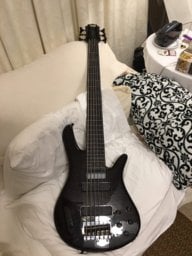
In the 80's, a keyboardist loaned me his "Green faced w/ rust knob" original version of the Furman PQ-3. I had only read about them until then and I utilized his weekly until he moved, but I digress.
All of the above regarding FULLY parametrics is true. It's a different learning curve after using graphic EQ, but once you get the feel of it, I could make any tone I desired. More on the Furman: I was able to use in front of my Kustom 200-B, which afterward sounded anemic without the PQE.
Wiith a lower wattage amp, you can sound ENORMOUS with this device. Also, if you love your passive pickup basses; plug into a Furman PQE or an other FULLY parametric unit and you can have both worlds, as active pickups are just battery powered on-board pre amps. You can enjoy significant boost without modifying your instrument or purhasing an active bass.
Another advantage of the Furman is that it has an independent "pre-amp only" funtion. With that engaged, I had the volume I expected out of that old K200B
head. With the pre-amp tuned off, then I could sculpt my tone and the preamp knob became a volume knob only.
Fast forward to the current century, and I was able to get the black faced version from ebay. Fully funtional. Furman also made a 4-band, as well as as a 6-band [ dual 3] and 8-band [dual 4]
OK...Here's where I need help: Furman pq-3 and their siblings are inherently noisy. This is of little consequence in a live band environment. I have read on the internet where someone modded a pq-3 with some minor replacement components, but I cannot find that post. If anyone knows how to remedy this PLEASE let me know. With that, I will say that a Furman pq3 is the best bang for the buck component you can buy, IMO.
Is Fully parametric better than graphic? Repeating what others have posted' there are things you can do with a fully parametric device that yo cannot do with a graphic. Also, technically, the frequency gaps between each graphic slider are just that...gaps.. which a prametric fully covers. Ultimately, OP....use your ears, not opinons.
All of the above regarding FULLY parametrics is true. It's a different learning curve after using graphic EQ, but once you get the feel of it, I could make any tone I desired. More on the Furman: I was able to use in front of my Kustom 200-B, which afterward sounded anemic without the PQE.
Wiith a lower wattage amp, you can sound ENORMOUS with this device. Also, if you love your passive pickup basses; plug into a Furman PQE or an other FULLY parametric unit and you can have both worlds, as active pickups are just battery powered on-board pre amps. You can enjoy significant boost without modifying your instrument or purhasing an active bass.
Another advantage of the Furman is that it has an independent "pre-amp only" funtion. With that engaged, I had the volume I expected out of that old K200B
head. With the pre-amp tuned off, then I could sculpt my tone and the preamp knob became a volume knob only.
Fast forward to the current century, and I was able to get the black faced version from ebay. Fully funtional. Furman also made a 4-band, as well as as a 6-band [ dual 3] and 8-band [dual 4]
OK...Here's where I need help: Furman pq-3 and their siblings are inherently noisy. This is of little consequence in a live band environment. I have read on the internet where someone modded a pq-3 with some minor replacement components, but I cannot find that post. If anyone knows how to remedy this PLEASE let me know. With that, I will say that a Furman pq3 is the best bang for the buck component you can buy, IMO.
Is Fully parametric better than graphic? Repeating what others have posted' there are things you can do with a fully parametric device that yo cannot do with a graphic. Also, technically, the frequency gaps between each graphic slider are just that...gaps.. which a prametric fully covers. Ultimately, OP....use your ears, not opinons.

Passinwind
I know nothing.
- Dec 3, 2003
- 23,049
- 45,917
- Disclosures
- Designer/Toaster Tech @ Passinwind Electronics
This is a really good EQ for the asking price. I've got two of the 622B's (which is the two channel version of the same thing) and use them all the time. Perfect tool for hauling out whatever is making things boomy and subtly changing the voicing of the highs.
Cool, and a pretty good deal too. I have a 642B in my monitor rack, which is also a really nice piece.
Ashly PQX-571s are going for as low as $125 or so on eBay these days, and are very robust and pretty nice sounding IME. We have three of those in the club system I mix on. I used one in my bass rack for quite a while as well. Symetrix and Rane units are even cheaper if you keep your eyes open.
As an eBay Associate, TalkBass may earn a commission from qualifying purchases.
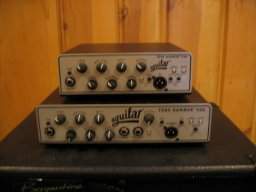
In the 80's, a keyboardist loaned me his "Green faced w/ rust knob" original version of the Furman PQ-3. I had only read about them until then and I utilized his weekly until he moved, but I digress.
All of the above regarding FULLY parametrics is true. It's a different learning curve after using graphic EQ, but once you get the feel of it, I could make any tone I desired. More on the Furman: I was able to use in front of my Kustom 200-B, which afterward sounded anemic without the PQE.
Wiith a lower wattage amp, you can sound ENORMOUS with this device. Also, if you love your passive pickup basses; plug into a Furman PQE or an other FULLY parametric unit and you can have both worlds, as active pickups are just battery powered on-board pre amps. You can enjoy significant boost without modifying your instrument or purhasing an active bass.
Another advantage of the Furman is that it has an independent "pre-amp only" funtion. With that engaged, I had the volume I expected out of that old K200B
head. With the pre-amp tuned off, then I could sculpt my tone and the preamp knob became a volume knob only.
Fast forward to the current century, and I was able to get the black faced version from ebay. Fully funtional. Furman also made a 4-band, as well as as a 6-band [ dual 3] and 8-band [dual 4]
OK...Here's where I need help: Furman pq-3 and their siblings are inherently noisy. This is of little consequence in a live band environment. I have read on the internet where someone modded a pq-3 with some minor replacement components, but I cannot find that post. If anyone knows how to remedy this PLEASE let me know. With that, I will say that a Furman pq3 is the best bang for the buck component you can buy, IMO.
Is Fully parametric better than graphic? Repeating what others have posted' there are things you can do with a fully parametric device that yo cannot do with a graphic. Also, technically, the frequency gaps between each graphic slider are just that...gaps.. which a prametric fully covers. Ultimately, OP....use your ears, not opinons.
That brings back memories. Most gear heads of my age or a touch older (I'm 53) had the classic rack system back in the late 70's/early 80's.... Alembic pre/Furman PQ3/Crown or BGW power amp into either a Bag End stack or JBL cabs.

+3, hence my point about parametrics being good because they force you to EQ with your ears instead of your eyes.
But they're worse if you don't understand how they work.

I'm no longer surprised when I see people I know have been playing for decades and they don't have a real clue as to how their gear works. The funniest is when they want to know what EQ settings I'm using on a gig. Why? Unless you're using the same rig in the same band with the same bass in the same place on the same night and you're ME...


That brings back memories. Most gear heads of my age or a touch older (I'm 53) had the classic rack system back in the late 70's/early 80's.... Alembic pre/Furman PQ3/Crown or BGW power amp into either a Bag End stack or JBL cabs.
Guilty as charged. One of the happiest days of my gigging life was when I got my head out of my butt and stopped dragging around the following rig everywhere:
Ashley preamp.
Biamp brand 3 way crossover.
I don't recall what fully parametric EQ I had.
Carver PM 1.5 amp for lows and mids.
Crown DC300 for highs
I built the Birch plywood rack for it.
Two JBL 4530 scoop bass bins (no joke)
Two custom built small 2-12 cabs
Two horn arrays
When I read about the rig Bootsy travelled with I felt an immediate kinship. The funny thing was this rig sounded okay to me. Not even better than good... but hey, look at all of my fancy gear.


And since I didn't like to play loud, it was even more pointless. So when I stumbled across a head that sounded exactly like the ideal sound of my basses in my head without tweaks, I was in heaven. That was an Amplified Music Products BH-420 and I haven't used an amp I've had to tweak since. But I sure as hell learned how along the way.
I think a lot of the anti parametric sentiment comes from the dumbing down of EQ sections in recent years by the amp manufacturers. I have no problem with a good FULLY parametric EQ. That said, lots of makers are replacing a 10 band graphics with 1 or 2 bands of semi parametric and hi and low shelving and this has no where near the capability of a 10 band graphic. But, as has been already said here, a lot of ppl don't really know how to a graphic EQ so maybe its for the best. I just see that kind of EQ a bit amateur.
I really miss the Q knob on the semi's. I find my self as likey to widen whats boosted as I am to boost it further. It has a similar but not the same effect. Semi parametrics seem cut off at the knees.
I really miss the Q knob on the semi's. I find my self as likey to widen whats boosted as I am to boost it further. It has a similar but not the same effect. Semi parametrics seem cut off at the knees.
Guilty as charged. One of the happiest days of my gigging life was when I got my head out of my butt and stopped dragging around the following rig everywhere:
Ashley preamp.
Biamp brand 3 way crossover.
I don't recall what fully parametric EQ I had.
Carver PM 1.5 amp for lows and mids.
Crown DC300 for highs
I built the Birch plywood rack for it.
Two JBL 4530 scoop bass bins (no joke)
Two custom built small 2-12 cabs
Two horn arrays
When I read about the rig Bootsy travelled with I felt an immediate kinship. The funny thing was this rig sounded okay to me. Not even better than good... but hey, look at all of my fancy gear.
And since I didn't like to play loud, it was even more pointless. So when I stumbled across a head that sounded exactly like the ideal sound of my basses in my head without tweaks, I was in heaven. That was an Amplified Music Products BH-420 and I haven't used an amp I've had to tweak since. But I sure as hell learned how along the way.
+1 I remember getting the first 'small amp' when it was introduced (I don't think Walter Woods was in business yet... could be wrong), the GK400RB (sometime in the very early 80's or late 70's I think). When it came from UPS and I pulled it out of the box, I thought 'what have I done'
It looked like a joke (at the time). I plugged it in, and my big rack system was for sale the next day
Parametric.
Tone: You can boost or cut at just the right place, and just the right bandwidth (number of frequencies). Quite often (if not usually) a band on a graphic will be too high or too low; one band will be too narrow, two will be too narrow, three or four may be just right but not centered on the right frequencies).
Room: If you walk the room you will often find a note that's so much louder than the rest that it ruins the entire mix. With a parametric you can fix this without killing your tone. With a graphic, you'll pull out far too wide a swath of frequencies - like turning down 5 keys (or more) on a piano to fix the one that's too hot).
The nicest one out there is the Rane PEQ55, which is a good value if you can find one used (I have one I don't need, as it's built into the new console).
Tone: You can boost or cut at just the right place, and just the right bandwidth (number of frequencies). Quite often (if not usually) a band on a graphic will be too high or too low; one band will be too narrow, two will be too narrow, three or four may be just right but not centered on the right frequencies).
Room: If you walk the room you will often find a note that's so much louder than the rest that it ruins the entire mix. With a parametric you can fix this without killing your tone. With a graphic, you'll pull out far too wide a swath of frequencies - like turning down 5 keys (or more) on a piano to fix the one that's too hot).
The nicest one out there is the Rane PEQ55, which is a good value if you can find one used (I have one I don't need, as it's built into the new console).

I prefer a good parametric,
But the best sounding unit is going to be the one that is made out of the better quality components.
Nice thing about digital desks is the abundance of parametrics available, although just like hardware there are varying degrees of quality with different plug ins.
I wanted to comment on the suggestion
Of boosting the gain and sweeping to find the offending frequency....
You can do the same thing by cutting the gain(instead of boosting) and sweeping until
the offending frequency dissappears.
this is much healthier for your ears and gear.
But the best sounding unit is going to be the one that is made out of the better quality components.
Nice thing about digital desks is the abundance of parametrics available, although just like hardware there are varying degrees of quality with different plug ins.
I wanted to comment on the suggestion
Of boosting the gain and sweeping to find the offending frequency....
You can do the same thing by cutting the gain(instead of boosting) and sweeping until
the offending frequency dissappears.
this is much healthier for your ears and gear.
[QUOTE="Q";9388595]I think a lot of the anti parametric sentiment comes from the dumbing down of EQ sections in recent years by the amp manufacturers. I have no problem with a good FULLY parametric EQ. That said, lots of makers are replacing a 10 band graphics with 1 or 2 bands of semi parametric and hi and low shelving and this has no where near the capability of a 10 band graphic. But, as has been already said here, a lot of ppl don't really know how to a graphic EQ so maybe its for the best. I just see that kind of EQ a bit amateur.
I really miss the Q knob on the semi's. I find my self as likey to widen whats boosted as I am to boost it further. It has a similar but not the same effect. Semi parametrics seem cut off at the knees.[/QUOTE]
They're dumbed down for a reason. Imagine if every owner of a particular amp had to actually learn how to use their EQ.

Then again, that sort of thing goes back to Fender Bassman amps and later Alembic preamps. It was almost like being part of a secret club if you knew how to set them flat.
The Markbass Little Mark II was a great example of people not understanding how a piece of gear works before dismissing it. Countless people looked at it and set all of the knobs to 12 o'clock, thinking they were setting the amp flat.
Then again, that sort of thing goes back to Fender Bassman amps and later Alembic preamps. It was almost like being part of a secret club if you knew how to set them flat.
I really miss the Q knob on the semi's. I find my self as likey to widen whats boosted as I am to boost it further. It has a similar but not the same effect. Semi parametrics seem cut off at the knees.[/QUOTE]
They're dumbed down for a reason. Imagine if every owner of a particular amp had to actually learn how to use their EQ.
Then again, that sort of thing goes back to Fender Bassman amps and later Alembic preamps. It was almost like being part of a secret club if you knew how to set them flat.
The Markbass Little Mark II was a great example of people not understanding how a piece of gear works before dismissing it. Countless people looked at it and set all of the knobs to 12 o'clock, thinking they were setting the amp flat.
Then again, that sort of thing goes back to Fender Bassman amps and later Alembic preamps. It was almost like being part of a secret club if you knew how to set them flat.
I prefer a good parametric,
But the best sounding unit is going to be the one that is made out of the better quality components.
Nice thing about digital desks is the abundance of parametrics available, although just like hardware there are varying degrees of quality with different plug ins.
I wanted to comment on the suggestion
Of boosting the gain and sweeping to find the offending frequency....
You can do the same thing by cutting the gain(instead of boosting) and sweeping until
the offending frequency dissappears.
this is much healthier for your ears and gear.
That's how I do it too. Then again the boost and sweep can give you a really low tech Mutron thing.


