• TalkBass has been independent since 1998. Add your voice.
    Create a free account to reply to discussions, view embedded media, and browse with fewer display ads.
    Join freeLog in
    Want zero display ads or expanded classifieds tools? Compare plans.

Grateful Dead - Wall of Sound

That's cool. I have a stereo with a full USB/iPod/iPhone interface, have a 160g iPod for my car and use my phone for streaming music, so it pretty much equals the same thing!

I go that route often also. I like the satellite sometimes because it forces me to listen to new music. Pandora through a cell phone is also very cool, although coverage is funky when you are in the middle of nowhere.
 
kellyrojo said:
I can see not diggin Phil's playing. Its really not what we think of when we normally consider the bass part in a song. Its weird but his playing just fit so well what they were doing. I can't imagine another place where it would sound good. It was almost like he was just soloing over the chord changes in the background yet somehow it works. WIERd!

Phil came from a 20th century jazz and classical background. If you put his playing in the context of a jazz group like Bill Evans with Scott LaFaro or the role of a cello player in a string quartet, it makes a lot more sense. The Grateful Dead were more interested in following their whims of the moment in reinventing music and in some cases it meant a lot of effort in reinventing the wheel and in others it meant taking traditional forms (like a contrapuntal bass line) and recasting it in a rock context. The journey meant more than the end product, so objective analysis in the context of pop music from 40 years later is somewhat futile if not meaningless. any expectations were confounded at the time, so to expect a conventional bass line out of Phil would be an exercise in frustration. We have plenty of kick ass conventional players, why not enjoy him for what he is? He's like the rest of every aspect of that band; charming, yet temperamental.

I, like others in the thread, lost a lot of interest after Keith left. I had some fun listening to Brent, but his approach was too heavy handed and knee-jerk rock and roll for me. Their playing lost a lot of possibilities after he joined, although it probably wasn't all due to him. Saw my first show in June '76, so I missed the Wall, but that show did have an equally interesting rig that was essentially a huge Sansui powered home hifi. Sounded amazing with one rig for instruments and one for vocals. I guess inter modulation distortion was a much bigger problem back then (which is why the wall had separates PAs for each instrument).

I inherited a monster Bag End 2x12 cab that looks very much like a Wall cabinet. Same woods and aluminum clamps. Doesn't sound that great and too heavy to move, so it sits in my basement.
 
  • Like
Reactions: Seth Miller
Phil came from a 20th century jazz and classical background. If you put his playing in the context of a jazz group like Bill Evans with Scott LaFaro or the role of a cello player in a string quartet, it makes a lot more sense. The Grateful Dead were more interested in following their whims of the moment in reinventing music and in some cases it meant a lot of effort in reinventing the wheel and in others it meant taking traditional forms (like a contrapuntal bass line) and recasting it in a rock context. The journey meant more than the end product, so objective analysis in the context of pop music from 40 years later is somewhat futile if not meaningless. any expectations were confounded at the time, so to expect a conventional bass line out of Phil would be an exercise in frustration. We have plenty of kick ass conventional players, why not enjoy him for what he is? He's like the rest of every aspect of that band; charming, yet temperamental.

I, like others in the thread, lost a lot of interest after Keith left. I had some fun listening to Brent, but his approach was too heavy handed and knee-jerk rock and roll for me. Their playing lost a lot of possibilities after he joined, although it probably wasn't all due to him. Saw my first show in June '76, so I missed the Wall, but that show did have an equally interesting rig that was essentially a huge Sansui powered home hifi. Sounded amazing with one rig for instruments and one for vocals. I guess inter modulation distortion was a much bigger problem back then (which is why the wall had separates PAs for each instrument).

I inherited a monster Bag End 2x12 cab that looks very much like a Wall cabinet. Same woods and aluminum clamps. Doesn't sound that great and too heavy to move, so it sits in my basement.


By 81 things had started to go down hill. Jerry was starting to show his junkie...I have some videos from that era, and he definitely out of it on stage. At that point, Brent may have been providing some structure to sort of keep things on track. I do like the fact that Brent was open to using more than just a basic piano and organ to a lesser extent.
 
Passinwind said:
That's a great one for sure. I had friends at that show, but tickets were really hard to come by and I got shut out. The Capitol was a great sounding room, I saw lots of killer non-Dead concerts there.

Invalid Link Removed was my first Dead show -- not too shabby.:cool:

Great room, indeed. I played there in November of 1991 opening for Phish and it turned out there were still some of original stage hands who had some interesting stories about the old days.

My first show: http://www.archive.org/details/gd76-06-11.sbd.jmason.7824.sbeok.shnf
My friends' older siblings at the time said the Dead were washed up and over the hill at that point.
 
BurningSkies said:
By 81 things had started to go down hill. Jerry was starting to show his junkie...I have some videos from that era, and he definitely out of it on stage. At that point, Brent may have been providing some structure to sort of keep things on track. I do like the fact that Brent was open to using more than just a basic piano and organ to a lesser extent.

What you say is true. The first two shows I saw with Brent were great: Billerica Forum ( a community skating rink with plywood over the ice) followed UMass Amherst in May of '79 were great. much more in tune vocals and high energy. But like my other heroes from the 70s, Jaco and Gil Scott-Heron, the drugs ruined them in the 80s.

Also, while I loved some Brent's synth stuff and the Hammond was great, his cheesy, crappy electric piano/DX-7 crap renders a lot of the 80s recordings unlistenable to me. drugs and god-awful synth tones are not a good match.
 
I was fortunate to experience the wall of sound many times, first at the original "Sound Test" at the Cow Palace,
which had the first configuration (sans the vocal array that hung over the drummers), then again at Santa Barbara in 1974, and at several events in the Los Angeles area during that era (memory a bit shady here, recall a 74 Hollywood Bowl gig).

At Santa Barbara, my band played as the "walk in" music before
the major crowd entered, and we just had bits an pieces of it turned on. It was amazing when fully engaged, you could walk
on the UC Santa Barbara campus 1/2 mile away and the sound was crystal clear, and you could hear Phil Lesh perfectly.

Speaking of which, as a bassist heavily influenced by Jack Casady and Phil Lesh, it was true about his approach to music. Just listen to the opening of "Friend of the Devil", a traditional bluegrass tune, Phil is playing around the rhythm. I loved his quotes where he would say "don't you dare try to follow me, just play your parts, I'm not connected to the kick drum"

Yes, the band changed after Keith left, but you have to realize that besides being broke (Lesh even play a G & L bass at some of those gigs) the PA was rented "off the shelf" and yes the road weariness had set in. Still some great shows. But for me, the Pigpen era was just absolute magic, especially because of their song selection, but the excitement of seeing a band on the way up as opposed to maintenance dose>​
 

Yes, the band changed after Keith left, but you have to realize that besides being broke (Lesh even play a G & L bass at some of those gigs) the PA was rented "off the shelf" and yes the road weariness had set in. Still some great shows. But for me, the Pigpen era was just absolute magic, especially because of their song selection, but the excitement of seeing a band on the way up as opposed to maintenance dose>​

I'm not sure that money had much to do with it. Phil was playing the G&L after rediscovering an early 60s Jazz bass. It's not like he had to sell off any of his other instruments (and unlike Jerry, he didn't give them away).

Some aspects of the PA was off the shelf, but I think that was mostly stacks and racks. They still had all of the FOH tricks going on as well as custom stage mic'ing, like the supermarket door openers triggering gates on the vocal mics, etc. That's also when they were working with Polaroid developing the SX70s focusing elements as triggers for gates for keyboard vocalists.

You are very correct about the energy thing, though. I missed the initial rise of the band with Pig, but very much enjoy the recordings from those days.

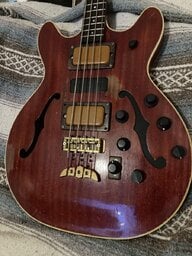
I know we've talked a lot about Starfires and here's the current evolution of mine, with 1973 Alembic Series II pickups and electronics:
 

Attachments

  • Starfire-3.jpg
    Starfire-3.jpg
    37.4 KB · Views: 54
Hi Edwin:

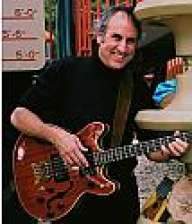
Here was my early 70's Guild_Alembic mod, pickups and bridge Alembic and electronics an early low pass/high pass filter system (not as eloquent as Series II, but still magnificent). Yes, something was sonically in the air for us to try to emulate that sound, best unpaid bass lessons in my life. Michael Dolan did the brass work before he left to go off on his own, the bridge sits on a heavy piece of brass,
with an adjustable brass nut as well
 

Attachments

  • GuildWeb.JPG
    GuildWeb.JPG
    15.1 KB · Views: 57
Speaking of which, as a bassist heavily influenced by Jack Casady and Phil Lesh, it was true about his approach to music. Just listen to the opening of "Friend of the Devil", a traditional bluegrass tune, Phil is playing around the rhythm. I loved his quotes where he would say "don't you dare try to follow me, just play your parts, I'm not connected to the kick drum"
Hell yes! To this day I will never understand it when bass players tell each other that they need to follow the bass drum. No you don't. That was a holdover from the early days of rock and roll where every bassist was a guitarist turned bassist and they didn't know what to do. Following the bass drum was an easy thing that they could do. It does work for some songs but it's such crap to do it on every song. Sometimes plowing through the drummer is what's needed.
 
Hell yes! To this day I will never understand it when bass players tell each other that they need to follow the bass drum. No you don't. That was a holdover from the early days of rock and roll where every bassist was a guitarist turned bassist and they didn't know what to do. Following the bass drum was an easy thing that they could do. It does work for some songs but it's such crap to do it on every song. Sometimes plowing through the drummer is what's needed.

Don't ask me. I don't even play on the one half the time... ;0
 
Hell ya! That's gospel right there.

Hell yes! To this day I will never understand it when bass players tell each other that they need to follow the bass drum. No you don't. That was a holdover from the early days of rock and roll where every bassist was a guitarist turned bassist and they didn't know what to do. Following the bass drum was an easy thing that they could do. It does work for some songs but it's such crap to do it on every song. Sometimes plowing through the drummer is what's needed.
 
edwinhurwitz said:
I'm not sure that money had much to do with it. Phil was playing the G&L after rediscovering an early 60s Jazz bass. It's not like he had to sell off any of his other instruments (and unlike Jerry, he didn't give them away).

Some aspects of the PA was off the shelf, but I think that was mostly stacks and racks. They still had all of the FOH tricks going on as well as custom stage mic'ing, like the supermarket door openers triggering gates on the vocal mics, etc. That's also when they were working with Polaroid developing the SX70s focusing elements as triggers for gates for keyboard vocalists.

You are very correct about the energy thing, though. I missed the initial rise of the band with Pig, but very much enjoy the recordings from those days.

I know we've talked a lot about Starfires and here's the current evolution of mine, with 1973 Alembic Series II pickups and electronics:

Yeah I didn't understand the G&L statement either.

Great looking bass bro.
 
After years of seeing Phil with Guilds, Alembics, the special bass he used on Acoustic Dead, the headless basses, when I saw him at the Ventura fairgrounds after the band had the long hiatus and came back (1985?) he was playing a G & L 4 string bass with the very distinctive headstock we all know​

Edwin said Phil "rediscovered" his love of Fender Jazz basses, perhaps this was related to that, but it was an off the shelf bass.
 
I thought it was illegal, or at least immoral, to play the 1 in reggae.

You'd be surprised how little Reggae has bass off the one, and you'd be surprised how little reggae has one drop drumming... Its the first thing that most people think of, but there's a whole variety of ways to play reggae. :)
 
Hell yes! To this day I will never understand it when bass players tell each other that they need to follow the bass drum. No you don't. That was a holdover from the early days of rock and roll where every bassist was a guitarist turned bassist and they didn't know what to do. Following the bass drum was an easy thing that they could do. It does work for some songs but it's such crap to do it on every song. Sometimes plowing through the drummer is what's needed.


+1. Phil sounded great, IMO, on the ancient D Crosby semi-gem If I could Only Remember My Name (wonder if I could get through Cowboy Movie at my local jam?).

And Berry Oakley would've broken something trying to follow one or both bass drums in the Allmans. For the right tune, disconnecting from the bass drum is the right thing to do, IMO.
 
After years of seeing Phil with Guilds, Alembics, the special bass he used on Acoustic Dead, the headless basses, when I saw him at the Ventura fairgrounds after the band had the long hiatus and came back (1985?) he was playing a G & L 4 string bass with the very distinctive headstock we all know​

Edwin said Phil "rediscovered" his love of Fender Jazz basses, perhaps this was related to that, but it was an off the shelf bass.

There wasn't a long hiatus in the 84/85 period, but they did take some time off before Summer of 86, since Jerry OD'ed, then went through a fairly serious rehab.
 
Hi Edwin:

Here was my early 70's Guild_Alembic mod, pickups and bridge Alembic and electronics an early low pass/high pass filter system (not as eloquent as Series II, but still magnificent). Yes, something was sonically in the air for us to try to emulate that sound, best unpaid bass lessons in my life. Michael Dolan did the brass work before he left to go off on his own, the bridge sits on a heavy piece of brass,
with an adjustable brass nut as well

There moments (like above) that I love this site :smug:

Thanks for memories and walk down the lane y'all.
 
andertone said:
After years of seeing Phil with Guilds, Alembics, the special bass he used on Acoustic Dead, the headless basses, when I saw him at the Ventura fairgrounds after the band had the long hiatus and came back (1985?) he was playing a G & L 4 string bass with the very distinctive headstock we all know

Edwin said Phil "rediscovered" his love of Fender Jazz basses, perhaps this was related to that, but it was an off the shelf bass.

Do you think he didn't still have all those basses? Do you think he paid for his Alembics? Come on dude. When he played the G&L, it was in all likelihood because HE LIKED IT.
 

Latest posts