• TalkBass has been independent since 1998. Add your voice.
    Create a free account to reply to discussions, view embedded media, and browse with fewer display ads.
    Join freeLog in
    Want zero display ads or expanded classifieds tools? Compare plans.

Guitar/short scale body conversion

Does anyone know how I can scale a guitar body size up to a full scale bass? The guitar in question is an Epiphone coronet, and I’d like to make a bass with the same model. Any thoughts other than just drawing something down on cardboard and testing the size?
 
The body size need not actually change. This is a standard size Stratocaster body:

HKFinal1.jpg


I just had to move the bridge down toward the rear of the body, and of course widen the neck mount area.
 
Is this now 34" scale?
How's the neck dive?

It's actually 32" scale, and it balances quite well. There's no dive at all. It might have had a little dive with a 34" scale length, but that's only about 1-5/8" longer. If I had to, I could have easily made it 34" scale length with very little difference I think.
 
  • Like
Reactions: Old Garage-Bander
It's actually 32" scale, and it balances quite well. There's no dive at all. It might have had a little dive with a 34" scale length, but that's only about 1-5/8" longer. If I had to, I could have easily made it 34" scale length with very little difference I think.
That’s good to hear. I’ll be using mahogany for the body and something lighter for the neck to avoid neck dive, but I might consider making it 32” scale anyway. I’ll also be moving the neck further into the body than the guitar is obviously so it might be easier with a medium scale.
 
It's actually 32" scale, and it balances quite well. There's no dive at all. It might have had a little dive with a 34" scale length, but that's only about 1-5/8" longer. If I had to, I could have easily made it 34" scale length with very little difference I think.

Good to hear, and thanks for the additional info.
I inquired about full scale as that was what the OP was asking about.

Hanging an extra 1-5/8" of neck out on that end of the bass could change the neck dive more than first expected.
I've done a lot with building golf clubs, and we have an important measurement we use called swing-weight.
What it boils down to is how well the club feels when being swung. On golf clubs, fractions of grams differences at one end or the other, or just a fraction of an inch in club length has a huge impact.

Unfortunately, guitars are a lot more complicated and have many more variables to be able to have some equivalent that translates to a neck dive measurement. But wouldn't it be great if we could put a number on it? The only downside might be that in the quest for a neck dive number there would probably be a lot more conformity in design.
 
I’ll also be moving the neck further into the body than the guitar is obviously so it might be easier with a medium scale.
Another thing you can do is keep guitar proportions but reduce the number of frets along with scale length :jawdrop::jawdrop:

Say you were using a 25.5" scale length Strat body/neck, the 22nd fret ends 18.34" from the nut.
Strip the fretboard off and replace it with one for a 30.5" scale length bass, the 16th fret lands 18.39" from the nut :)

That's the method Danelectro used briefly for their 15 fret short scale bass.

clear.png
Dano 15 fret.jpg


Great thing about your idea is you are making the neck yourself, this means you have a huge amount of leeway concerning scale length :cool:

Here's a link to FretFind 2D. Play around with scale lengths, string spacing etc; it'll do the math then you can download a template with the correct fret positions. BTW to get 18.34" for the 16th fret you'd want 30.419" scale length :laugh:

ekips.org - FretFind2D
 
Another thing you can do is keep guitar proportions but reduce the number of frets along with scale length :jawdrop::jawdrop:

Say you were using a 25.5" scale length Strat body/neck, the 22nd fret ends 18.34" from the nut.
Strip the fretboard off and replace it with one for a 30.5" scale length bass, the 16th fret lands 18.39" from the nut :)

That's the method Danelectro used briefly for their 15 fret short scale bass.

View attachment 4922279 View attachment 4922281

Great thing about your idea is you are making the neck yourself, this means you have a huge amount of leeway concerning scale length :cool:

Here's a link to FretFind 2D. Play around with scale lengths, string spacing etc; it'll do the math then you can download a template with the correct fret positions. BTW to get 18.34" for the 16th fret you'd want 30.419" scale length :laugh:

ekips.org - FretFind2D
Thanks for showing me the site, it’s really cool
 
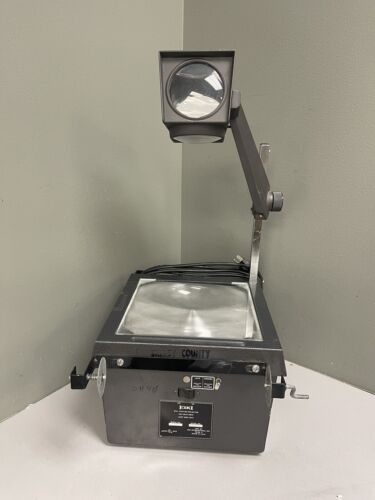
I'm in agreement with everyone else that you shouldn't need to change the body size but many years ago I picked up an old overhead projector at a flea market, I would use it to enlarge body shapes that I had drawn up to fit the scale that I needed...
s-l500.jpg


Haven't used it in years but it made doing so very easy.
 
All excellent suggestions. (And I really want a bass like maplego's Hello Kitty bass!)

As a general rule of thumb, for Fender-style basses using typical body and neck materials and typical-for-Fender tuning machines, the upper horn should end near the 12th fret. This provides appropriate balance on the strap. If the end of the upper horn falls a little short of the 12th fret, it is often possible to keep the balance on the strap by using lighter weight tuning machines. In a pinch a body made of a heavier-than-typical material may also offset a tendency to neck dive, but in my experience adding weight to an instrument is almost always detrimental to overall ergonomics.

One other thing. Either stick to the conventional scale lengths (30", 32", 34", etc.) or have actual strings on hand when designing the instrument to be sure they will fit. The issue is that bass strings taper to tails that can be readily wound around narrow tuning posts without breaking. This taper area must fall between the upper edge of the nut and post of the lowest tuning machine. There is surprisingly little tolerance for scale length variability here. See this article on my site for more information about this:

Liutaio Mottola Lutherie Information Website
 
  • Like
Reactions: mapleglo
The body size need not actually change. This is a standard size Stratocaster body:

View attachment 4922165

I just had to move the bridge down toward the rear of the body, and of course widen the neck mount area.

Sorry for the short de-rail, but I've got to say - I'm not even even a Hello Kitty fan but that is a really cool bass. Great work!