I built myself a bass! Well, sort of; I bought a pre-finished body and neck and a bunch of other parts and put them together. If you've ever wondered if GuitarFetish/GFS parts are as good as they make themselves out to be, I hope you'll find this thread informative.

I bought the parts from a few different sources:
From GuitarFetish:
I chose one of GuitarFetish's lightweight P-bass bodies with a cherryburst finish. To go with that, I chose a maple neck with maple fretboard finished in vintage amber. I picked a white pearloid pickguard, all gold hardware, and a pair of gold knobs with mother-of-pearl tops to tie it all together. The heart of the bass is a GFS overwound pickup that weighs in at about 16kΩ.
Thoughts on GuitarFetish products:
In short, you get what you pay for, but there's a little more to it than that. Here are some close-up shots of the body:
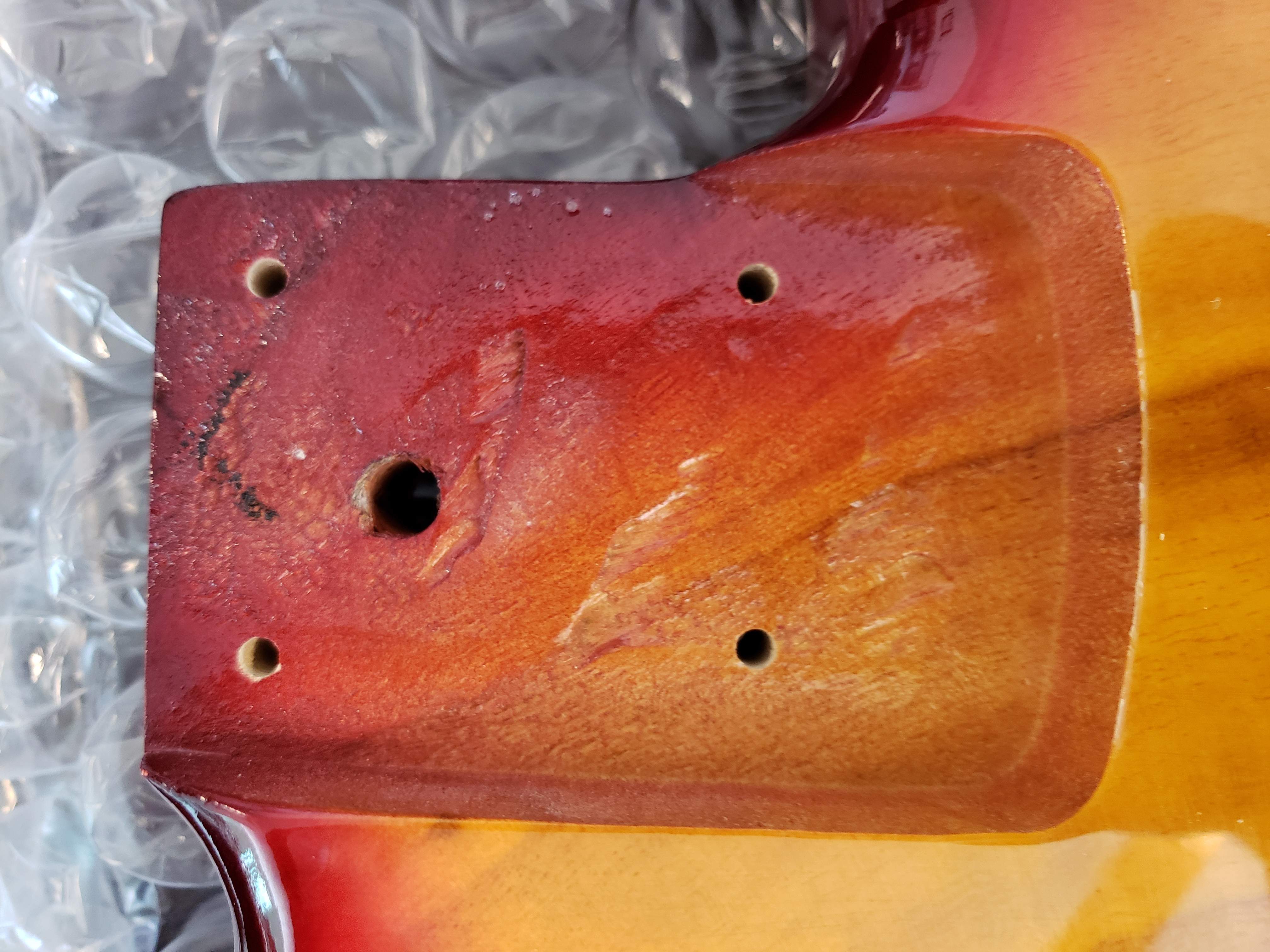
The neck pocket kinda looks like it was hacked out with a hatchet.
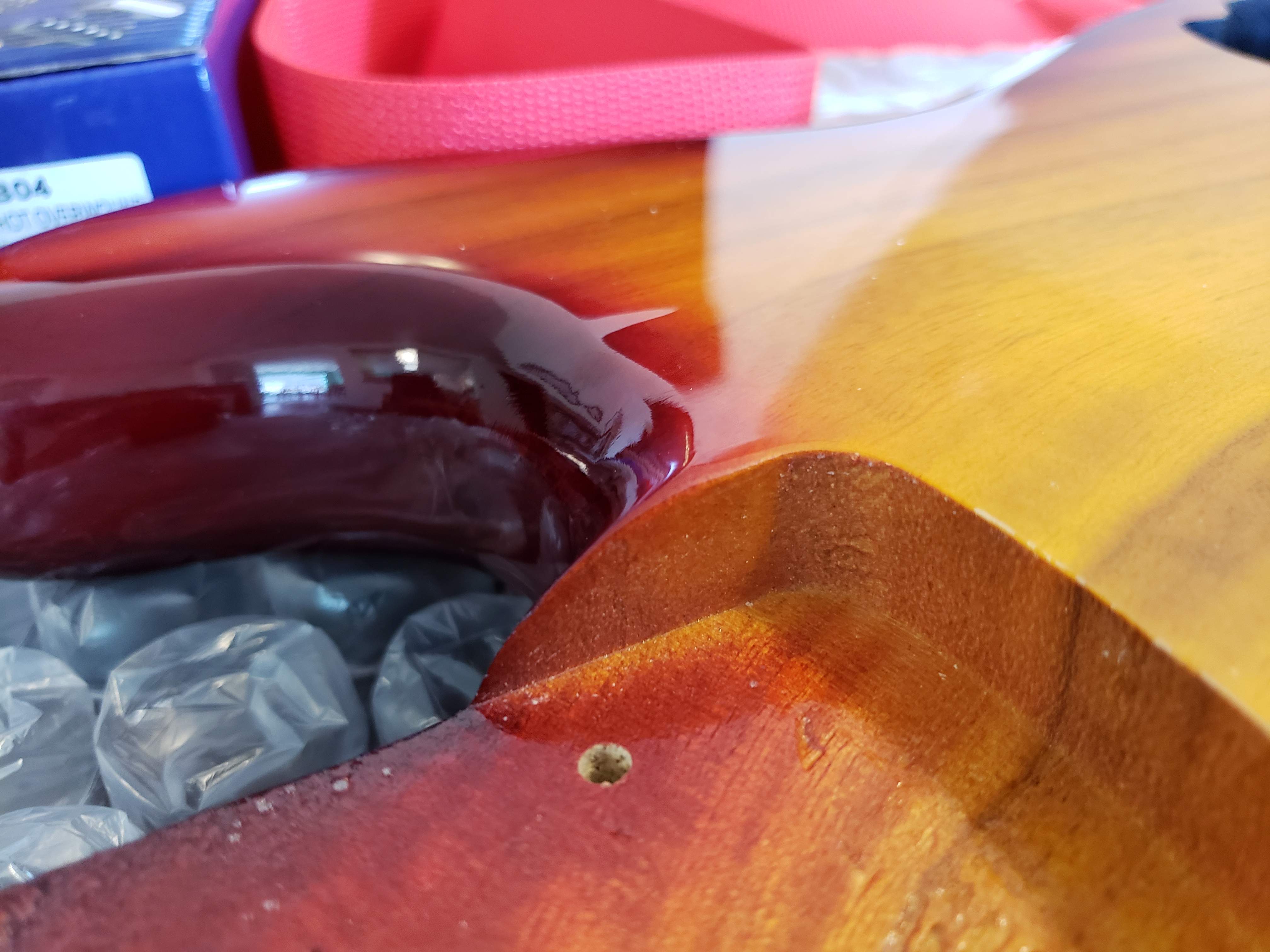
You can see a little dip in the top of the body there.
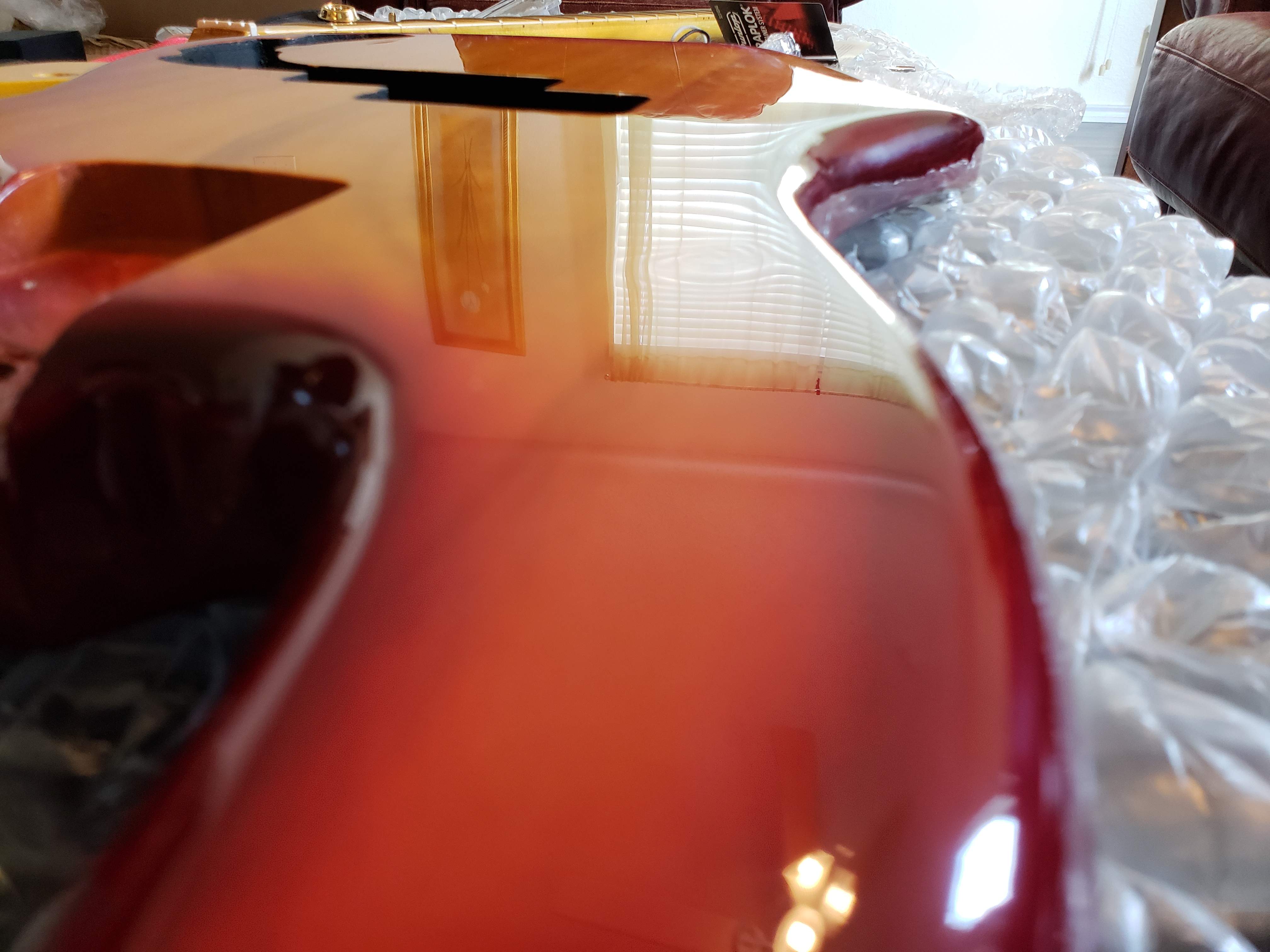
Another small dip. You have to look closely to see it; look at the reflection of the blinds and you should be able to find it.
The body was very light, as advertised, and the quality of the finish looked good overall. The routing for the cavity appeared clean.
Now, on to the neck. My biggest issue with the neck was that the nut was glued in the wrong place:
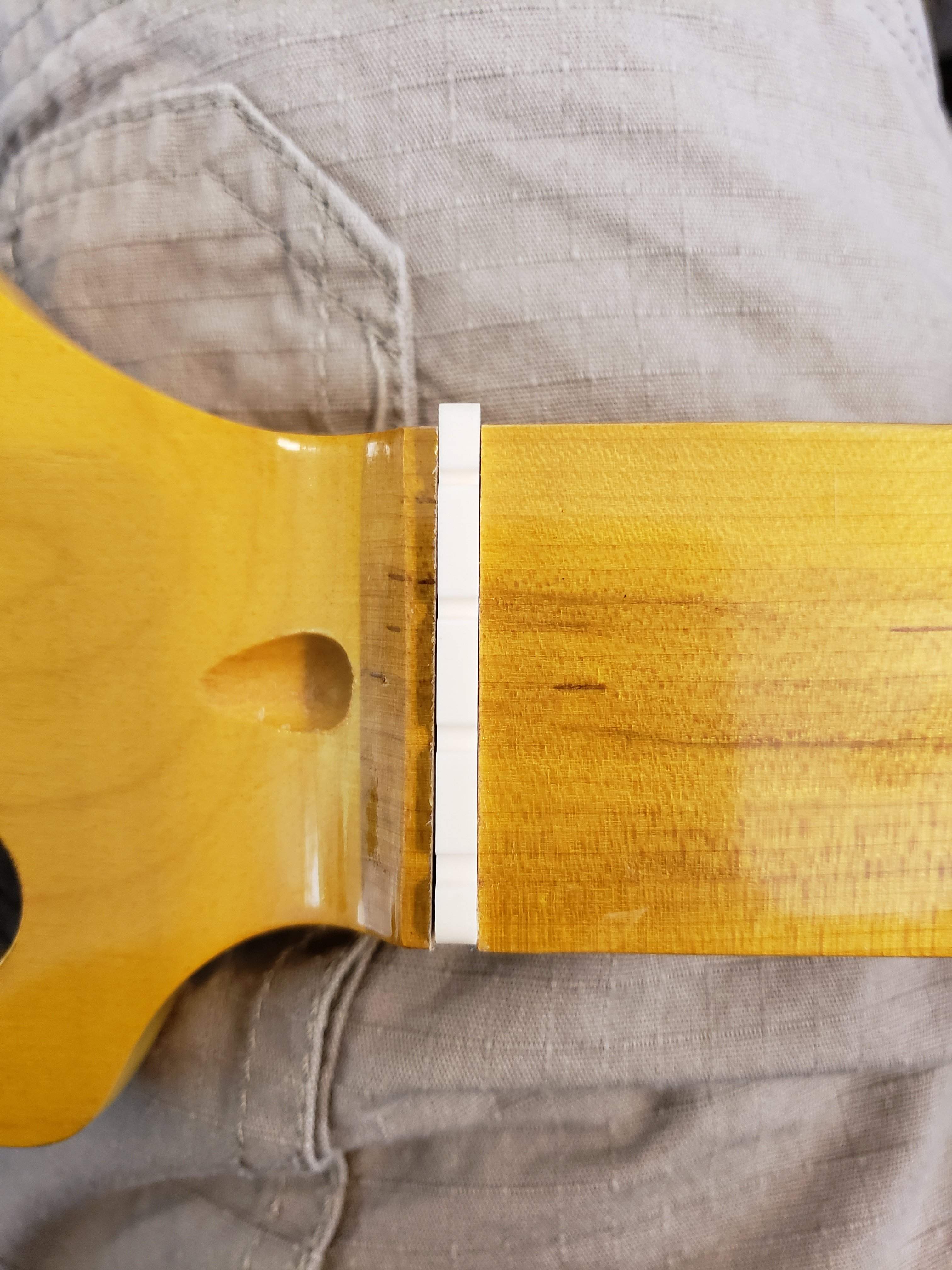
That won't do at all. So I used a small screwdriver to carefully pry it up and put it where it belongs:
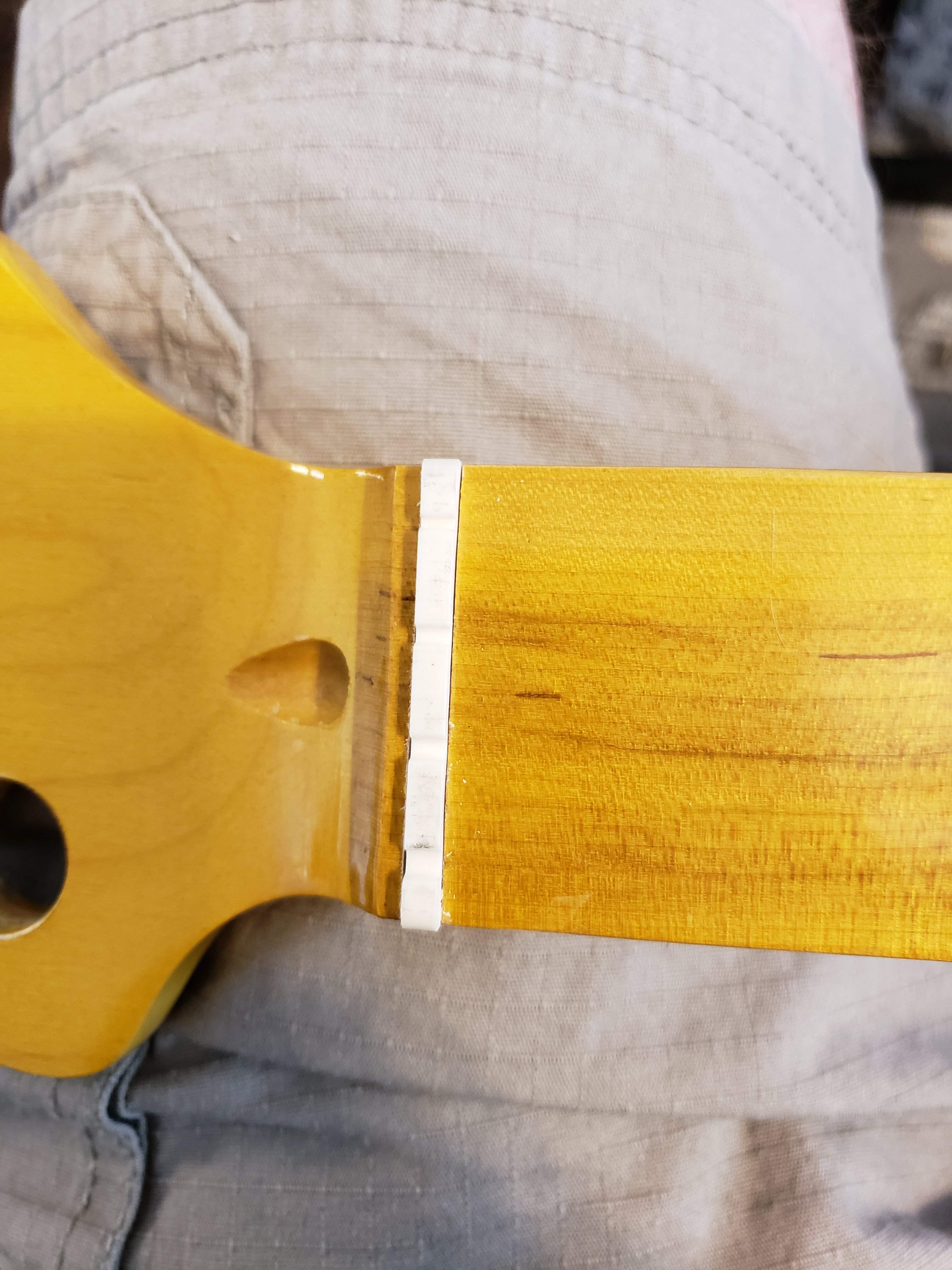
There, much better. There were a couple of other small issues with the neck, like some damage to one of the inlays:
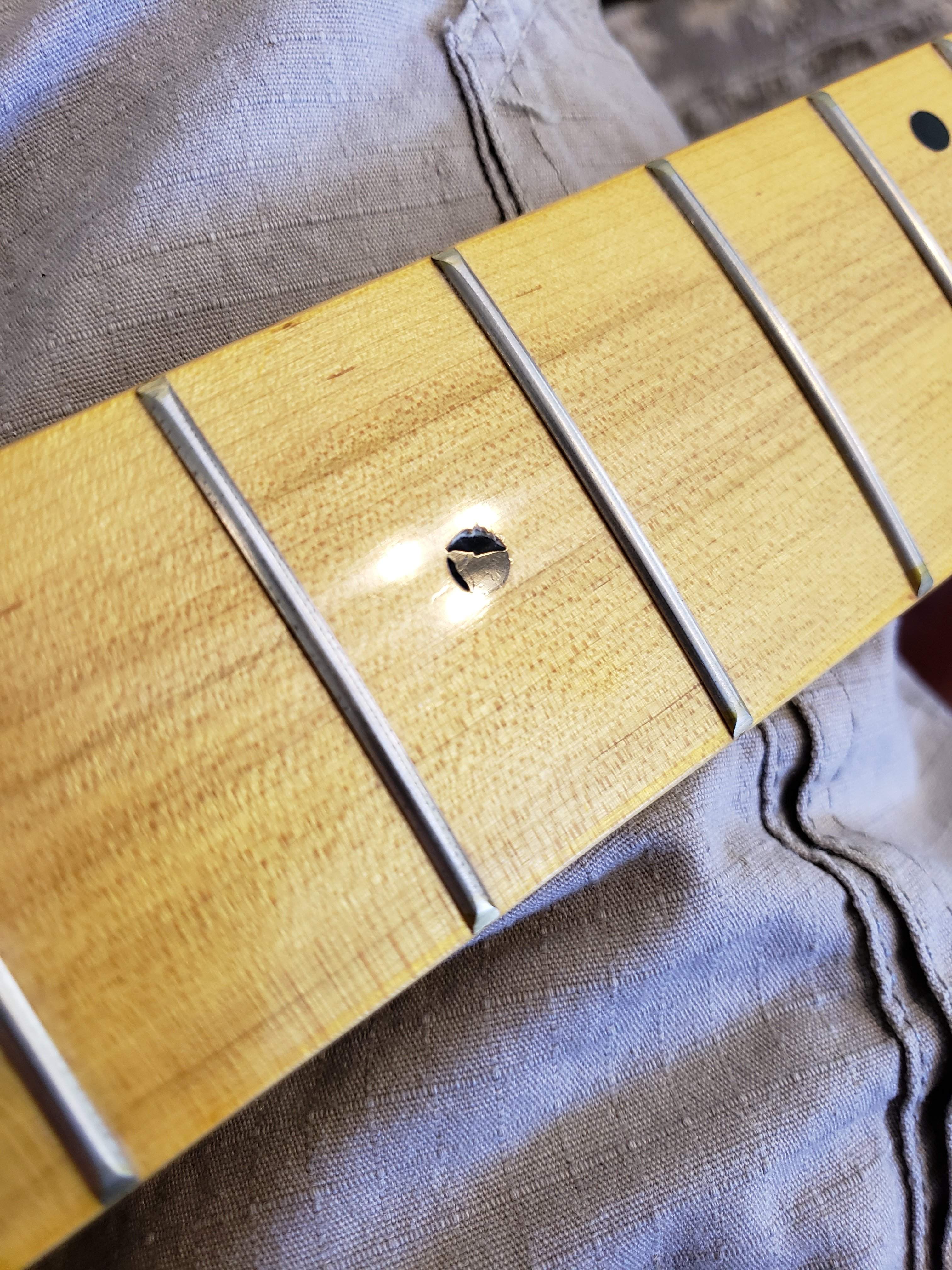
And a small ding in the fretboard:
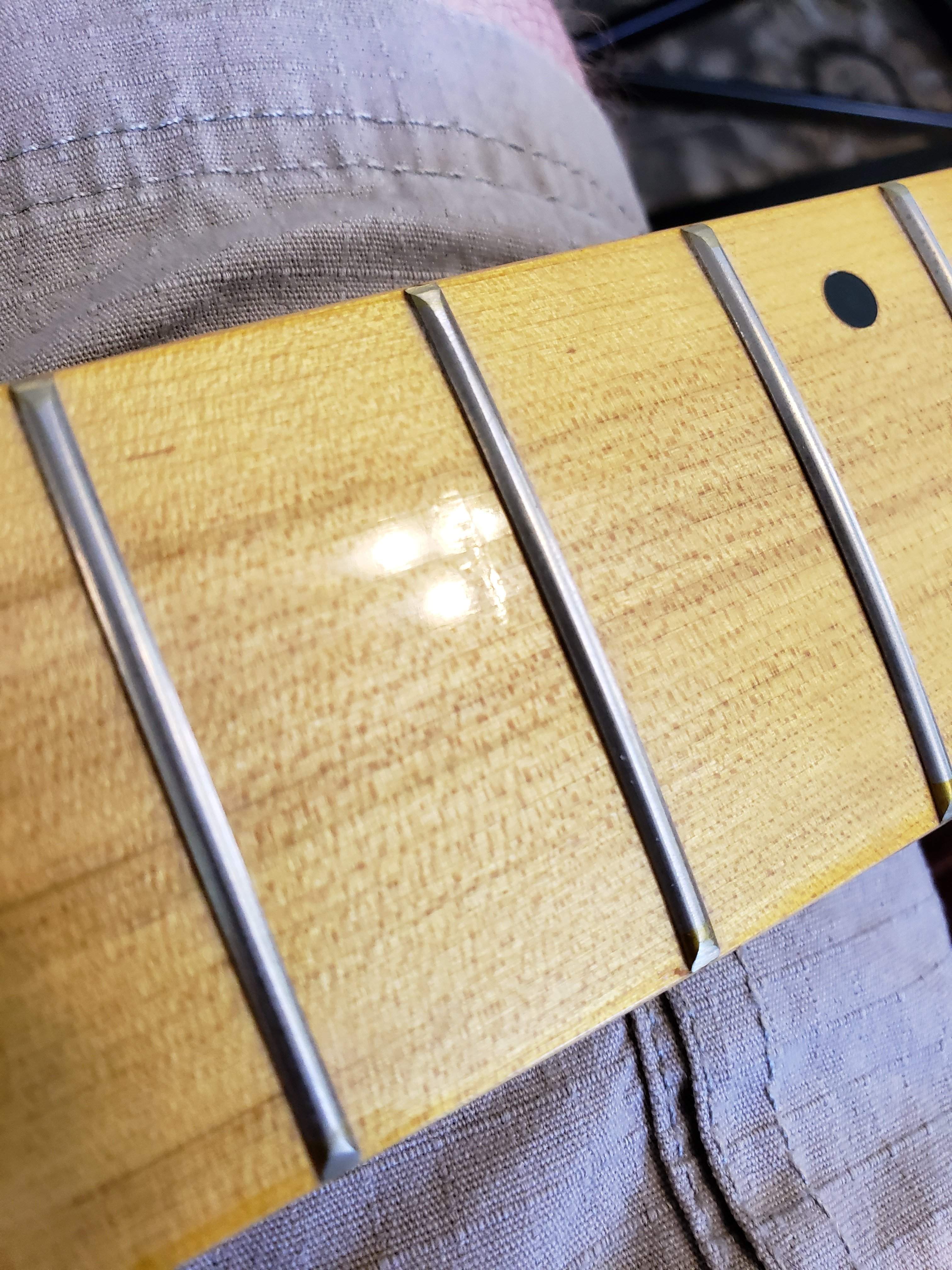
There was also some dried polishing compound caked on some of the upper frets. I didn't get a picture of that; I just wiped it off. The finish on the neck feels very thin. The neck is straight, the frets seem level, and the fret ends are well finished (no sharp edges that I could feel). There were no holes in the heel of the neck.
Now, check out this pickguard:
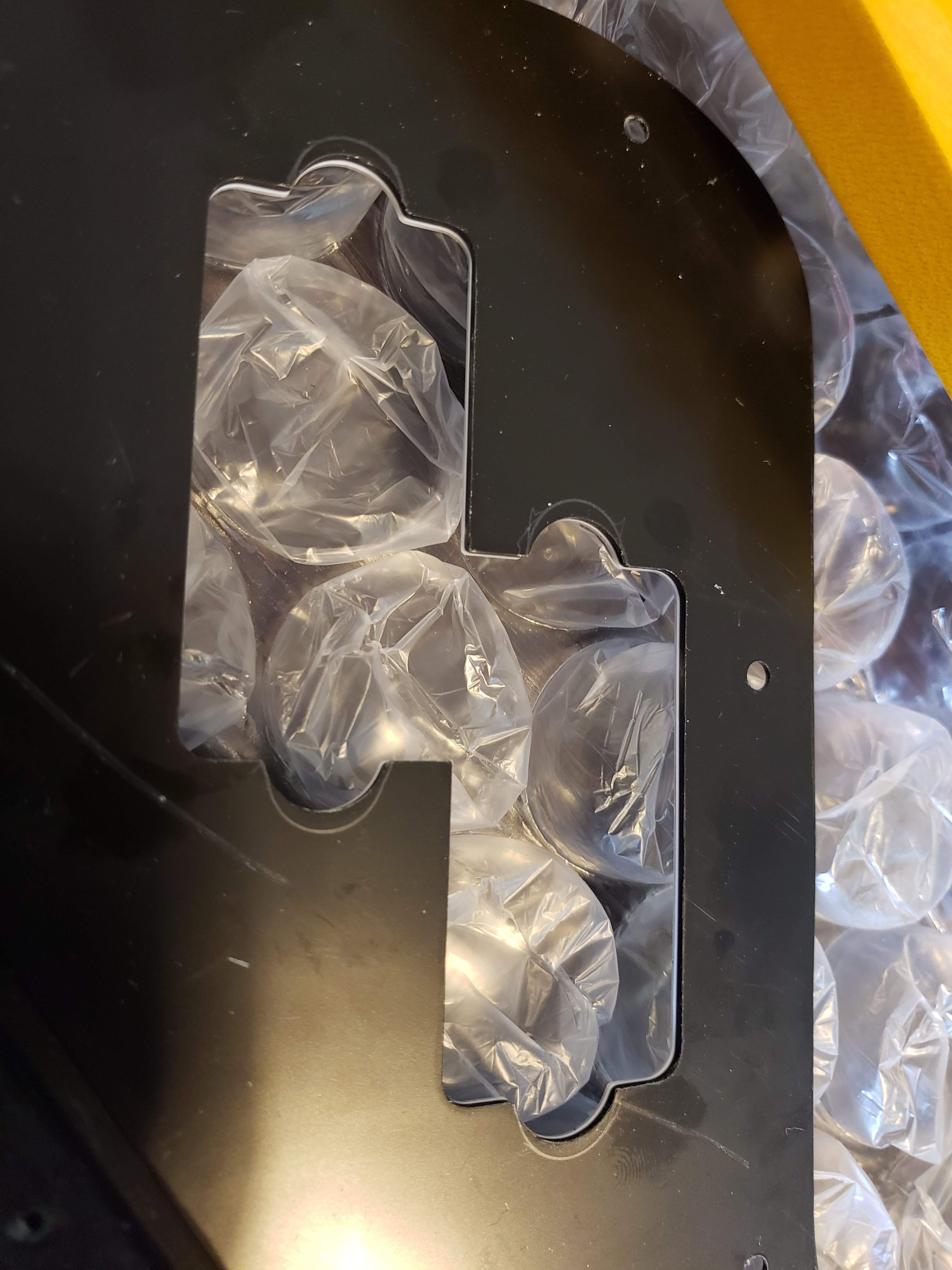
You see those pencil marks? I traced the outline of the pickup on the back of the pickguard. All that plastic inside the pencil marks had to be filed away before the pickup would actually fit. I also had to file the corners to make them more square. Remember, both the pickguard and the pickup were sold to me by the same company. I was frustrated that they didn't fit together, but I expected a few issues like this at this price point, and I dealt with it.
Let me back up a bit and talk about the conductive shielding paint:
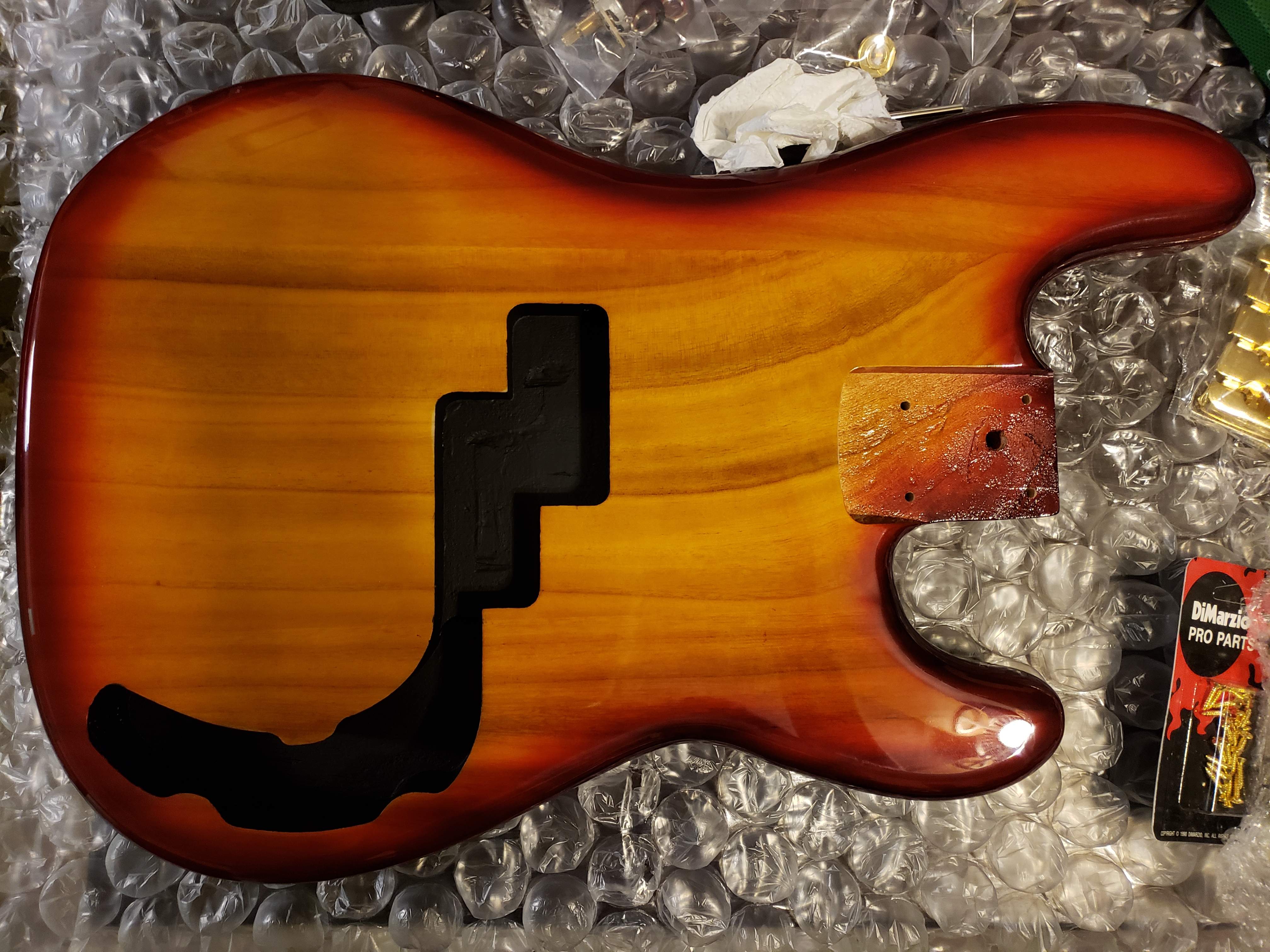
It went on easily enough, but no matter how much I poked it with my multimeter, I couldn't find continuity between any two points in the cavity. I'm pretty sure this stuff is bogus; I do not recommend it.
The pickup came with GFS's KwikPlug connector, which is just a 1/8" headphone jack. I decided I'd rather have soldered connections, so I removed the connector and soldered the pickup in the old-fashioned way. My multimeter did read it at about 16kΩ, as advertised. The pickup came with screws, but no springs; I reused some springs I had leftover from a humbucker project and they worked just fine. Here's what it all looked like soldered together:
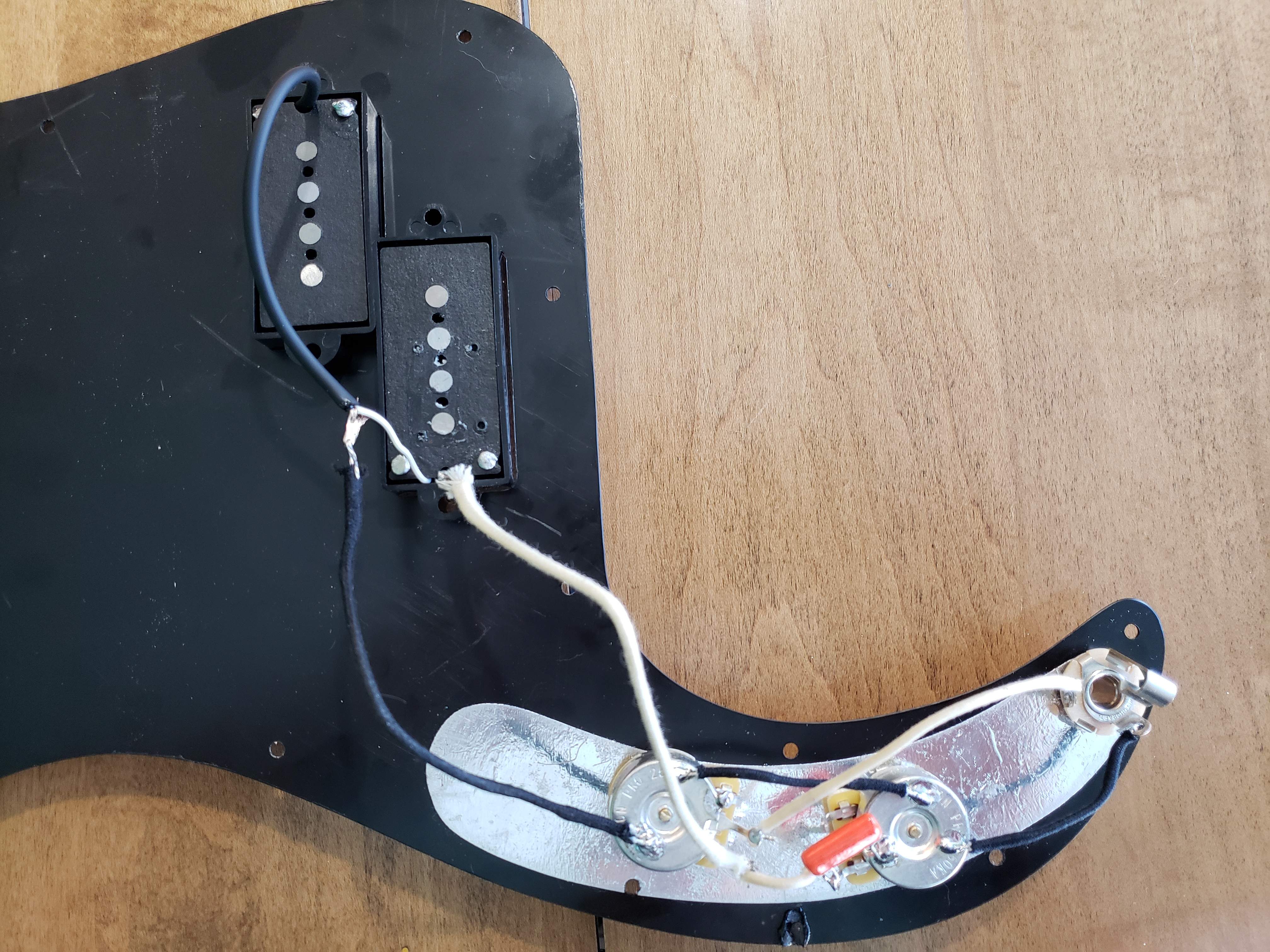
The bridge and the knobs from GuitarFetish actually surprised me. They seemed to be the best quality for the price of all the parts I bought from them. I would not hesitate to buy those parts again.
*About those tuners:
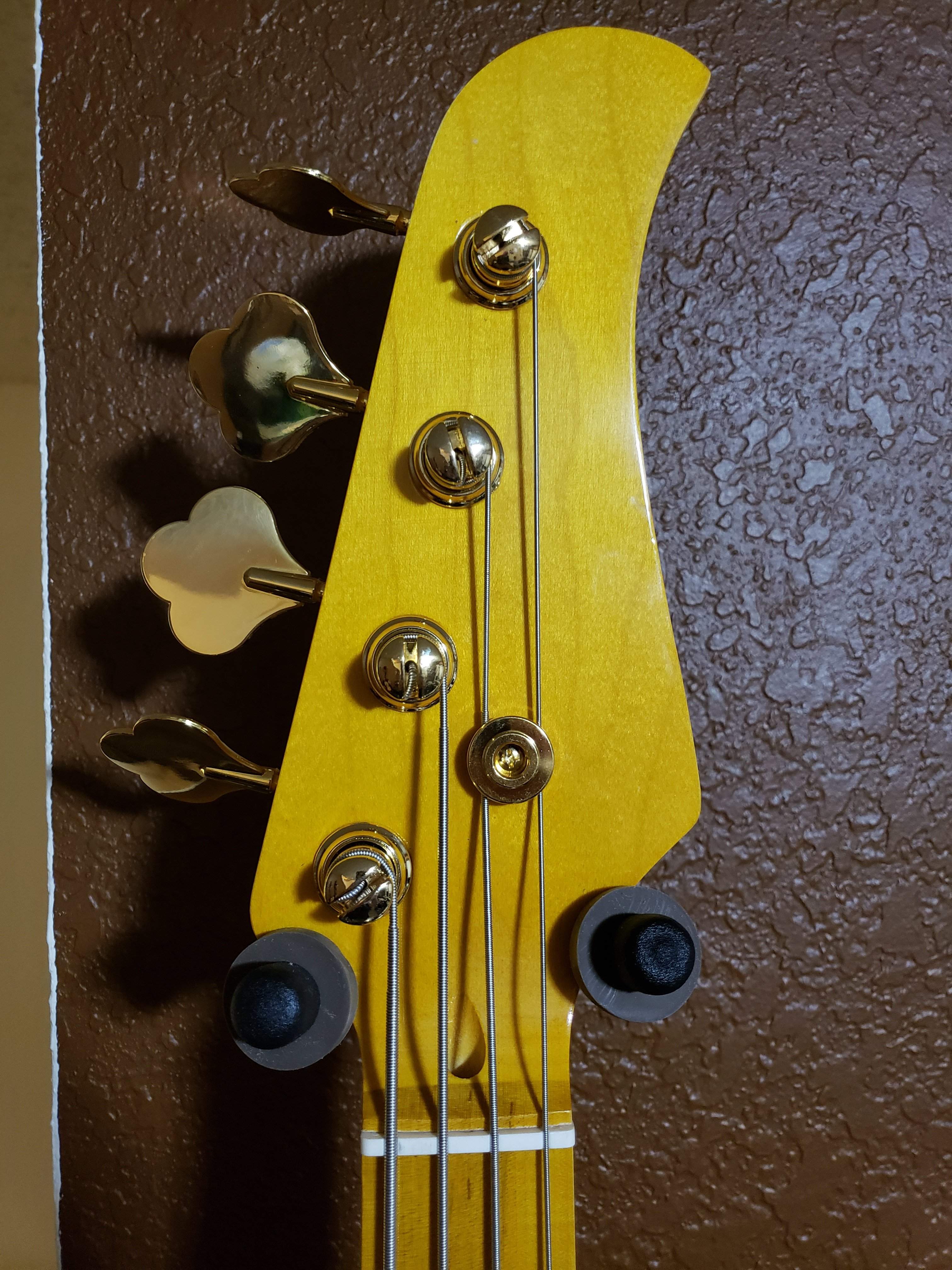
This was the most frustrating part of the build for me. I ordered the Wilkinson sealed-body tuners at first. If I had paid more attention to the descriptions of the tuners and the neck, I would have been able to tell they wouldn't fit; the bushings were much too small for the holes in the headstock. So I sent those back and ordered the Wilkinson "elephant-ear" tuners. When those came, the bushings seemed right, but the backplates were much too big to fit on the headstock:
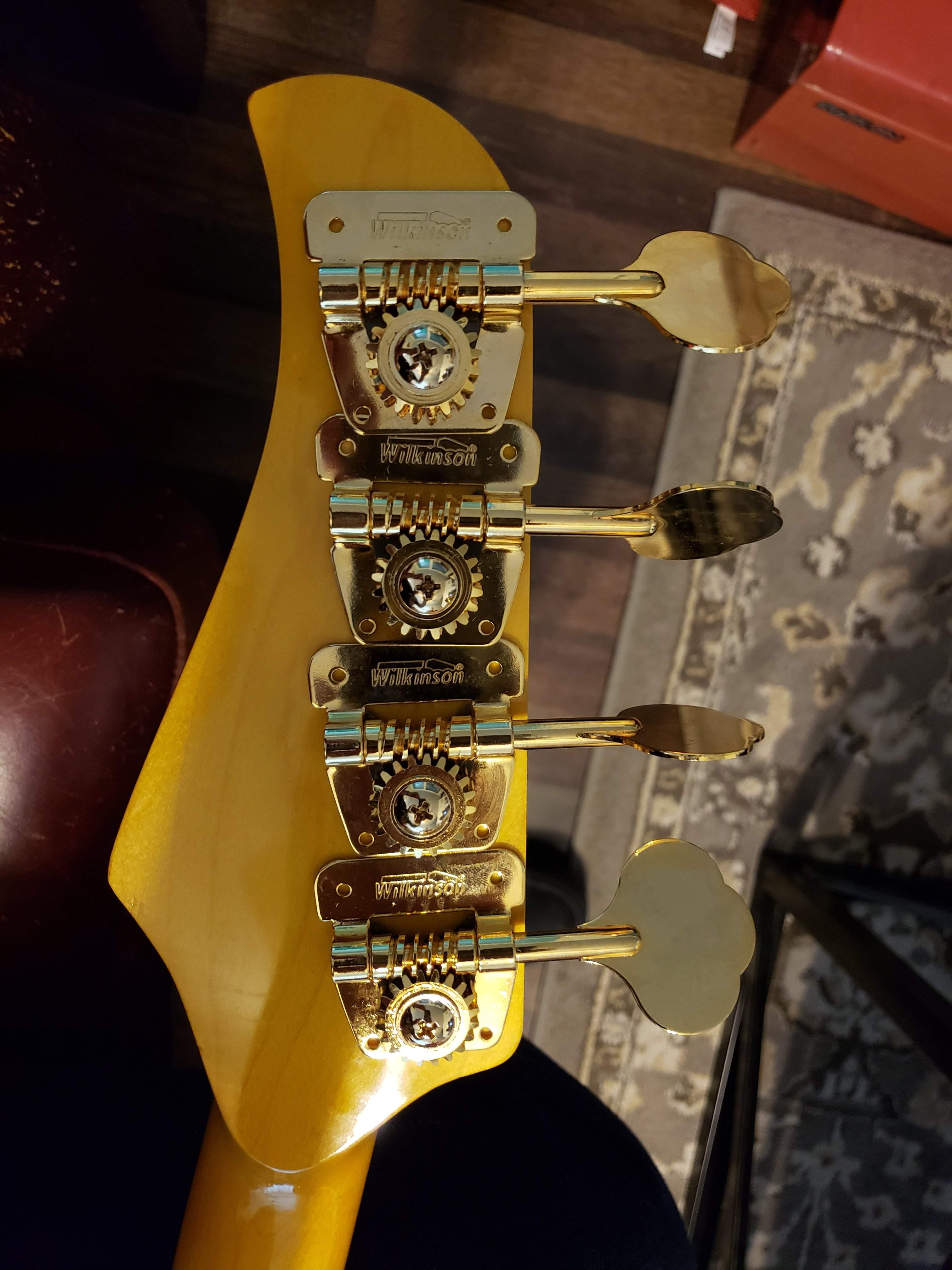
The plating was also scuffed up on some of them:
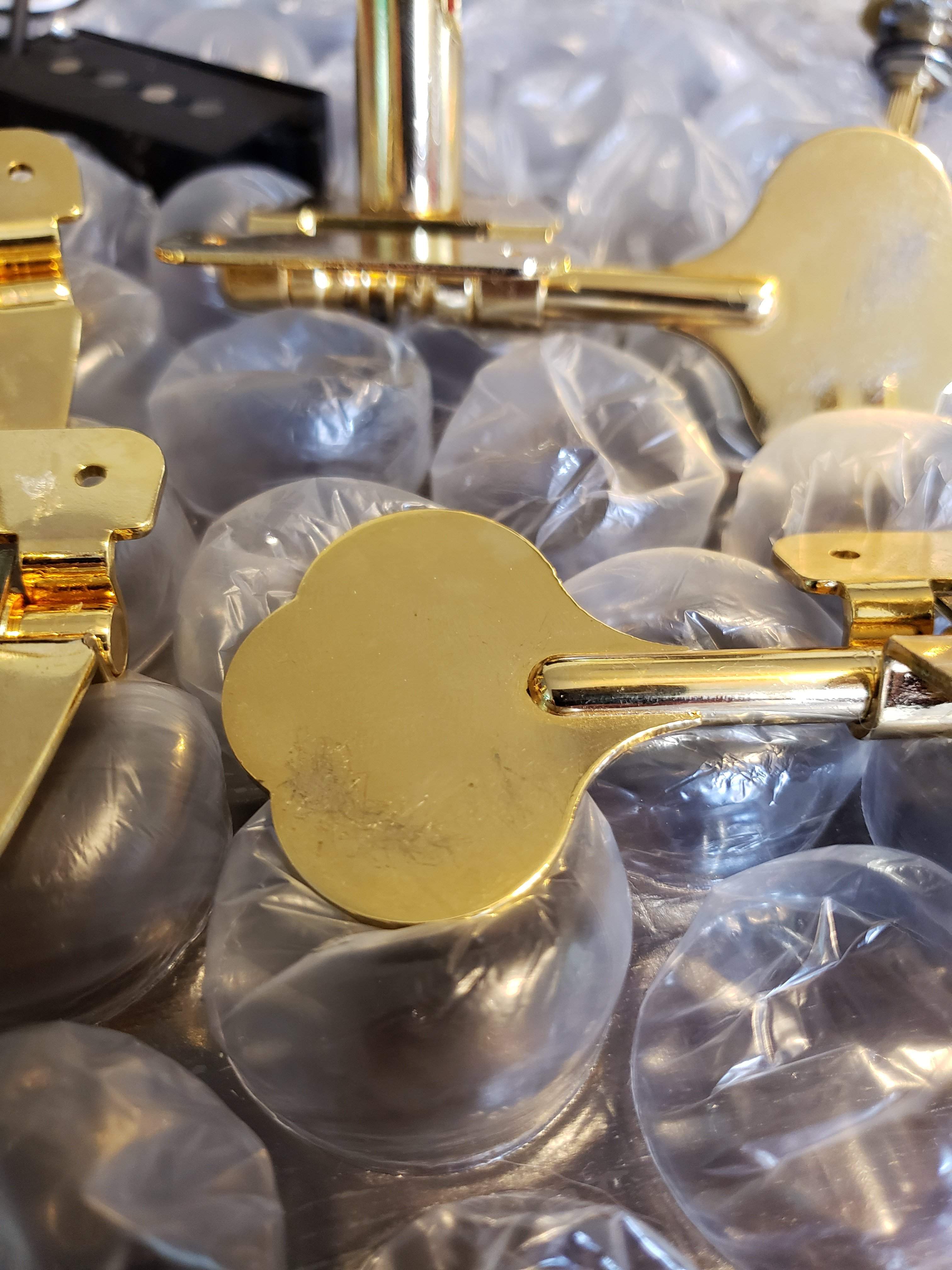
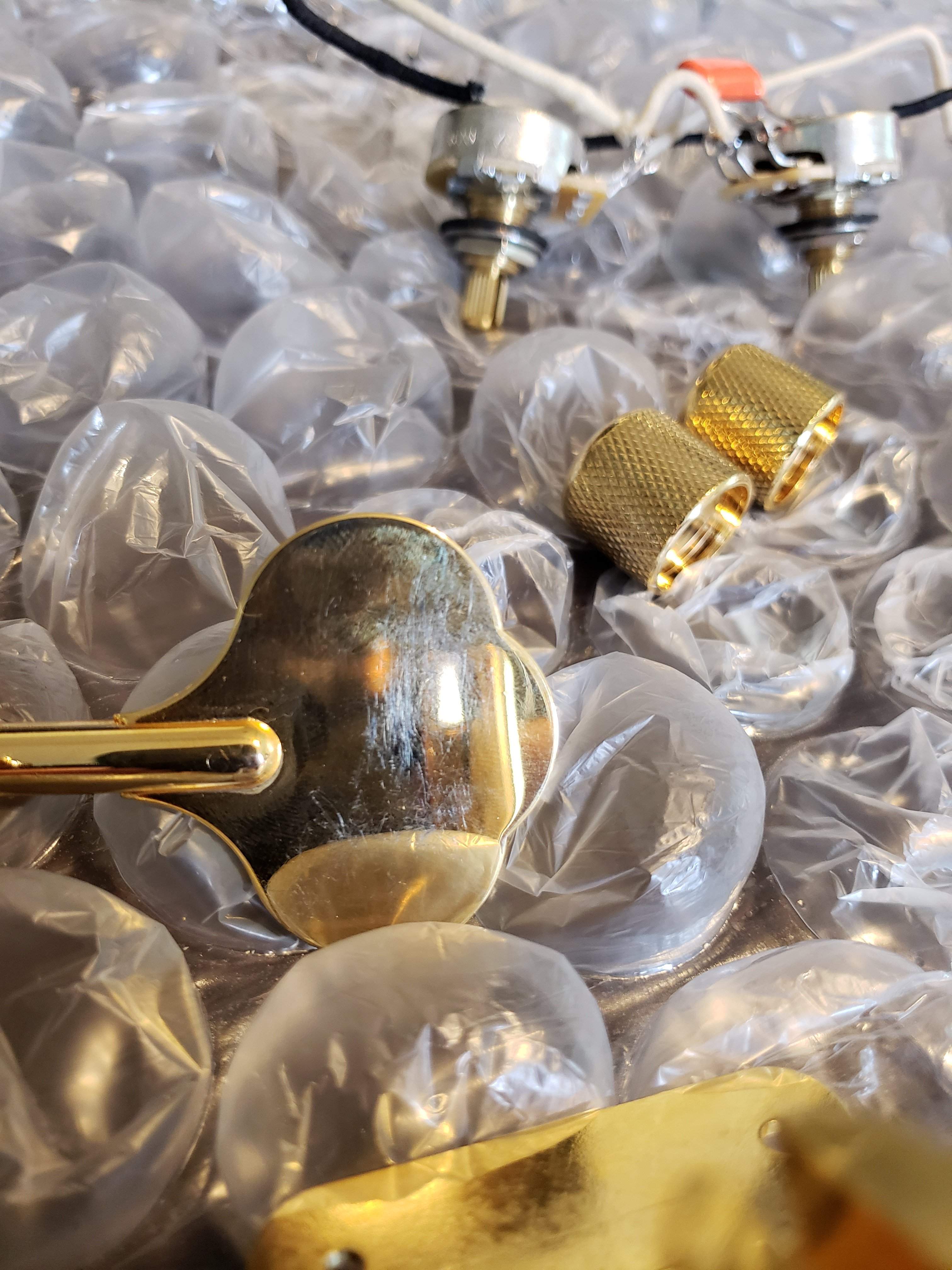
I sent those back too. There was a dimensional drawing of the tuners on the webpage, showing the size of the backplate, but that information was useless without knowing the hole spacing on the headstock. There was no way I could have known they wouldn't fit, and by this time, I'd wasted quite a bit of money on shipping back and forth, not to mention time. I finally bought the right set of tuners, and they came in today. The takeaway here is this: if you're buying GuitarFetish tuners for a GuitarFetish bass neck, the Wilkinson ones will not fit. Buy the cheap ones instead.
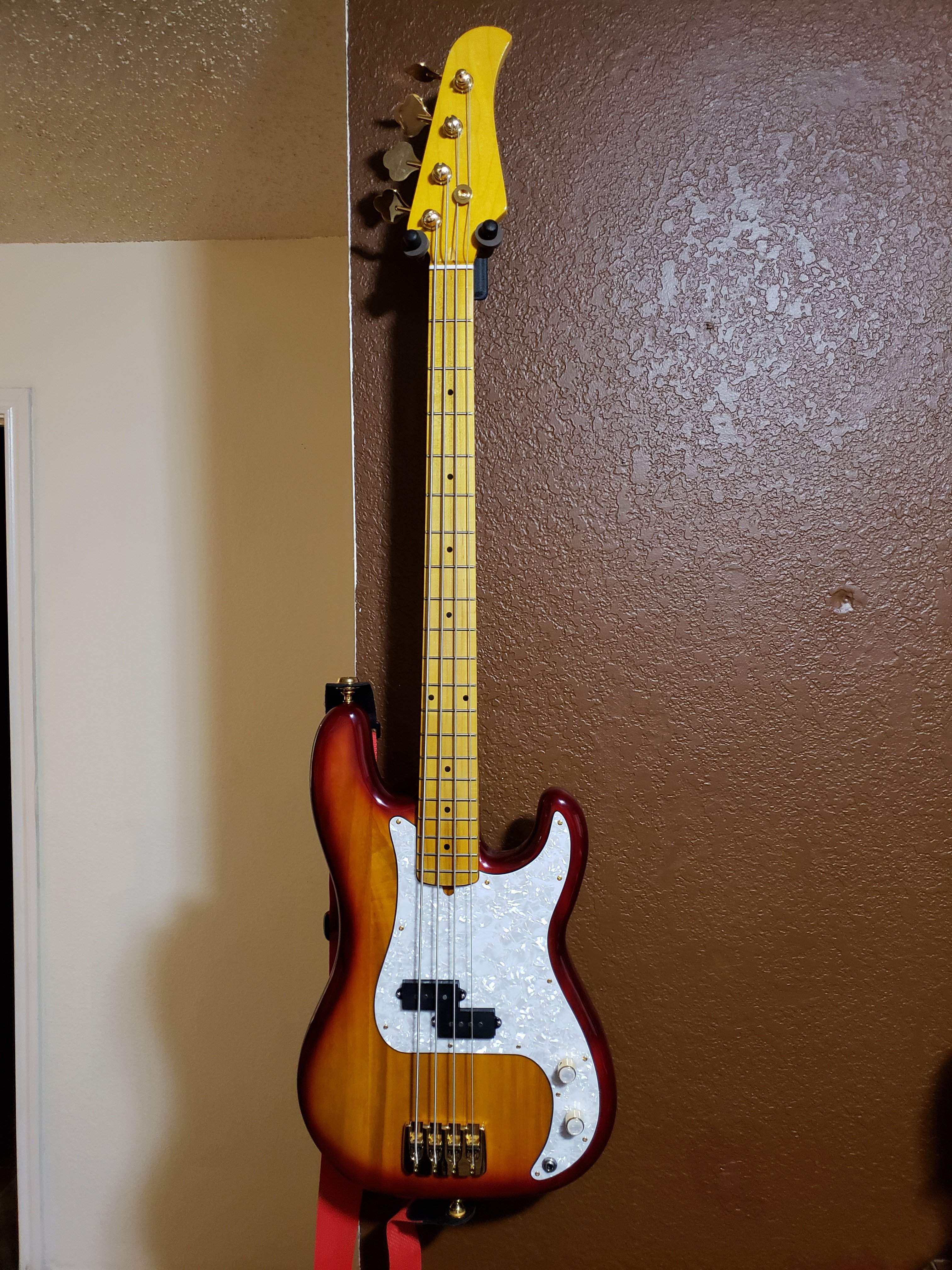
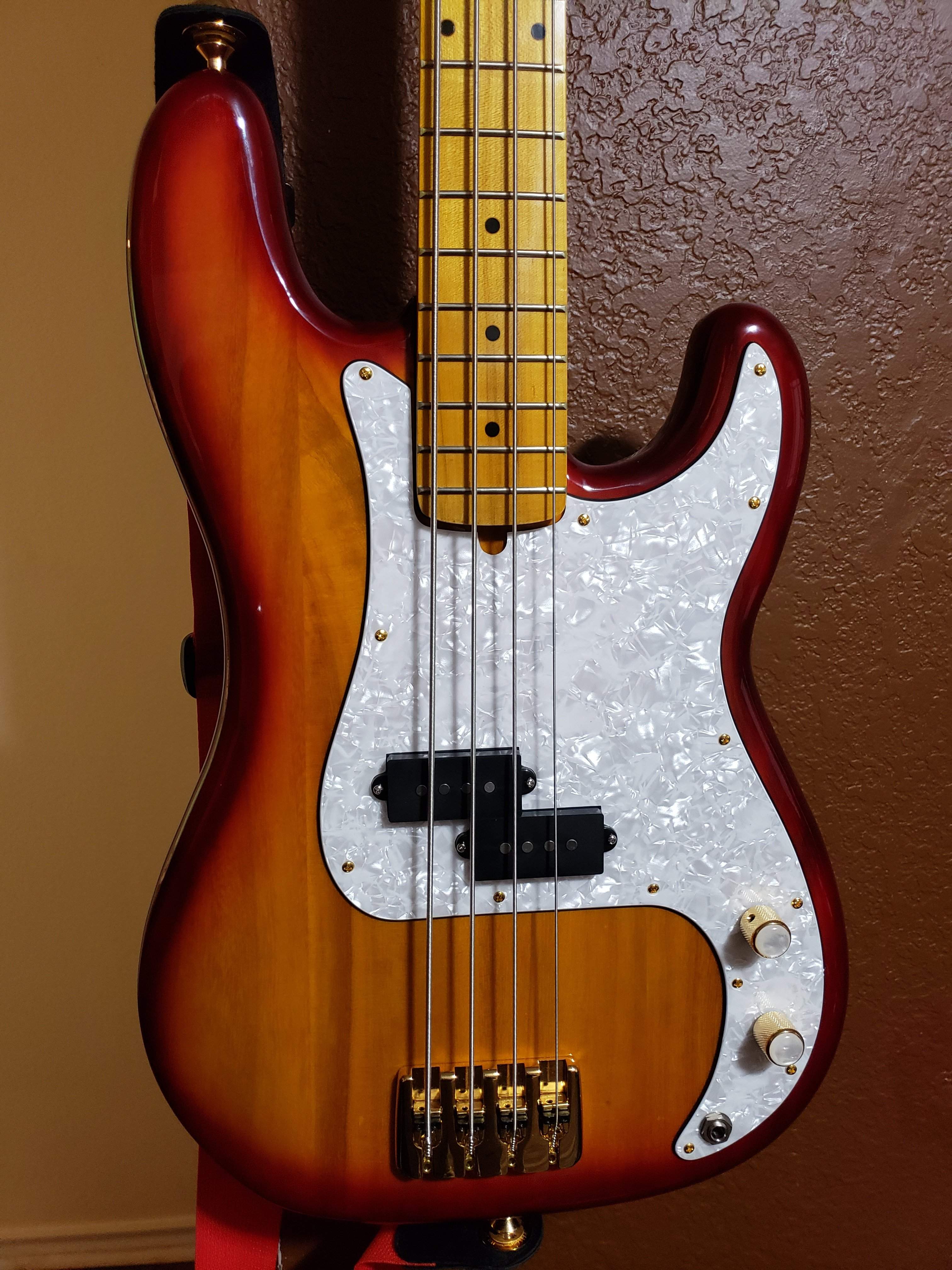
The finished product:
Today, I finished putting it all together, put some Elixir medium-gauge strings on it, plugged it in, and played it for the first time. I didn't play it much, but I really liked the sound and feel of it. Once I finish making some final adjustments, it'll be ready to rock. I could have bought a nicer bass for less money; I'm not fooling myself about that. But I still think this project was worth it. Besides, just look at the thing:
I bought the parts from a few different sources:
From GuitarFetish:
- Body: $59.95
- Neck: $49.95
- Tuners: $43.80
- Bridge: $26.95
- Knobs: $14.45
- Pickguard: $21.95
- Output jack: $3.49
- Conductive shielding paint: $8.95
- Pickup: $32.95
- Shipping: $26.34
- GuitarFetish Total: $288.78
- Hookup wires: $1.35
- Capacitor: $3.32
- Potentiometers: $14.50
- String retainer: $4.75
- Shipping: $9.99
- StewMac total: $33.91
- Pickguard screws: $8.50
- Strings: $37.98
- Strap: $2.99
- Strap locks: $15.26
- Double gig bag: $69.99
- Discount: -$3.80
- Shipping: $0.00
- Musician's Friend total: $130.92
- Neck plate and screws: $15.29
- Shipping: $0.00
- Amazon total: $15.29
I chose one of GuitarFetish's lightweight P-bass bodies with a cherryburst finish. To go with that, I chose a maple neck with maple fretboard finished in vintage amber. I picked a white pearloid pickguard, all gold hardware, and a pair of gold knobs with mother-of-pearl tops to tie it all together. The heart of the bass is a GFS overwound pickup that weighs in at about 16kΩ.
Thoughts on GuitarFetish products:
In short, you get what you pay for, but there's a little more to it than that. Here are some close-up shots of the body:
The neck pocket kinda looks like it was hacked out with a hatchet.
You can see a little dip in the top of the body there.
Another small dip. You have to look closely to see it; look at the reflection of the blinds and you should be able to find it.
The body was very light, as advertised, and the quality of the finish looked good overall. The routing for the cavity appeared clean.
Now, on to the neck. My biggest issue with the neck was that the nut was glued in the wrong place:
That won't do at all. So I used a small screwdriver to carefully pry it up and put it where it belongs:
There, much better. There were a couple of other small issues with the neck, like some damage to one of the inlays:
And a small ding in the fretboard:
There was also some dried polishing compound caked on some of the upper frets. I didn't get a picture of that; I just wiped it off. The finish on the neck feels very thin. The neck is straight, the frets seem level, and the fret ends are well finished (no sharp edges that I could feel). There were no holes in the heel of the neck.
Now, check out this pickguard:
You see those pencil marks? I traced the outline of the pickup on the back of the pickguard. All that plastic inside the pencil marks had to be filed away before the pickup would actually fit. I also had to file the corners to make them more square. Remember, both the pickguard and the pickup were sold to me by the same company. I was frustrated that they didn't fit together, but I expected a few issues like this at this price point, and I dealt with it.
Let me back up a bit and talk about the conductive shielding paint:
It went on easily enough, but no matter how much I poked it with my multimeter, I couldn't find continuity between any two points in the cavity. I'm pretty sure this stuff is bogus; I do not recommend it.
The pickup came with GFS's KwikPlug connector, which is just a 1/8" headphone jack. I decided I'd rather have soldered connections, so I removed the connector and soldered the pickup in the old-fashioned way. My multimeter did read it at about 16kΩ, as advertised. The pickup came with screws, but no springs; I reused some springs I had leftover from a humbucker project and they worked just fine. Here's what it all looked like soldered together:
The bridge and the knobs from GuitarFetish actually surprised me. They seemed to be the best quality for the price of all the parts I bought from them. I would not hesitate to buy those parts again.
*About those tuners:
This was the most frustrating part of the build for me. I ordered the Wilkinson sealed-body tuners at first. If I had paid more attention to the descriptions of the tuners and the neck, I would have been able to tell they wouldn't fit; the bushings were much too small for the holes in the headstock. So I sent those back and ordered the Wilkinson "elephant-ear" tuners. When those came, the bushings seemed right, but the backplates were much too big to fit on the headstock:
The plating was also scuffed up on some of them:
I sent those back too. There was a dimensional drawing of the tuners on the webpage, showing the size of the backplate, but that information was useless without knowing the hole spacing on the headstock. There was no way I could have known they wouldn't fit, and by this time, I'd wasted quite a bit of money on shipping back and forth, not to mention time. I finally bought the right set of tuners, and they came in today. The takeaway here is this: if you're buying GuitarFetish tuners for a GuitarFetish bass neck, the Wilkinson ones will not fit. Buy the cheap ones instead.
The finished product:
Today, I finished putting it all together, put some Elixir medium-gauge strings on it, plugged it in, and played it for the first time. I didn't play it much, but I really liked the sound and feel of it. Once I finish making some final adjustments, it'll be ready to rock. I could have bought a nicer bass for less money; I'm not fooling myself about that. But I still think this project was worth it. Besides, just look at the thing:
Last edited: