Weird, not my experience with gut at all. I will say though. They take over a month to stabilize. More like 6 to 8 weeksWhen i used a gut G and D they were all over the place, going flat throughout the set as they warmed up then being sharp coming out of the break. Not the reason i stopped playing them but i definitely don't miss that

Enjoy the benefits of a premium membership!
Upgrade Account
-
TalkBass has been independent since 1998. Add your voice.
Create a free account to reply to discussions, view embedded media, and browse with fewer display ads.
Join free Log in
Want zero display ads or expanded classifieds tools? Compare plans.
You are using an out of date browser. It may not display this or other websites correctly.
You should upgrade or use an alternative browser.
You should upgrade or use an alternative browser.
Double Bass GUTS ARE SO MUCH FUN!!!
- Thread starter Marc Piane
- Start date
More options
Who Replied?
I threw a gamut G on to try and the damn thing
1. Won't stay in tune
2. Won't stop growing hairs
3. Won't sound through an amp.
Sadly I gotta go back to my Evah G. If anyone wants a gamut Lyon message me
1. Won't stay in tune
2. Won't stop growing hairs
3. Won't sound through an amp.
Sadly I gotta go back to my Evah G. If anyone wants a gamut Lyon message me
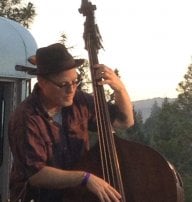
...the life cycle of a gut strung bass addiction continues...
I just posted this a couple of days ago in the EP Slap thread.
Hello tuning and upkeep, it's been awhile...
-J
Just put a fresh, new full set on...
I was getting more and more frustrated with the Obligatos, not because they are bad in any way but I was just missing something in the way I played. I've gotten good at getting a "gut like" sound using steel or synthetic but it's tactile as much as anything and ultimately the physical characteristics of the strings themselves (diameter, excursion, etc) are what I realized I was missing. I play differently, and I think, more honestly with those big ol', slow, clunky, sublime hunks of sheep under my hands. Granted, the E & A from this set have dinosaur cores but they're pretty damn close and I really do love the way they sound under the bow.
-J
I just posted this a couple of days ago in the EP Slap thread.
Hello tuning and upkeep, it's been awhile...
-J
I have cheapo plain gut GD with Garbo AE on my bass now, G is at 10mm height. I tried a plain A and Gamut Pistoy AE too, but Garbos are what works for me. This setup is bowable and amplifies really well. Those EP slaps are interesting, I`ll propably get a set sooner or later.


I was a gut enthusiast if you will, trying several synthetics and always coming back to gut. But hot damn this summer changed my unconditional devotion to muton. I put a beat up set of innovations on Monday night, and they were stable by last night when I practiced. Now I'm not saying that I will never put the gut back on, because I probably will.....but it was refreshing to just play for a couple of hours without tuning in between every song. Damn you global warming.
I had a gig lately outside, warm and humid ( partly rainy too ), we played 2 sets, one acoustically and another on stage and thru festival pa. Plain gut / Garbo -combo wasn`t that tragig at all, of course there was tuning involved, but I could hear myself clearly all the time and I just love the sound, all this packed in low tension and easy playability, even at G 10mm - E 13mm height. Gamut Pistoy AE was a different story alltogether, sounded good, but the tuning instability is just pure PITA imho.
edit: I hear that Gerold Genssler makes custom guts that are stabilisized somehow. They have some sort of warranty and the price ain`t that bad when compared to Eudoxa, Gamut and such.
edit: I hear that Gerold Genssler makes custom guts that are stabilisized somehow. They have some sort of warranty and the price ain`t that bad when compared to Eudoxa, Gamut and such.
Last edited:
Hello all. So I'm going to drink the kool-aid and dive in head first. I've been reading this thread for a month or so now and would like some advice. I'm purchasing a full set of pistoys and need advice on the gauge. I've read that a few of you use a heavier gauge for your G. I understand from this thread that switching to guts is going to be a change in the tension from steel and my playing will need to adjust. This is not a concern as my chops need much improving anyway. My biggest concern is not getting the proper gauge and having to reorder. I spoke with Dan on the phone and he at first suggested all mediums. When I mentioned what I had read in this thread he did agree that a heavier G wouldn't hurt. He went on to mention that maybe I should put on a heavy E. I had a wonderful conversation but I still don't have a clear idea of where I should start. My current setup is:
Older Pfretzschner carved workshop bass
Spiro E&A Oliv D&G
If you where moving from this setup, what gauges would you use?
I mostly play old school jazz and bluegrass.
Any and all advice would be greatly appreciated. Thank you!
Older Pfretzschner carved workshop bass
Spiro E&A Oliv D&G
If you where moving from this setup, what gauges would you use?
I mostly play old school jazz and bluegrass.
Any and all advice would be greatly appreciated. Thank you!

Hello all. So I'm going to drink the kool-aid and dive in head first. I've been reading this thread for a month or so now and would like some advice. I'm purchasing a full set of pistoys and need advice on the gauge. I've read that a few of you use a heavier gauge for your G. I understand from this thread that switching to guts is going to be a change in the tension from steel and my playing will need to adjust. This is not a concern as my chops need much improving anyway. My biggest concern is not getting the proper gauge and having to reorder. I spoke with Dan on the phone and he at first suggested all mediums. When I mentioned what I had read in this thread he did agree that a heavier G wouldn't hurt. He went on to mention that maybe I should put on a heavy E. I had a wonderful conversation but I still don't have a clear idea of where I should start. My current setup is:
Older Pfretzschner carved workshop bass
Spiro E&A Oliv D&G
If you where moving from this setup, what gauges would you use?
I mostly play old school jazz and bluegrass.
Any and all advice would be greatly appreciated. Thank you!
Hi Hardbop!
I have been using Dan's Pistoy strings for the last 6 years. They are it for me.
In the beginning I used naked gut (Pistoy) on the G & D string, and for the E & A i used his copperwound strings. If this is the setup you are going for I would suggest a heavy G, light D (because the D string needs to be of a lighter gauge to speak clearly all the way up the fingerboard), and a medium + copperwound A and a heavy copperwound E. That is a great and very even setup regarding tension, feel, volume and playability.
After a couple if years with this setup I changed the E & A for naked gut (pistoys) and haven't looked back. Great tuning stability, and I love the sound. This setup is not for everybody, but I love it!

And they last long. My G & D are 6 years old going strong, the A is 4 years old, and the E is 2-3 years old (from when Dan began making naked gut E strings again).
Good luck with the change!
Thanks. I forgot to mention that I'm going to go with all unwrapped strings. I'm located in Chicago. After reading about the different materials moving in different directions, I decided that all plain is the way to go. My Olivs do the same thing tuning wise.
Is not a heavy G and light D on opposite ends of the spectrum? Is the tension difference not noticeable?
Again, I'm going with all plain gut. Thanks much for the insight!
Is not a heavy G and light D on opposite ends of the spectrum? Is the tension difference not noticeable?
Again, I'm going with all plain gut. Thanks much for the insight!
Thanks. I forgot to mention that I'm going to go with all unwrapped strings. I'm located in Chicago. After reading about the different materials moving in different directions, I decided that all plain is the way to go. My Olivs do the same thing tuning wise.
Is not a heavy G and light D on opposite ends of the spectrum? Is the tension difference not noticeable?
Again, I'm going with all plain gut. Thanks much for the insight!
Glad to be of assistance!
Well, if you are going with all gut I would suggest heavy G and Light D, A and E. The E and A are really, really thick even in the light gauge, and the tension match in this set is perfect for me (also between G & D). This is the set I use. As I mentioned before the lower strings speak clearer in a lighter gauge, and (IMO) you need as much "help" as possible to get the most tone, and note definition you can get out of the naked strings. I think coming from spiro E & A will be a very, very big change in both tone and feel, and hopefully it will be a good one! These strings (A and most of all E) have very little sustain, but the absolute perfect percussive attack and decay! Again IMO! These are not for everybody, but if you are into them they are the best!
Again, good luck with the switch and if you have any other questions I would be glad to try to be of assistance.
I finally had to pay up for all the humidity. It was fairly dry last night and nobody was home so I set up on the back porch with youtube on the kindle. After about two hours my strings were shredded and dry as a bone. It took me an hour to cut and sand all the hairs off and they are soaking up the mineral oil as fast as I can put it on. Some of those hairs were longer than mine 
Jesper, I took your advice and purchased a light EAD and a Heavy G. Thank you, I think this was the right decision.
Now I need to make another decision concerning the bridge and ask for more insight from gut players.
I have picked out 2 different Despiau double tree bridges at my luthier's shop but cannot decide between them and have no idea which would be better or if it even matters.
Both are 150mm. One is a CT6 and weighs 135 grams, it has short legs that are wider than the other. The other is a CT12 and weighs 161 grams, it has tall legs and they are narrower than the other. I weighed about 7 different bridges and they where all in the 131-135g range.
I've posted this question elsewhere but I'd like to hear from gut players specifically.
Does the denser wood at 161 grams and/or the narrower legs make a difference in the tone?
If it was your decision, which bridge wold you choose?
Thank you for helping educate me!
Now I need to make another decision concerning the bridge and ask for more insight from gut players.
I have picked out 2 different Despiau double tree bridges at my luthier's shop but cannot decide between them and have no idea which would be better or if it even matters.
Both are 150mm. One is a CT6 and weighs 135 grams, it has short legs that are wider than the other. The other is a CT12 and weighs 161 grams, it has tall legs and they are narrower than the other. I weighed about 7 different bridges and they where all in the 131-135g range.
I've posted this question elsewhere but I'd like to hear from gut players specifically.
Does the denser wood at 161 grams and/or the narrower legs make a difference in the tone?
If it was your decision, which bridge wold you choose?
Thank you for helping educate me!
Attachments


I like the narrower, slim one. But then again, if that is the heavier one, I am a bit confused.....If it was your decision, which bridge wold you choose?
Thank you for helping educate me!
I like the narrower, slim one. But then again, if that is the heavier one, I am a bit confused.....
I'm a little confused as well, hence my inquiry of those with more experience than I.
After noticing that the one bridge was noticeably heavier just by holding it, I weighed most of the potential bridges that I had picked out. They were all basically the same with the exception of the one CT12. However, that may have been the only CT12. Most of the bridges were CT6s but there were a couple others that looked different. (At the time, I had no idea what I was looking at.)
I'd prefer to make this decision only once.


my main bass, an upton standard was at the luthier to get an endpin upgrade and the setup checked before we hit the studio (my basement) next month to record our second album.
i pulled out my 1950s karl meisel plywood that is strung up with lenzner wrapped E and A and the D and G are tynex or nylon wrapped guts for rehearsal.
now, i have kept this bass in a very light canvas bag in my basement that has been up and down with the heat and humidity all summer. i couldn't believe it but, THE BASS WAS IN TUNE!!! ALL 4 STRINGS!!!
maybe it's because they are not pain guts but, only my martin d-15 stays in tune that long.
don't believe all the hype about all the work that goes into gut strings.
i pulled out my 1950s karl meisel plywood that is strung up with lenzner wrapped E and A and the D and G are tynex or nylon wrapped guts for rehearsal.
now, i have kept this bass in a very light canvas bag in my basement that has been up and down with the heat and humidity all summer. i couldn't believe it but, THE BASS WAS IN TUNE!!! ALL 4 STRINGS!!!
maybe it's because they are not pain guts but, only my martin d-15 stays in tune that long.
don't believe all the hype about all the work that goes into gut strings.
Jesper, I took your advice and purchased a light EAD and a Heavy G. Thank you, I think this was the right decision.
Now I need to make another decision concerning the bridge and ask for more insight from gut players.
I have picked out 2 different Despiau double tree bridges at my luthier's shop but cannot decide between them and have no idea which would be better or if it even matters.
Both are 150mm. One is a CT6 and weighs 135 grams, it has short legs that are wider than the other. The other is a CT12 and weighs 161 grams, it has tall legs and they are narrower than the other. I weighed about 7 different bridges and they where all in the 131-135g range.
I've posted this question elsewhere but I'd like to hear from gut players specifically.
Does the denser wood at 161 grams and/or the narrower legs make a difference in the tone?
If it was your decision, which bridge wold you choose?
Thank you for helping educate me!
Some fifths-tuning players use a wingless, aka as light as possible bridge. This sort of bridge emphasizes the lowest and highest frequencies and if I have understood the concept correctly it would give a little more fundamental to the low C string as well as it helps to start the notes with a bow. With this in mind I might suggest the lightest bridge, as your aim with the plain gut lower strings is propably to get as much fundamental as possible. The low tension of full set of plain guts allows a light bridge, it can take the tension easily and doesn`t get warped.
My 2 cents
EDIT: Here`s a wingless bridge with ADG plain guts, played by a master and with a bow:
Last edited:

How do the Evah slaps hold up? I'm thinking of throwing a set of those on my new bass or maybe just skip it and go with innovation
bskts, I have a clean set of Rotos you can have if you're into the faux-gut vibe.


