Like Ron Carter, bass guitar looked super to him compared all of the classical and Jazz work he did on double bass.

TalkBass has been independent since 1998. Add your voice.
Create a free account to reply to discussions, view embedded media, and browse with fewer display ads.
Join free Log in
Want zero display ads or expanded classifieds tools? Compare plans.
To be fair he probably couldn't. There weren't a lot of resources back then.
This is a guy who probably looked at the thin neck on a Soundgear and said "Oh Hell, No!"
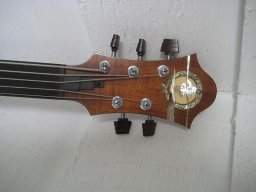
Yes, according to interview, the original one got stolen, and some guy called him years later offering to sell it back. He told the guy where to go. Before the Alembic he was playing a Gibson EB, short scale with mud buckers. Probably felt like a toy in his giant hands? When he switched to the Alembic his band mates could finally hear him, said "hey, you actually know how to play?"I doubt if he ever looked at a Soundgear unless Ibanez offered him an endorsement. He has had his Alembic since 1973 or 1974.
That's a fair point for sure. I started in 1984 and the Mel Bay book every beginner had then. Besides that it was a real struggle finding much else.To be fair he probably couldn't. There weren't a lot of resources back then.


He didn't need to study electric bass because he studied music which is transferable to all instruments, but especially so from double bass.


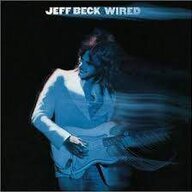
Not familiar with him but that is an interesting story.The late saxophonist / genius Andrew White wasn't working enough and like several horn players I know, he decided to play electric bass to get some gigs.
Legend has it that he got a bass, put the case on the floor in his living room and opened it up, and then just sat there for a while looking at the bass and thinking about it, decoding the fretboard in his mind.
He then apparently then just picked up the bass and started playing it as though he had it all figured out.
He went on to play bass with Stevie Wonder and the Fifth Dimension. While also playing oboe and English Horn in the American Ballet Orchestra.
He was also the original premier transcriber of Coltrane solos. I was fortunate enough to see him on the scene in DC back in the day.


well, Berklee started including electric bass into it's performance program in 1973. I personally took lessons on Upright and electric bass in the early 70's in Chicago.To be fair he probably couldn't. There weren't a lot of resources back then.
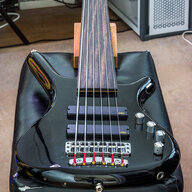
You do know his main is short scale with a pretty narrow fretboard, right?This is a guy who probably looked at the thin neck on a Soundgear and said "Oh Hell, No!"
He didn't need to study electric bass because he studied music which is transferable to all instruments, but especially so from double bass.