• TalkBass has been independent since 1998. Add your voice.
    Create a free account to reply to discussions, view embedded media, and browse with fewer display ads.
    Join freeLog in
    Want zero display ads or expanded classifieds tools? Compare plans.

Help! Is this a geniune Fullerton reissue P?

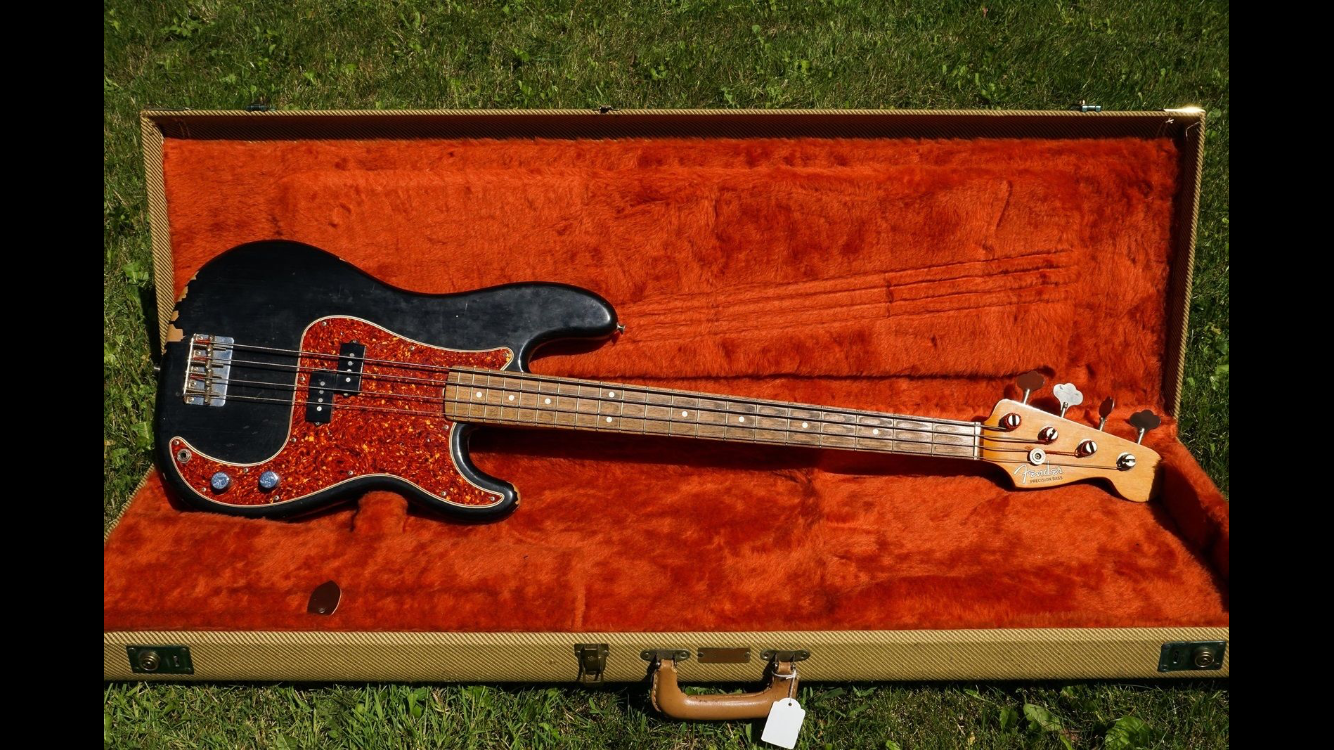
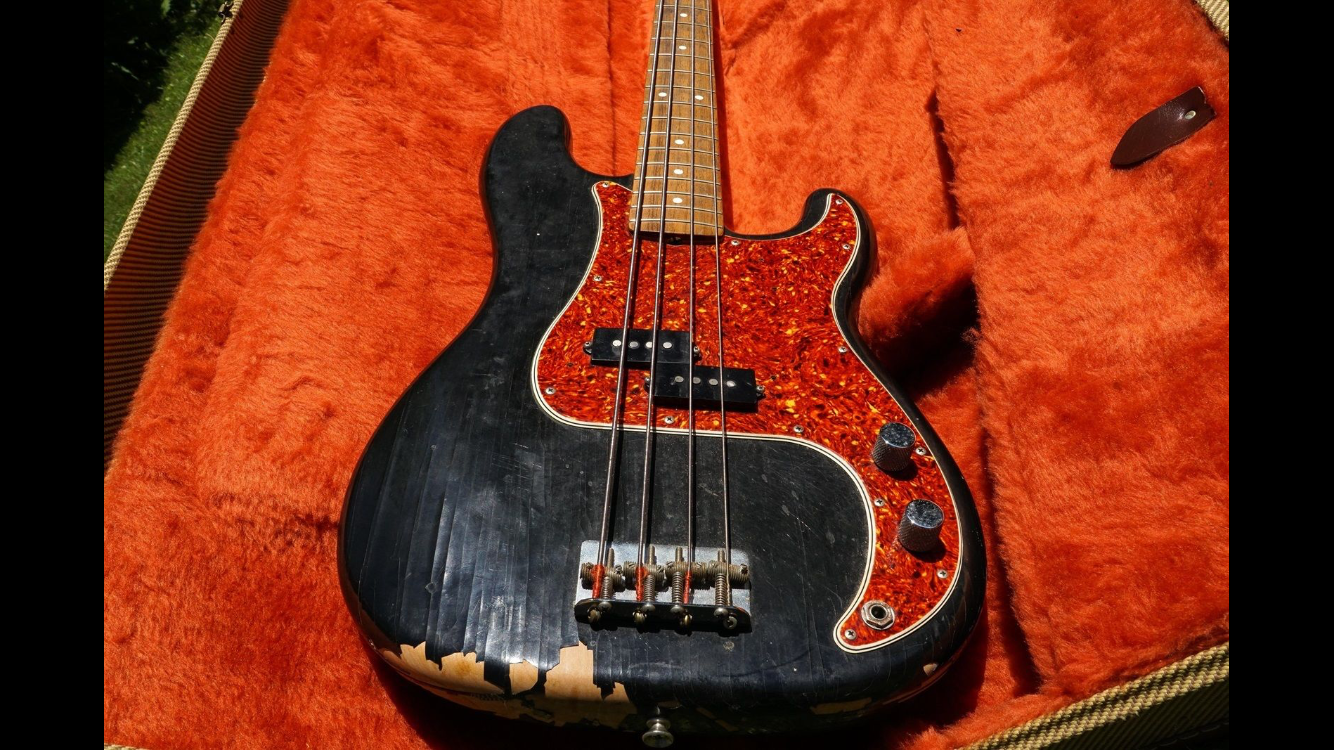
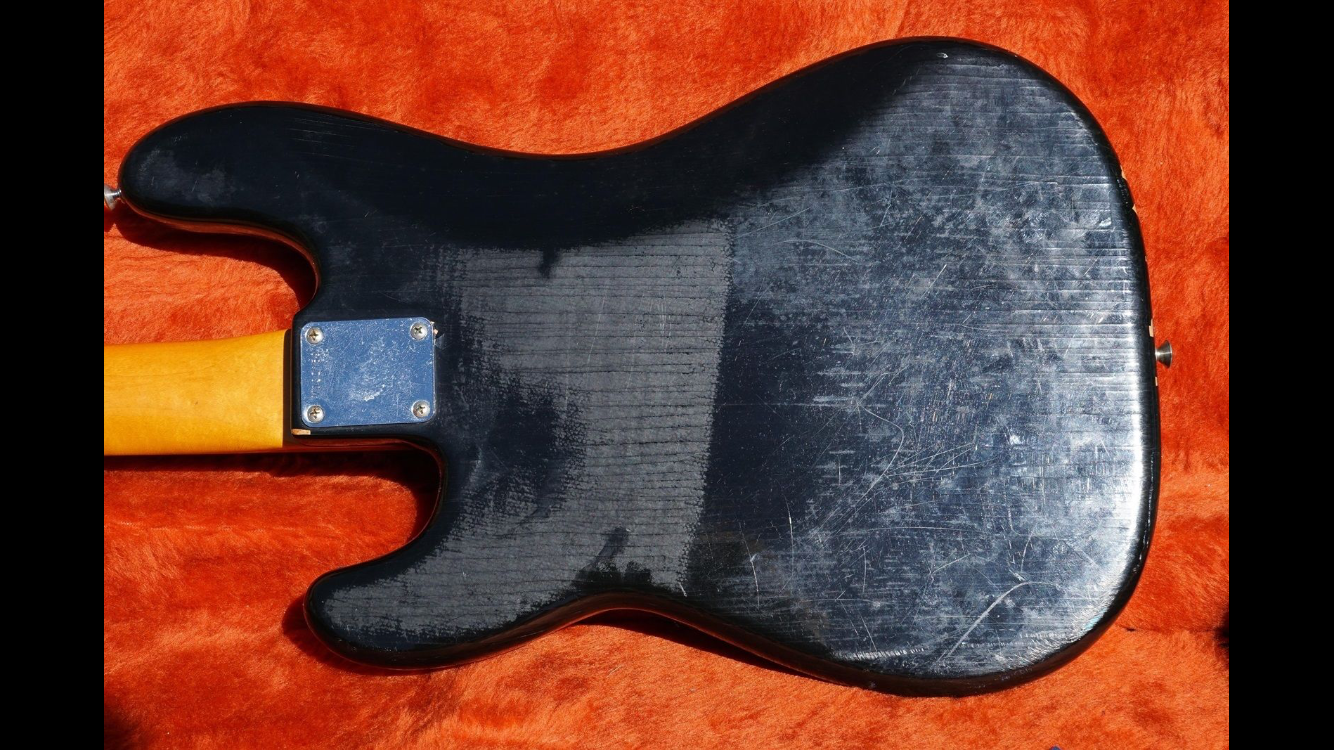
Hello. This P has been offered me at a decent price. Seller informs me it's a 62 reissue from 82 (neck and pots). Cosmetically it has a bit of wear – it has been stored for some time and apparently not in a friendly environment.

The cracking on the body does look more like a poly than a nitro finish, I think. And there are no holes for bridge cover.

Can anyone help shed some light over this. Fullerton bass or not?

IMG_8167.PNG
IMG_8168.PNG
IMG_8169.PNG
 
  • Like
Reactions: jd56hawk
@Dluxe

Yes, I agree, but reading up on the matter, there are posters on the Fullerton RI club (which I just found) that say that the decal placement first got right later on (mayby 83) – the first year(s) were apparently more hit and miss. Dunno, still diggin'

About the no holes – do we know for sure that all Fullertons came with covers installed?
 
About the no holes – do we know for sure that all Fullertons came with covers installed?

As I understand it, there should at least be little dimples where the cover screws would go. No the did not come installed.

I can't speak to PBass decal placement.

But I'd like to clearly see the s/n, the fingerboard where it meets the headstock and some other things.

Unless this dude is offering it for under a grand, no way would I grab it without many more detailed pictures.
 
The following is from the guitar dater project website

Guitar Info

This guitar is from the U.S. Vintage Series
made at the Corona Plant (Fender)
in Cannot be determined from serial number
Production Number: 32059


Fender: Corona
Corona factory was opened in 1985, Corona California, with major guitar production starting in 1987. With the addition of a custom shop in 1987 the plant currently employs about 700 workers. Apart from general and Custom Shop Fender instruments and amplifiers, it also encompasses Guild acoustic & electric guitars.

From Fender's website.

1982 saw the introduction of the U.S. Vintage Series instruments and “V”-prefix serial numbers. The only way to definitively date U.S. instruments with “V”-prefix serial numbers is to remove the neck and check the butt end of the neck heel for a production date, which may be stamped or written there.

SERIAL NUMBERS PRODUCTION DATES
EI + 5 digits
E2 + 5 digits
E3 + 5 digits
V + 4, 5 or 6 digits (U.S. Vintage Series except ’52 Telecaster) 1982
(For U.S. Vintage Series, check neck date for specific year)
E2 + 5 digits
E3 + 5 digits
V + 4, 5 or 6 digits (U.S. Vintage Series except ’52 Telecaster) 1983
(For U.S. Vintage Series, check neck date for specific year)
E3 + 5 digits
E4 + 5 digits
V + 4, 5 or 6 digits (U.S. Vintage Series except ’52 Telecaster) 1984
(For U.S. Vintage Series, check neck date for specific year)

CBS sold Fender in March 1985. Serial numbering didn’t change because instruments continued to be made using existing tooling, parts and serial number schemes.

SERIAL NUMBERS PRODUCTION DATES
E3 + 5 digits
E4 + 5 digits
V + 4, 5 or 6 digits (U.S. Vintage Series except ’52 Telecaster) 1985
(For U.S. Vintage Series, check neck date for specific year)
V + 4, 5 or 6 digits (U.S. Vintage Series except ’52 Telecaster) 1986
(For U.S. Vintage Series, check neck date for specific year)
E4 + 5 digits
V + 4, 5 or 6 digits (U.S. Vintage Series except ’52 Telecaster) 1987
(For U.S. Vintage Series, check neck date for specific year)
E4 + 5 digits
E8 + 5 digits
V + 4, 5 or 6 digits (U.S. Vintage Series except ’52 Telecaster) 1988
(For U.S. Vintage Series, check neck date for specific year)
E8 + 5 digits
E9 + 5 digits
V + 5 or 6 digits (U.S. Vintage Series except ’52 Telecaster) 1989
(For U.S. Vintage Series, check neck date for specific year)

So it should be clear as mud now. You need to get the neck off and check the true date.
 
  • Like
Reactions: DavC and SirMjac28
All the vintage reissues were finished in nitro. Peeling like that comes from excessive heat. The bass might have been stored in an attic for a long time.

I have a 1982 57RI. Neck date was for September 1982. The decal placement looks to be about the same as the bass in the OP.
 
I had a surf green '87 with the same serial number range.

FENDER AVRI DATES.png


So, V032xxx is statistically meaning "by January 88". Not a Fullerton (at least the neck plate isn't...)
Does it have the "Fullerton Hump"? This is the small bump in the upper horn cutout (from routing) where the body curves up to meet the neck. I don't know which year this finally disappeared.
My 2005 AVRI '62 Jazz has it. I will check if my 1999 AVRI '62 P has it.
 
Last edited:
  • Like
Reactions: design
The bass covers were supplied in individual bags , pilot holes drilled for the bridge but none for the neck pickup , only the pick guard holes to guide. Hope this info helps.
IMG_2296.JPG
IMG_2321.JPG

@Dluxe

Yes, I agree, but reading up on the matter, there are posters on the Fullerton RI club (which I just found) that say that the decal placement first got right later on (mayby 83) – the first year(s) were apparently more hit and miss. Dunno, still diggin'

About the no holes – do we know for sure that all Fullertons came with covers installed?
 
This does not seem to be a Fullerton reissue. I have two and they were made in early 83. They came with covers installed and case candy. The think the decal is in the wrong position too. Also, I don't think they originally came in black. I have read that bass production did not ramp up until early 1983.
 

Latest posts