
Enjoy the benefits of a premium membership!
Upgrade Account
-
TalkBass has been independent since 1998. Add your voice.
Create a free account to reply to discussions, view embedded media, and browse with fewer display ads.
Join free Log in
Want zero display ads or expanded classifieds tools? Compare plans.
You are using an out of date browser. It may not display this or other websites correctly.
You should upgrade or use an alternative browser.
You should upgrade or use an alternative browser.
Help me settle a bet. What chord do you hear?
- Thread starter Axtman
- Start date
More options
Who Replied?

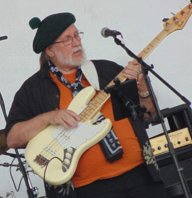
This is one of the songs that my band covers. I have a disagreement between the keyboard player and guitar player versus me (bass player). They hear one chord I hear another.
Here is the song. Telling Stories by Tracy Chapman:
Here is the tab for the bridge. It starts at about 2:05.
[Bridge]
D C G
Feel the pity and the pain for the ones who do not speak
D C (G or Em)?
Back the words you get respect and compassion and for posterity
C Em G D/F# Em
Spread the words and make believe there is truth in the space between.
Please listen, play along and tell me what you think. Thanks!
FYI: I am not affiliated with Tracy Chapman.
Yeah, I hear an Em too.
Even without seeing the music though, the bass line should give you a good indication of where's it's going to end up.
When that bass line uses a half-step passing note (not the root of the chord that's playing behind it), there's very little chance that the next interval is going to be a Major 7th below that passing tone. That's just too large of an interval for a passing note that is only ½-step below the note it's coming from to build a bridge to. In other words, the interval is too much to bridge with a ½-step passing note. That G, F#, Em however, is a very common passing phrase between G and Em and that F# is still part of the D chord (D, F#, A) that's playing behind it. Harmonically, it fits nicely as a passing note in a passing phrase.
G, F#, G presuming it went back up to the G on the D string instead of down to the G on the E string, would be a neighbor note giving that phrase a much different sound to the transition than that passing phrase does. It would have a very bright sound to it as the 7th of the G resolves up to the root of the G. That would work if it resolved to a Major chord because the 7th of any chord leans heavily into resolution in the tonic (root). That type of a neighbor note is more commonly used when the tonic (root or "the I") is being held twice as long as anything else and it is used to emphasize that chord at the half way point.
That "neighbor note" doesn't work in that song because when you listen to the chord the overall timbre of the destination chord has a minor sound to it, not a bright major sound. So that G, F#, G with the F# moving above and back to the G just doesn't fit the song very well at all, whereas the G, F#, E fits it perfectly.


So, in the end, if you don't play an E and play a G, you are one of those visionary bass players that do not always play the root note 100% of the time. Well done Man! 

It's kind of funny, or maybe sad, they are both classically trained musicians with music degrees. One is an accomplished recording artist, the other teaches music.
It just shows the "quality"
 of their education, but...
It's never too late for your "classically-trained musicians with music degrees" to join our very knowledgeable TB forum for some "refresher" harmony courses.


It's green with a flattened fifth (or maybe purple with a sharpened eleventh, it's not a very good recording so I can't be certain)What color is this, green or purple? I am having a hard time discerning which it really is.
View attachment 3492420


Wow! You won't believe this!
Bass Player: 1
Guitar Player and Keyboard Player: 0
My bandmates admitted today at rehearsal that I was correct. Then they fired me. Well at least I was right. (Just kidding about the firing.)
Bass Player: 1
Guitar Player and Keyboard Player: 0
My bandmates admitted today at rehearsal that I was correct. Then they fired me. Well at least I was right. (Just kidding about the firing.)
What's your prize, you get to drop the song?Wow! You won't believe this!
Bass Player: 1
Guitar Player and Keyboard Player: 0
My bandmates admitted today at rehearsal that I was correct. Then they fired me. Well at least I was right. (Just kidding about the firing.)
The original prize was a drink, but the real prize is basking in the glory of being right.

 you're correct, of course, but the OP just wanted to know the chord --- which was not that complicated/difficult.


