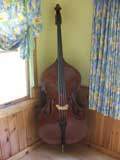
When I first moved to Alaska, I drove up from Seattle in the end of February and right into a bitter cold snap with humidity at zero. The bass went in and out of the car to a hotel room daily for about nine days and when I got to our new house and opened the case, my bass had essentially exploded. If I remember right, there were wide open seams all around the lower bouts, a small crack in the top, and a couple of saddle cracks for good measure. I saw this as an opportunity to find the best repairman in the city right away and sure I enough I quickly found him by talking to some of the Symphony people.
I took to humidifying the room that my bass lived in for the first two winters and then decided to experiment with letting the bass acclimate naturally to the extreme shifts in humidity. Lo and behold, the first winter I tried this, I experienced just a small seam split that needed repair. The next winter I tried it nothing was needed.
I am very very careful with my bass during the winter months since the wood is a bit brittle and will crack more easily than in the summer. The owner of the violin shop here in Anchorage thinks I'm crazy and speaks of the dangers of terminal dryness that non humidified instruments will get. Personally I have come to believe that if you are going to be religious about keeping water in the humidifier, the dampits moist but not dripping and in its case at all times except when it is being played, then by all means do the right thing by your instrument. If you have a tendency to slack off at all then the up and down fluctuation in humidity can be just as bad IMHO.
As far as tone goes, the timbre does tighten up a bit, but if I keep the wood vibrating with regular practice it is certainly a sound that I can live with for half the year. Just my 2 cents from the last frontier.