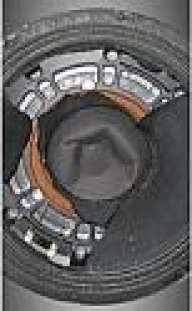
The title says it all: how do you know when your truss rod is not working? What is the usable range of adjustment (i.e. turns of the nut)?
I ask because I just changed strings on a new bass that I took delivery of in October. It came with really low action that I put up a little by loosening the truss rod. With the string change the action went a fair amount higher - not unplayable - but higher. I turned the truss rod about a 1/3 to 1/2 a turn (right - righty tighty) and let it settle for several days and I am not sure it did anything. Maybe a little. I gave it another 1/4 turn this evening and it still seems high.
There was no snapping sound, no difficult resistance. Nothing to note in the feel of the truss rod movement. I was always told to adjust in 1/8 or 1/4 turns and let it settle. I am thinking the total 3/4" turn should have shown some results. So when the rod is "adjusting", how much useable range should it have have?
The bass is a new Sandberg VT5 with a roasted maple neck and pau ferro fingerboard.
Well the first thing you have to know is which type of truss rod are you dealing with? Is it a single action or a dual action I don't know for sure if the California series basses use a dual action truss rod but the other Sandberg's that I have come in contact with have dual action rods. They work differently. They allow you to move the neck both up and down IOW forward or back bow conditions. Pardon me if I am being too simplified here but I don't know the extent of your knowledge. If you already know all of this it never hurts to have a refresher anyways. Someone who doesn't know might read through this whole thread and everybody's opinions are good and valid and maybe it will help somebody else
On a dual action truss rod there will be a spot in the middle of the nuts travel where it begins to feel loose like it's disconnected. Because In a sense it is. When you get to that spot where it is loose turning the truss rod nut clockwise causes the neck to become convex creating a backbow. AKA less relief like righty tighty
So naturally going the other direction counterclockwise forces the neck to be concave creating a bowed condition. AKA more relief like lefty loosely.
Sometimes that can get very confusing cuz I have seen occasions where you have to turn the nut all the way back to the center neutral position and then go the other direction to actually get the neck to move to where you want it to be. sometimes you don't have to at all it just depends.
If you change strings and the action went up that's a clear sign that the new strings are higher tension causing The action to go higher Because there is more string tension pulling against the neck therefore it's going to pull forward more creating more relief in the neck. So you are correct in that you would need to tighten the truss rod but only enough to set the neck at the proper relief that Sandberg says you should be using. In my In experience the neck relief will be the same regardless of the string that's on there. except in some cases where you might want to have a little bit more relief in the neck like if you go to lighter gauge strings that vibrate more you may have to increase the neck relief to account for that as well as raise the action a little bit.
One thing that many people fail to realize is increasing the amount of relief in the neck even though when you look at it the curve of the neck doesn't appear to be that much it does raise the heel end of the neck and can actually cause fret buzz on the upper frets. The straight plane of the string remains the same but since the neck has more bow in it it essentially raises the end up enough where it will buzz if you lower the strings.
Since a dual action truss rod has the ability to physically move the neck in both directions I have never found it necessary to actually apply pressure to the neck to move it and then turning the truss rod. As the rod itself actually has enough strength to physically move the wood of the neck one way or the other. That's just the way I do it everybody has their own way. On a single action rod I will always help it out a little bit.
Also, on an older Rickenbacker That uses those hairpin style dual truss rods you never want to just tighten the nuts to try to straighten the neck. You must manually move the neck to where you want it to be and then tighten up the dual rods.
So, set relief to Factory specs then use the bridge to adjust your action if the saddles bottom out before you can get the action as low as you want then that's another issue and you will probably have to shim the neck I don't think you would have to do that with a Sandberg but you never know.