

Enjoy the benefits of a premium membership!
Upgrade Account
-
TalkBass has been independent since 1998. Add your voice.
Create a free account to reply to discussions, view embedded media, and browse with fewer display ads.
Join free Log in
Want zero display ads or expanded classifieds tools? Compare plans.
You are using an out of date browser. It may not display this or other websites correctly.
You should upgrade or use an alternative browser.
You should upgrade or use an alternative browser.
How much should a pickup route cost?
- Thread starter gjbassist
- Start date
More options
Who Replied?
Unless you know somebody, I wouldn't expect to pay much less than $100. That's not a bad price at all.
And last time I posted in a thread like this I was telling all the luthiers they were ripping people off
And last time I posted in a thread like this I was telling all the luthiers they were ripping people off
mikeyswood
Inactive
Google is your friend.
Actual experience trumps Google.

SDB Guitars
Commercial User
...I'm surprised there's such a vibrant market for an attachment that is for a misuse of another tool...
...clearly you don't know what you're talking about, and might consider doing a wee bit of research before bashing an idea.
Google is your friend...
I used Google, and here's some of what I found...
SGW - a senior member at [B said:Invalid Link Removed[/B] ]...The bearings in a drill press, and the whole head, are designed for thrust loads. Milling puts a great deal of side loading on the quill. The typical bearings in a drill press are also far too loose for milling, and you'll get chatter.
The entirety of that thread can be found here - Invalid Link Removed - it is essentially machinists explaining why you should not use a drill press as a mill. If you want to mill, use a mill. It's tolerances will be what you need, and you won't destroy your machine doing it.

Actual experience trumps Google.
You're pointless. The person who started this line of discussion DID it -- so I think his experience would trump your snarkiness.
I used Google, and here's some of what I found...
The entirety of that thread can be found here - Invalid Link Removed - it is essentially machinists explaining why you should not use a drill press as a mill. If you want to mill, use a mill. It's tolerances will be what you need, and you won't destroy your machine doing it.
I've read plenty of similar discussions -- and a lot of them involved people saying "you can't" to people who eventually did. Even a casual scan of articles would confirm that lots of people do it, and make it work. Some put more effort into modding the equipment than others, but the bottom line is irrefutable -- it can be done.
My casual search didn't turn up any "I destroyed my drill press by using it as a mill" threads...find some and post them here -- that would be more compelling than simple nay-saying.
And not everyone wants a mill in their home, or has room, or the money...when they make this work, they're being resourceful, and that's admirable.
EDIT: I just DID a search on the phrase I suggested and found some very interesting threads with very useful information on the topic -- very educational stuff. Better than just saying "don't do it."
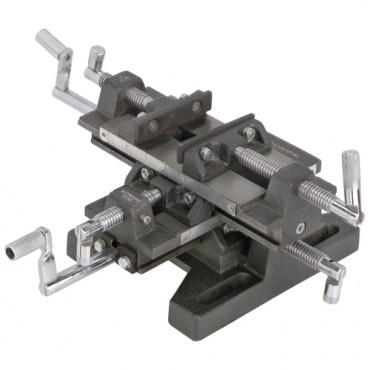
So, how does the bass attach exactly?
Block attached to underside of board, block in clamp, bass clamped to topside of board. OR realize that it was an example demonstrating that milling with a drill press is not a novel concept...
mikeyswood
Inactive
You're pointless. The person who started this line of discussion DID it -- so I think his experience would trump your snarkiness.
Keep reading noob!

You will quickly learn that my contributions here are extremely pointed and among the most useful to the aspiring builders and future readers.
Instructing someone that is starting out to abuse and misuse the capital expenses that are required to continue is pathetically idiotic advice.

Deep breaths everyone, and let's all try to remember rule #1 here; respect.
There are going to be plenty of situations where something works out, even though the historically correct path was not taken. Should an inexperienced person take said new path? Probably not. The experienced folk would (imo correctly) guide that person to what has historically worked in the past.
Just my 2 cents...
There are going to be plenty of situations where something works out, even though the historically correct path was not taken. Should an inexperienced person take said new path? Probably not. The experienced folk would (imo correctly) guide that person to what has historically worked in the past.
Just my 2 cents...


I was charged 100.00 a few years ago to route a J cavity in a P-Bass. He did a less than professional job, so I routed it bigger for a MM pickup. I did a much better job but it took some time. I made a lot of measurements and constructed a fence with wood strips that allowed my Dremel to go only so far horizontally. I clamped or glued the fence to the bass. I had to control the Dremel vertically by hand, but the results were quite nice. I used the coarse and fine sanding attachments for the Dremel.

Hi.
$100 sounds about right for a first class job.
As for the other subject in hand:
As a machinist by hobby and having a degree in mechanical engineering, I'd side strongly with the people who don't advice anyone to try milling or routing with a cheap drill press.
Been there, done that, was young and extremely lucky.
When, not if, but when the collar comes loose, something is broken and lost. Be that the workpiece, You can consider yourself lucky, be that your arm, finger, eye, anything like that, well, that'll be one method you won't probably try again. Not that You'll play either if it's your arm or hand that's injured beyond repair.
If someone wants to encourage people to maim themselves, fine, perhaps they got the right to do so, but it's downright irresponsible if You ask me.
Sure, there's a lot of drill presses that can be used for routing and milling, but the odds that a person with such a machine would require advice on how to operate the said machine to its full potential are not too high.
Please keep Your limbs intact and functional when using power tools on a great hobby called instrument building. The luthiers hopefully know how to do it by now
Regards
Sam
$100 sounds about right for a first class job.
As for the other subject in hand:
As a machinist by hobby and having a degree in mechanical engineering, I'd side strongly with the people who don't advice anyone to try milling or routing with a cheap drill press.
Been there, done that, was young and extremely lucky.
When, not if, but when the collar comes loose, something is broken and lost. Be that the workpiece, You can consider yourself lucky, be that your arm, finger, eye, anything like that, well, that'll be one method you won't probably try again. Not that You'll play either if it's your arm or hand that's injured beyond repair.
If someone wants to encourage people to maim themselves, fine, perhaps they got the right to do so, but it's downright irresponsible if You ask me.
Sure, there's a lot of drill presses that can be used for routing and milling, but the odds that a person with such a machine would require advice on how to operate the said machine to its full potential are not too high.
Please keep Your limbs intact and functional when using power tools on a great hobby called instrument building. The luthiers hopefully know how to do it by now
Regards
Sam

Just because you can do it doesnt mean you should. You could carve a bass from a tree with a pocketknife if you had the time and patience. That hundred bucks will seem really cheap if you gouge a chunk out of your body with a router or drill press. If you like your bass enough to put a new pickup in it please god dont do it if you are not sure you can pull it off! When I build a bass or guitar the pickup route is the most nerve wracking part of the process. Ruining the route will be very, very hard to fix. If you dont have some decent experience with a router I would not try it.
I should note that I do sometimes use the drill press and a forstner bit to remove the majority of material before I use my router for the final cut. No milling though. Only vertical strokes. ( be careful of the depth!) By removing the majority of the material first, you lower the chances of losing control of the router. This also cuts down on the beating your router will take.

gbarcus
Commercial User
- Jul 20, 2008
- 398
- 12
- Disclosures
- Owner of Barcus Basses barcusbasses.com
I've only done a few pickup routing jobs. And let me tell you when you get to that point, you have put soooo much work into it already. It's a little nerve racking to say the least.
I must confess, a long time ago, I did try using a drill press as a router...never again. It just didn't have the speed needed and ripped the part I had right out of my hands, not to mention almost loosing digits. Good thing I had brown pants on.
I must confess, a long time ago, I did try using a drill press as a router...never again. It just didn't have the speed needed and ripped the part I had right out of my hands, not to mention almost loosing digits. Good thing I had brown pants on.


