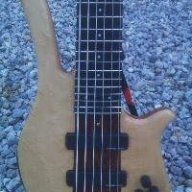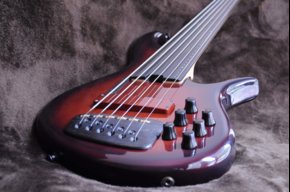
If you play modern metal... you need the extra range. There is a reason why fanned-fret basses are almost a requirement in bands like Krosis.
If you play Broadway/theater/showtunes... you need the extra range, especially since songs are in all different keys, so you need to be able to transpose quickly. Many theater bassists have 6-strings for that reason.
People who play bass in their churches need that low B for gospel music. Big name gospel bassists like Andrew Gouche play extended range basses and use that range.
And some songs are a little easier to play on a 5 than a 4. For example, playing the bassline to Luke Bryan's "Country Girl (Shake it for Me)" on 4-string requires a lot of fingerboard jumps, whereas playing it on a 5-string requires fewer and shorter jumps, since you can play "across the street" rather than "down the road" from the closed E on the B string.
I think a 5-string is essential for a cover band these days, since 80s and 90s songs are what's popular in that scene. Many 90s songs were in drop D and the 80s is when 5-string basses started gaining traction to compete with the low notes of synthesizers.
Even contemporary pop music requires low notes. The first note in "Good 4 U" by Olivia Rodrigo is a low C#. The studio bassist played it on a 5-string. If you want to play it on a 4, you'd need to drop down to drop-C tuning (CGCF) or something.
If you play Broadway/theater/showtunes... you need the extra range, especially since songs are in all different keys, so you need to be able to transpose quickly. Many theater bassists have 6-strings for that reason.
People who play bass in their churches need that low B for gospel music. Big name gospel bassists like Andrew Gouche play extended range basses and use that range.
And some songs are a little easier to play on a 5 than a 4. For example, playing the bassline to Luke Bryan's "Country Girl (Shake it for Me)" on 4-string requires a lot of fingerboard jumps, whereas playing it on a 5-string requires fewer and shorter jumps, since you can play "across the street" rather than "down the road" from the closed E on the B string.
I think a 5-string is essential for a cover band these days, since 80s and 90s songs are what's popular in that scene. Many 90s songs were in drop D and the 80s is when 5-string basses started gaining traction to compete with the low notes of synthesizers.
Even contemporary pop music requires low notes. The first note in "Good 4 U" by Olivia Rodrigo is a low C#. The studio bassist played it on a 5-string. If you want to play it on a 4, you'd need to drop down to drop-C tuning (CGCF) or something.