• TalkBass has been independent since 1998. Add your voice.
    Create a free account to reply to discussions, view embedded media, and browse with fewer display ads.
    Join freeLog in
    Want zero display ads or expanded classifieds tools? Compare plans.

How to EQ for Flats on Stingray?

I have put on my very first set of flats ever. This is on my Ernie Ball Shorty.

I'm not sure if it's a novelty thing, but I can't put my bass down. Every free second I'm reaching for it.

I'm loving them for that Motown sound. I'm loving them for no string noise. I'm loving the feel and the easy sliding into next position. I was totally uneducated about them and I can't even tell you how much I'm enjoying nearly every aspect of them already and didn't even know what to expect.

That said, I've been messing with my EQ because they are different. I've pulled down the treble and mids and am more balanced on my amp and really digging it, but if I dig in I'm still getting a kind of farty sound or a little too much growl. How do I EQ my amp to keep the clarity, and a little of the growl I like, but get rid of the farty sound? I'm turning my tone knob about half way to zero depending on what I'm playing (Sweet Child of Mine or Tears of a Clown, etc).
 
Just for clarification, what specific brand/model of flats are we talking about here?
These are the Dunlop Short Scale 45-105. I went with the 45-105 because that is the size of the round wounds that came on it.

I basically guessed because I didn't know anything about flat wounds other than people like them for that a deep fundamental with Motown sound, but I find them versatile enough so far I think to cover anything I like to play.

Just need to understand any EQ advice I can get to get the most out of them. I'm not sure if maybe it's even my preamp level may just need to come down too because they have more output than a round wound? Is that possible? I don't know.
 
The main thing to remember about short scale flats is... they're usually all about the fundamental tones. Particularly the ones in the heavier gauges. I have those same GHS Precision Flats on 3 of my short scale basses; it's no coincidence that those are the shorties that are used for the fundamental tone - and harmonics be damned. The shorties that I do want some harmonics from? They wear 39-96 La Bella 760FX's; the 40-100 Pyramid Gold flats; or the 42-100 Dogal R45's. I don't use them, but based on my experience with the long scale sets? Short scale D'Addario Chromes, or the new shorty EB Slinky Cobalt Flats, would certainly get you out of the Thud Swamp.
Some people say that DR Legends aren't "thumpy", but... the short scale set on my aluminum necked, headless Kramer Duke certainly are. Almost identical sound to the short scale 50-107 GHS Bass Boomers they replaced, in fact. So...
Bottom line? IME, low end fundamental tone? Heavier gauge flats. More middy tone, with some harmonics? Lighter gauge flats will give that to you...:cool:
 
  • Like
Reactions: Treblefree
So what I've done so far is dialed back the bass on my EQ, then I realized I had some extra bite and unevenness now on my G and D strings, so I adjusted my pickup as well. Now I'm more balanced.

I played out yesterday and liked what I heard pretty good. Went straight out of my di to FOH at an outdoor event. I am still getting used to the sound. Maybe next time I'll go for 40-100, but at $60 a set, I don't want to do a bunch of experiments.

I notice bending my D and G strings is more difficult, but seems like E and A strings bend pretty easily. Didn't anticipate that either. Sounds very good vibrato though so no complaints at all. In fact, when i vibrato, I hear it more than ever in the mix.
 
So what I've done so far is dialed back the bass on my EQ, then I realized I had some extra bite and unevenness now on my G and D strings, so I adjusted my pickup as well. Now I'm more balanced.

I played out yesterday and liked what I heard pretty good. Went straight out of my di to FOH at an outdoor event. I am still getting used to the sound. Maybe next time I'll go for 40-100, but at $60 a set, I don't want to do a bunch of experiments.

I notice bending my D and G strings is more difficult, but seems like E and A strings bend pretty easily. Didn't anticipate that either. Sounds very good vibrato though so no complaints at all. In fact, when i vibrato, I hear it more than ever in the mix.

It's ridiculous how expensive flats are becoming. When I started using Dunlops around 2018, the price was in the low 30s. As soon as the pandemic-era shortages started, they were 50 everywhere.

I always felt that 40-100 was the gauge to get with those, but the big ones sound good too. The low E can get a little outsize. Trying an HPF and controlling your gain will help.
 
  • Like
Reactions: Treblefree
I have a LOT of experience with flats on a Stingray (just not short scale, which make a huge difference.)

People will try to tell you that the "Stingray" sound is rounds with tons of treble, but Stingrays first shipped with flats and some of it's most iconic players, like Bernard Edwards, used flats. It was designed for flats. IMO this is by far the best tone a Stingray can produce.

I have a Classic 2 band now, and had a two 3 bands in the past. The 2 band is a little more forgiving, because it sounds much better regardless of what strings you use. The 3 band is a very unforgiving setup when it comes to strings, but can still sound really good.

Overall, EBMM Cobalt flats or TIs sound the best, IMO. Cobalt flats being the absolute best. they have a little zing but are still very warm and have the mids in the right place, espicially for a 2 bander.

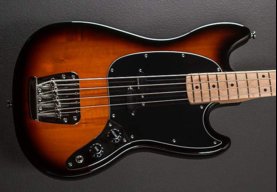
What doesn't sound good are more dead/thumpy flats like LaBella. None of the Stingray character comes out with those strings and it's just a pretty boring situation IMO. If you want that, get a Mustang or a P - both of which thrive with traditional flats.

As far as EQ, mild settings sound best with flats IMO. Little bass boost, a little less treble, mids flat or every so slightly reduced. Let the strings and the pickups do the heavy tone lifting.

I would start with your amp AND bass totally flat. Try just boosting the treble and bass slightly on the Ray, and keep the mids flat. Then, adjust your amp for any correction you need at that point (possible a little mid dip, and maybe a little mroe bass and treble.) Then you will be able to leave the amp alone and have more freedom on the bass itself to change the tone. The key is to be able to use about 75-85% of the bass knobs before it sounds bad, with the flat position, or close to it, being your default sound. This way you get a nice range on the bass itself.
 
Last edited: