I have always wanted to do it, since I started playing bass I've dreamed about building my own and that dream grew. I would love nothing more then to make a career of it, but it seems nearly impossible to get into. Information, ANY information, will be massively appreciated.

Enjoy the benefits of a premium membership!
Upgrade Account
-
TalkBass has been independent since 1998. Add your voice.
Create a free account to reply to discussions, view embedded media, and browse with fewer display ads.
Join free Log in
Want zero display ads or expanded classifieds tools? Compare plans.
You are using an out of date browser. It may not display this or other websites correctly.
You should upgrade or use an alternative browser.
You should upgrade or use an alternative browser.
How to Make A Career as a Luthier?
- Thread starter MikeyFingers
- Start date
More options
Who Replied?Be professional. Be good at what you do. Take care of your customers and your customers will take care of you.
It's just like any other line of business in that sence don't you think??
It's just like any other line of business in that sence don't you think??

I have always wanted to do it, since I started playing bass I've dreamed about building my own and that dream grew. I would love nothing more then to make a career of it, but it seems nearly impossible to get into. Information, ANY information, will be massively appreciated.
Go here
[Invalid or Expired Link Removed]
Join, read the archives. Everything you'd ever want to know.
and here
http://www.luthiersforum.com/forum/
Lots of great folks and info at both sites.
My first acoustic took 9 months. I had a very different work schedule then. My classical took over a year but I had to make a number of tools and jigs for it, either way I could never make a guitar quickly enough to even make minimum wage if I were to sell them for a reasonable price. I love to build, but I take breaks from it to focus on playing and save up for wood for the next one.
It's said that a journey of a thousand miles begins with one step. Start that first build.

- Dec 20, 2004
- 4,267
- 2,481
- Disclosures
- Player-Builder-Founder: Honey Badger Pickups & Regenerate Guitar Works
be prepared to dream of making the "big bucks" as a Fry Chef at Burger King ... when that starts to sit well, you're getting close to being ready to make luthery you bread winning career ... and once you're there don't take it personally when people complain about your outrageously high pricing compared to a MIM Fender bass
I assure you there's more reality than humor in my statement
R
I assure you there's more reality than humor in my statement
R
How does one make a career as a luthier? By landing a part time job that pays major bucks to fund your instrument building.

Read this thread - if this sounds like you, then you're well on your way! 
http://www.talkbass.com/forum/showthread.php?t=382799
http://www.talkbass.com/forum/showthread.php?t=382799

How does one make a career as a luthier? By landing a part time job that pays major bucks to fund your instrument building.
This reminds me of brewing. After winning numerous homebrew medals/competitions, I started to think seriously of giving up my career in IT and working in a microbrewery or brewpub.
Before I quit my job (thank God), I decided to apprentice somewhere to get a feel for the field and gain experience. It was an eye opener. It was ball busting work and long hours with 99% of the work spent cleaning. Brewers were lucky if they made $35,000/yr and bounced from brewery to brewery for more salary and autonomy. Accountants dictated recipes to control costs. Owners rushed batches that weren't finished to tap in order to make money (nothing on tap, no sales). My fairy tale dream of sitting all day and formulating the world's coolest beer recipes were shattered.
Thankfully, I never ruined my favorite hobby by taking a brewing position!
apprenticing to a respected luthier is a good idea. you will learn how they fix/build instruments as well as how they run the business. making a living making anything in this country is very challenging - labor costs in north america make it very difficult competing w/foreign (asian) workers. You could also go to school and think of being a luther as a trade.
Doing quality repairs in a big city seems to be a viable way to make money. I have run my own shop for 3 years now in downtown brooklyn and I have a constant flow of work. I also do a small amount of custom guitars and basses. People always need a good repair person to fix or customize their instruments. Customer service goes a long way in this field.
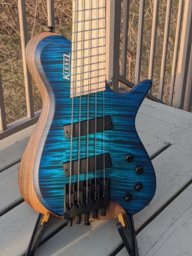
Doing quality repairs in a big city seems to be a viable way to make money. I have run my own shop for 3 years now in downtown brooklyn and I have a constant flow of work. I also do a small amount of custom guitars and basses. People always need a good repair person to fix or customize their instruments. Customer service goes a long way in this field.
just curious, how did you learn to do repair work? school? books? apprenticeship?
Hi.
As a someone who didn't make it, a few things come to my mind.
Skill: That's the most important, IMHO. You have to be good, NO, exeptional, with your hands.
Speed: You have to be able to work with a tight schedule in order to at least break even.
Artistic: There has to be something appealing in your instrument that can't be found on the shelf.
You have to ask yourself: Why would anyone want my instrument for X amount of money when a similar product can be had for for example X/3 of the price from the music shop? With replacing option if it doesn't suit me. Or if I have a change of heart.
Dedication/devotion: Instrument building has to be the priority, a main goal, the sole career plan.
I failed on the last: dedication/devotion.
I had, and still have, a million and then some interests, which all eat up any chances of any one from being profitable. But then again I have a degree and work for someone else most of the time.
Instrument building is one of those activities that I see as great hobbies, but lousy careers. Just as playing for a living or doing sound, or being a stage hand, a roadie, etc. for a living. The glamour, if there ever even was any, wears off REALLY fast if You're not 100% into it, let me tell you.
If You're sure, 100% sure, go for it.
Otherwise, it's a great hobby that can even bring some occasional income.
Regards
Sam
As a someone who didn't make it, a few things come to my mind.
Skill: That's the most important, IMHO. You have to be good, NO, exeptional, with your hands.
Speed: You have to be able to work with a tight schedule in order to at least break even.
Artistic: There has to be something appealing in your instrument that can't be found on the shelf.
You have to ask yourself: Why would anyone want my instrument for X amount of money when a similar product can be had for for example X/3 of the price from the music shop? With replacing option if it doesn't suit me. Or if I have a change of heart.
Dedication/devotion: Instrument building has to be the priority, a main goal, the sole career plan.
I failed on the last: dedication/devotion.
I had, and still have, a million and then some interests, which all eat up any chances of any one from being profitable. But then again I have a degree and work for someone else most of the time.
Instrument building is one of those activities that I see as great hobbies, but lousy careers. Just as playing for a living or doing sound, or being a stage hand, a roadie, etc. for a living. The glamour, if there ever even was any, wears off REALLY fast if You're not 100% into it, let me tell you.
If You're sure, 100% sure, go for it.
Otherwise, it's a great hobby that can even bring some occasional income.
Regards
Sam
- Aug 14, 2008
- 698
- 12
- Disclosures
- Owner and Operator, Xylem Handmade Basses and Guitars
be prepared to dream of making the "big bucks" as a Fry Chef at Burger King ... when that starts to sit well, you're getting close to being ready to make luthery you bread winning career
LOL...that's about the size of it...
I built a mandolin with a friend who had made his living as a luthier - just scraping by - in Texas for eight years. I later made a 12-string guitar with William Cumpiano, whose web site is here: http://www.cumpiano.com/ I'd suggest you go to the site and read it - all of it, including the links to the work of his business partner Harry Becker. (You can see my guitar on the 'Build a Guitar with William' page.)
I didn't build either instrument so that I could make a living at it; I was curious, and I wanted the experience. It is exacting work, to say the least, and seems to fit best with a certain kind of personality.
I think the bottom line is, if you want to make lutherie your life's work, then yes, you should listen to people saying you'll end up flipping burgers - and then turn away from that and go for your dream.
I didn't build either instrument so that I could make a living at it; I was curious, and I wanted the experience. It is exacting work, to say the least, and seems to fit best with a certain kind of personality.
I think the bottom line is, if you want to make lutherie your life's work, then yes, you should listen to people saying you'll end up flipping burgers - and then turn away from that and go for your dream.

If you want to make a small fortune out of luthiery, start with a big one...
I think HAVING to do it for a living is the part that ruins it, I do it part time for a hobby, but if i had to do it, that wouldn't be much fun.
For example: I like to cook and grill, but i wouldn't want to have to cook to make my living...
I think HAVING to do it for a living is the part that ruins it, I do it part time for a hobby, but if i had to do it, that wouldn't be much fun.
For example: I like to cook and grill, but i wouldn't want to have to cook to make my living...
For 25 years I owned a Porsche restoration business. I was successful because I loved what I was doing. However; taking a loved hobby and making it a business destroys some of the fine points of the love affair. Rent, payroll, taxes, insurance and customers all cause pain from time to time. I am not trying to discourage anyone from doing what they love, but it is not with bumps and bruses.

- Jun 6, 2004
- 6,351
- 543
- 66
- Disclosures
- Owner and builder Clementbass
Several good and true quotes here.
"Be prepared to dream of making the "big bucks" as a Fry Chef at Burger King ... when that starts to sit well, you're getting close to being ready to make luthery you bread winning career ... and once you're there don't take it personally when people complain about your outrageously high pricing compared to a MIM Fender bass."
"Taking a loved hobby and making it a business destroys some of the fine points of the love affair. Rent, payroll, taxes, insurance and customers all cause pain from time to time. I am not trying to discourage anyone from doing what they love, but it is not with bumps and bruses."
I did it easily. After working in one industry for 28 years I got fired from what I thought was a full time job working only 40-45 hours a week. Bass building was just for fun on the side but it was the only other thing I knew how to do. If at all possible keep it as a side business. It is much more fun to do it because you want to that because you have to. Tom
"Be prepared to dream of making the "big bucks" as a Fry Chef at Burger King ... when that starts to sit well, you're getting close to being ready to make luthery you bread winning career ... and once you're there don't take it personally when people complain about your outrageously high pricing compared to a MIM Fender bass."
"Taking a loved hobby and making it a business destroys some of the fine points of the love affair. Rent, payroll, taxes, insurance and customers all cause pain from time to time. I am not trying to discourage anyone from doing what they love, but it is not with bumps and bruses."
I did it easily. After working in one industry for 28 years I got fired from what I thought was a full time job working only 40-45 hours a week. Bass building was just for fun on the side but it was the only other thing I knew how to do. If at all possible keep it as a side business. It is much more fun to do it because you want to that because you have to. Tom

To quote the owner of my company, paraphrase another poster up ^ there (Georynn), and reuse a saying/joke that's been used elsewhere with great humor and accuracy:
Q: "How do you make a million dollars in the bass building business?"
A: "Start with three."
Don't do it because you want to.
Don't do it because you love it.
Do it only if you HAVE TO.

As the guy that handles the "business side" of a shop, Rocky's admonition to be aware of all the less glamorous aspects is important to remember. There is a lot about being in this business that you probably aren't thinking about, but is very necessary to deal with on a daily basis.
Good luck if you jump in, and you won't be thought any less of if you decide not to, or just do it as a sideline/hobby (which would be my suggestion).
Q: "How do you make a million dollars in the bass building business?"
A: "Start with three."
Don't do it because you want to.
Don't do it because you love it.
Do it only if you HAVE TO.
As the guy that handles the "business side" of a shop, Rocky's admonition to be aware of all the less glamorous aspects is important to remember. There is a lot about being in this business that you probably aren't thinking about, but is very necessary to deal with on a daily basis.
Good luck if you jump in, and you won't be thought any less of if you decide not to, or just do it as a sideline/hobby (which would be my suggestion).


