• TalkBass has been independent since 1998. Add your voice.
    Create a free account to reply to discussions, view embedded media, and browse with fewer display ads.
    Join freeLog in
    Want zero display ads or expanded classifieds tools? Compare plans.

How to make bass speaker sound lower?

This is the sound I'm trying to emulate.


Here is what I hear in that recording.

The bass sounds like a Jazz with both pickup on full so it is a bit scooped and the high mids and maybe treble are rolled off. They are probably plucking gently near the neck with a lot of gain so the amp is over driven a little. It also sounds like there is an octave effect on the bass. So the bass line is probably played near the middle of the neck and they let the octave effect fill in the bottom.

The recording its self is mixed to highlight that deep bass. If you listen closely you will notice that the bass is all alone on the bottom. The biggest bass competitor which is usually the kick drum is tuned high and tight and well damped for a punchy sound that sits above the bass in the mix. The drummer never uses deep tom toms and even the snare is very sharp and high. Very typical Reggae mix. Also note when the bass drops out in the middle it is really obvious and makes it sound even deeper when they come back in.

Here are some great tips on how to get that bass sound + the best reggae bass video I have found. I love this guy!
 
Hartke does not make a 4x12 bass cabinet. You likely have a 4x10, which like many Hartke cabinets is going to be quite bright and mid-focused. That said, it should be able to reproduce most frequencies unless you tune down very low. What are your EQ Settings?
 
  • Like
Reactions: BeauZooka
The deepest enveloping sound I ever heard was a local guy many years ago using a Rick into an old Marshall 4x12 stack...Massive full bodied sound that could fill a pretty large function room....you can over think this stuff.
 
Audio sample: compressed round tone with low mids boosted (somewhere between 200-400hz).

Roll the tone knob down on the bass.

I'd probably put the bass knob back at around 12 oclock then:
treble at 9 oclock (or even lower- but start at 9)
shape 12-2pm can goose a little after checking
Frequency down to 9 oclock.
Brite is off

compression at noon (that audio sample is HIGHLY compressed in the bass)

and keep using the master to turn up to get the bass loud enough. If you still feel you need more bass- goose bass knob to maybe 2 or 3 or so. It's really got a diminishing return:


The manual for the amp is quite informative:

"
Bass: +8/-14dB, 80 Hz relative to 12 o’clock
Shape: +11/-3dB relative to 12 o’clock
Frequency: 200Hz to 800Hz
Treble: +5/-20dB, 6kHz relative to 12 o’clock


"
The Hartke TX600 Bass Amplifier gives you enormous control over shaping the sound of your bass, using a process called equalization. To understand how this works, it’s important to know that every naturally occurring sound consists of a broad range of pitches (frequencies) combined together in a unique way. This blend is what gives every sound its distinctive tonal color. Actually, it’s hard to make the TX600 EQ sound bad.

The TX600’s EQ section is a tone
stack equalizer. The tone stack EQ
is a fixed bandwidth EQ. It is a little
different than normal boost and
cut hi-fi bass and treble controls as
there is no theoretical “flat” setting.
When the three knobs are at their
center (12 o’clock) position, the response is set to a preset equalization curve that has been tailored for the bass guitar. The TX600 EQ controls are somewhat interactive, since electronically, the BASS control feeds the SHAPE control, which feeds the Treble control. You should experiment with the EQ knobs and your particular bass to dial up the best sound.

The SHAPE and FREQUENCY knobs apply an adjustable notch (scoop) filter to the specified frequency area, so that you can customize the effect of the EQ curve that best complements your particular bass instrument. As the SHAPE knob is rotated clockwise the depth of the notch increases. Moving the FREQUENCY control clockwise causes the notch filter to be applied to higher frequencies, while moving the knob counterclockwise causes it to be applied to lower frequencies.

In addition to the EQ knobs, the TX600 also includes a BRITE switch. The BRITE switch adds an overall boost to the high-end frequency response. This button works in conjunction with the GAIN knob (similar to the Loudness button on a stereo). As you raise the GAIN, the overall boost is diminished. When the GAIN is set to “10” (turned fully clockwise), the BRITE switch has no effect on the audio.

In many instances, the best way to deal with equalization is to think in terms of which frequency areas you need to attenuate, as opposed to which ones you need to boost. Be aware that boosting a frequency area also have the effect of boosting the overall signal; specifically, too much low frequency EQ boost can actually cause overload distortion, or even harm a connected speaker. In general, if you’re going to apply a fair amount of low frequency EQ boost, it’s a good idea to keep compression on, if only to protect your speakers from potential damage.

"
 
With your bass head, start with the compression off and bass and treble at noon. Then turn up the gain until the sound gets a little dirty. Then mess around with the shape and frequency until you get close to what you want. Then fatten that up with the compression. Finally tweak the bass and treble a little. These will depend on how it sounds in the room with your band. You may need a surprising amount of treble if you are playing with a drummer.

Also get your drummer to put a pillow in their kick drum and work to really lock in. Also and this is the hardest one...see if you can get your guitar player(s) to reduce the amount of bass in their tone to make room for you and if you have a keyboard player tie their left hand behind their back :thumbsup:. That kind of bass tone needs room to breath!:bassist:
 
  • Like
Reactions: erratick
Hi, I have a Hartke 4x12 1000 watt cabinet and a 600 watt Hartke amp. I want to know if it is possible to get a lower end sound out of my speakers if I get some sort of bass effects pedal?
Turn down the mids and turn it up. You'll get more low end without boosting anything but volume.
 
  • Like
Reactions: erratick
This is the sound I'm trying to emulate.
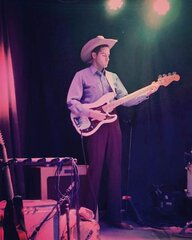

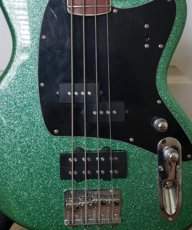
maybe you might like an EB0 bass

preview.jpg
 
I believe a low pass filter is what you need or a combination
Depends what you're trying to do, they both have good use cases. In the case I stated of removing low inaudible low frequencies, you'd need a high pass filter.

A high pass filter passes any audio higher than the set frequency. In this case I'd usually set it near 40hz, so anything above 40hz is passed and anything below 40hz is attenuated.

A low pass filter pass any frequencies below the set frequency. Set it at 1khz and it'll pass through anything below that, and it'll roll of frequencies above 1khz.

Most people would benefit from a combo pedal, as both of those functions are extremely useful. But if I had a budget and/or only room for 1, I'd take a HPF to tame below 40hz every time.
 
You have all the ingredients to get the job done and a lot of great EQing advice to try out, the only thing I haven’t seen which I’d like to add to your list of stuff to try is various right hand techniques. A very very old style is to pluck with your thumb over the end of the fingerboard. If you don’t have a tug bar on your bass you can hook your fingers on the g-side if the fretboard. That’ll get you a lot of low end. Generally speaking the closer to the center of the string and the more meat you’re putting on the string to pluck it, the more bloom and boom you’ll get. Fingertips by the bridge, tight and defined. Side of Thumb over the end of the fingerboard, maximum boom and bloom, then there’s the whole range in between to try out.
Also, you mentioned pickups. Anything overwound may help you out. One more thing, I’m going to assume you’re already listening to 10ft. Ganja Plant if you are posting John Brown’s Body songs, but if not, look them up too. Mostly the same band, all of them killers.
 
Remember it takes space and distance for a fundamental bass frequency to propagate. In one band I was in the 90's, I had drummer who claimed he could never hear his bass drum, even though he had a huge sub right beside him. We could never get him to realize this fundamental (pun intended) fact of how sound works, even though at the levels he desired we were pulverizing the mortar in the bricks in the back wall and shaking dental fillings loose in the audience. In other words, you're never going to hear it standing next to it. To that end, I don't even take a bass amp on stage anymore. I have a small hot-spot style monitor that gives me the articulation, along with a little keys and vocals, so I can lock with the drummer, and let the sound man do the rest.