Hey! I got a Fender Kingman acoustic bass for christmas, and I'll be playing a gig with it this week for the very first time. Trouble is......how do I stop it feeding back at stage volume?The amp isn't mic'd so it needs to be able to project to the back of the room. Help?

Enjoy the benefits of a premium membership!
Upgrade Account
-
TalkBass has been independent since 1998. Add your voice.
Create a free account to reply to discussions, view embedded media, and browse with fewer display ads.
Join free Log in
Want zero display ads or expanded classifieds tools? Compare plans.
You are using an out of date browser. It may not display this or other websites correctly.
You should upgrade or use an alternative browser.
You should upgrade or use an alternative browser.
How to stop acoustic bass feedback????
- Thread starter blairquik
- Start date
More options
Who Replied?
Hi,
This is a tough one at loud volumes... just some ideas.....
1. try to not stand in front of or too close to you your amp (difficult on most stages )
2. keep the top of the bass perpendicular to your amp, keep your body between your amp and bass.
3. they do sell rubber "feedback busters" at guitar stores. it fits in the sound hole.
4. mute your strings with your hands when you're not playing.
5. raise you amp off of the floor, closer to ear level.
6. eq the problem frequencies out- if your amp has a good eq, be careful to not add too many lows.
Good luck!
This is a tough one at loud volumes... just some ideas.....
1. try to not stand in front of or too close to you your amp (difficult on most stages )
2. keep the top of the bass perpendicular to your amp, keep your body between your amp and bass.
3. they do sell rubber "feedback busters" at guitar stores. it fits in the sound hole.
4. mute your strings with your hands when you're not playing.
5. raise you amp off of the floor, closer to ear level.
6. eq the problem frequencies out- if your amp has a good eq, be careful to not add too many lows.
Good luck!

...just saw the preamp on your bass has a phase switch, use it- it can help with feedback, a little....
...just saw the preamp on your bass has a phase switch, use it- it can help with feedback, a little....
Wondered what that button was for, cheers!
I wonder if adjusting the pre/post gain will make any difference.....you know, like having the pre low and the post higher to stop the signal driving. Also, can you get such a thing as a noise gate pedal? I'm sure I've heard of that somewhere?

neither of those affect feedback. there is only two things you can do...turn down, or aim your amp completely away from you and your bass. well, there is a third thing...stuff your bass full of foam and close the soundhole. but that changes the sound.I wonder if adjusting the pre/post gain will make any difference.....you know, like having the pre low and the post higher to stop the signal driving. Also, can you get such a thing as a noise gate pedal? I'm sure I've heard of that somewhere?
cover the hole. i managed to get my 335 semi hollow to feed back LESS by covering the holes with tape. a friend of mine that plays upright stuffed a bed sheet in his to cut down on feedback.
but theres not really a way out of it completely. a VERY tight EQ might help out.
but theres not really a way out of it completely. a VERY tight EQ might help out.

well, there is a third thing...stuff your bass full of foam and close the soundhole. but that changes the sound.
I've seen acoustic guitar players stuff their guitars with crumpled up newspaper to play at louder volumes. Just don't stuff it too close to the sound hole or people will see it.
That seemed to help a bit with guitar, but bass is a whole different animal. I suspect no matter what you do, your bass will turn into a giant eBow.
(Do people even remember the eBow? Heck... do people remember what newspapers were?)
At least the newspaper trick is wicked cheap to try out.
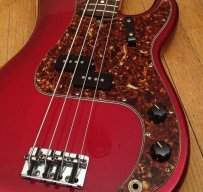
Wondered what that button was for, cheers!
I wonder if adjusting the pre/post gain will make any difference.....you know, like having the pre low and the post higher to stop the signal driving. Also, can you get such a thing as a noise gate pedal? I'm sure I've heard of that somewhere?
I don't think a noise gate would help with feedback.
I don't know if your situation is a proper application of this, but there's a guy that goes by fdeck here on TB makes a bass preamp with a high pass filter, it lets you dial out the low bass at a variable point to reduce stage rumble and feedback a little bit. Folks use it a lot for upright/DB- where a high pass filter and a phase button are pretty crucial to getting volume without feedback- reviews are good, and it's affordable.... I'm sure if you message fdeck, he will tell you if it will work for you.
Invalid Link Removed
Another possibility is getting a magnetic soundhole pickup for your bass, I'm not sure but it seems that would allow for a little more volume before feedback.
What amp/speaker are you using to amplify your bass? That might help with some suggestions...
Also......
+1 on the foam/paper stuffing of the bass -
it's free and it'll probably work just as well for reducing feedback as any of the other suggestions
+1 on the foam/paper stuffing of the bass -
it's free and it'll probably work just as well for reducing feedback as any of the other suggestions
Why did you get an acoustic bass?
Because I've wanted one for ages, have been playing for 13 years and wanted to diversify my 'collection'..... and I have the best girlfriend in the world who found an acoustic with the Jazz bass neck that I love!
Parametric EQ.
The oft-recommended high pass filter gets rid of the good bottom end along with the frequency range that is too hot, giving a result that I find to be very disappointing.
The oft-recommended high pass filter gets rid of the good bottom end along with the frequency range that is too hot, giving a result that I find to be very disappointing.
[Invalid or Expired Link Removed]
Just make sure you get the right size
+1 on a hole plug.
to the people asking why you would get an acoustic bass- I have a vic bailey acoustic i use occasionally, the tone is quite different from a solid body elecric.
How to eliminate feedback in an acoustic bass:
1) Place the bass on a flat, hard, level surface.
2) Step back approximately 15 paces.
3) Grasp the accordion with both hands and, using a smooth, straight-arm, underhand swing, pitch the accordion so that it travels in a clean, high arc, landing squarely on the body of the acoustic bass.
It will never feed back again. (This will also fix any problems with the accordion sound.)
Seriously, I'm jealous. Sounds like a nice bass. I hope to find the right acoustic someday. Let us know what works!
1) Place the bass on a flat, hard, level surface.
2) Step back approximately 15 paces.
3) Grasp the accordion with both hands and, using a smooth, straight-arm, underhand swing, pitch the accordion so that it travels in a clean, high arc, landing squarely on the body of the acoustic bass.
It will never feed back again. (This will also fix any problems with the accordion sound.)
Seriously, I'm jealous. Sounds like a nice bass. I hope to find the right acoustic someday. Let us know what works!
Most of the suggestions may help if you want to try them. I myself have a Fender Kingman Acoustic and I think it is one of the best acoustic Bass out there in looks and sound. Feedback was also a problem. This is how I solved mine.
1. Change strings to a Fender Tapewound string. It gives less noise from the strings, easy on the hands, look cool and give a great Bass thump.
2. I put on "Lute Hole" feedback plug on mine in maple that matched the Bass well.
3. EQ the problem frequencies out.
4. I have my contol on the Bass guitar set on.
Volume open all the way. Cut down at amp.
Bass open all the way.
Treble cut off.
Med half-way.
Phase button on.
5. I also have a piece of foam about 1" wide and wide as the string with and a little higher then the strings so when you slide it under against the bridge it gives you a nice upright thump and cuts down on a lot of string noise.
A great Bass that I think that Fender may come out with more models later. This Bass has the Fender Jazz neck and headstock. I'd love to see them do a Mustang Acoustic Bass with the 30" scale.
1. Change strings to a Fender Tapewound string. It gives less noise from the strings, easy on the hands, look cool and give a great Bass thump.
2. I put on "Lute Hole" feedback plug on mine in maple that matched the Bass well.
3. EQ the problem frequencies out.
4. I have my contol on the Bass guitar set on.
Volume open all the way. Cut down at amp.
Bass open all the way.
Treble cut off.
Med half-way.
Phase button on.
5. I also have a piece of foam about 1" wide and wide as the string with and a little higher then the strings so when you slide it under against the bridge it gives you a nice upright thump and cuts down on a lot of string noise.
A great Bass that I think that Fender may come out with more models later. This Bass has the Fender Jazz neck and headstock. I'd love to see them do a Mustang Acoustic Bass with the 30" scale.
How to eliminate feedback in an acoustic bass:
1) Place the bass on a flat, hard, level surface.
2) Step back approximately 15 paces.
3) Grasp the accordion with both hands and, using a smooth, straight-arm, underhand swing, pitch the accordion so that it travels in a clean, high arc, landing squarely on the body of the acoustic bass.
It will never feed back again. (This will also fix any problems with the accordion sound.)
Seriously, I'm jealous. Sounds like a nice bass. I hope to find the right acoustic someday. Let us know what works!
LOL. But, I might add that you could substitute a banjo for the accordion....


