
Enjoy the benefits of a premium membership!
Upgrade Account
-
TalkBass has been independent since 1998. Add your voice.
Create a free account to reply to discussions, view embedded media, and browse with fewer display ads.
Join free Log in
Want zero display ads or expanded classifieds tools? Compare plans.
You are using an out of date browser. It may not display this or other websites correctly.
You should upgrade or use an alternative browser.
You should upgrade or use an alternative browser.
How versatile is a Fodera bass?
- Thread starter Dr. Cheese
- Start date
More options
Who Replied?
Just to be clear, I'm not knocking Fodera in the least. Everyone has his/her own preferences and requirements. Especially as a singing bassist in a mostly supportive bass role, I need lighter basses with good tone that can be dialed in quickly and stay in tune. That's why I'm digging Sadowsky MetroLine PJs and StingRay Specials.I now own one just like Sharay Reeds. That bass is the best instrument I’ve ever had in my hands . Practically plays itself . It might be the one you threw back into the water.
It is very versatile. There is nothing I can’t get out of it except for what I have my other 3 basses for. It’s not Fretless , it doesn’t have flats , and it isn’t a shorter scale with different pickup placement.
If I had to go down to one bass, this would be it. Worth every penny.
I did not buy this bass because it was versatile. I buy what inspires me to pick it up and play it.
I think I told you that I once had a chance to grab a Yin Yang. It was possibly the best playing bass I've ever touched! But I only rarely kick myself for passing it up.



IMO versatility is overrated. My bass has to give me one killer tone and I'll make it fit every situation.

Versatility.. whats that? Ive got one tone which punches, letting me get on with the music. Never fails.

Versatile can mean 'capable of many different tones' or it can mean 'fits into any number of gig settings'; could be both, but might mean one or the other, depending on the player.
What tends to connect me to a bass isn't that it can do 200 different tones, it's that either (1) it has a unique tone/sound that I don't get elsewhere, and/or (2) it has a few tones I really like that work for my gigs. For example, I have a G&L L-2500, and it has a bazillion potential combinations between series/parallel, pickup selection, passive/active/active treble boost, and EQ. I actually think that bass has more tones I dislike than ones that I like; but the ones I like, I REALLY like. So I don't keep it because it can do 27 different tones, I keep it because I love 3-4 tones that it does so well.
What tends to connect me to a bass isn't that it can do 200 different tones, it's that either (1) it has a unique tone/sound that I don't get elsewhere, and/or (2) it has a few tones I really like that work for my gigs. For example, I have a G&L L-2500, and it has a bazillion potential combinations between series/parallel, pickup selection, passive/active/active treble boost, and EQ. I actually think that bass has more tones I dislike than ones that I like; but the ones I like, I REALLY like. So I don't keep it because it can do 27 different tones, I keep it because I love 3-4 tones that it does so well.

In a heartbeat I would play it in front of Billy!But would you play it in front of Billy Cobham, Ala' a young Will Lee?
Isn't that the 'true' bench mark of tone?
Not 'best for metal', or 'punchy', but 'would Billy Cobham whup my @$$?'

No question


Both of those cost probably 2-3 times what I paid for my Fodera. The one in the OP is indeed a much higher priced model than mine.It may be versatile but for that money I’m buying an alembic or a first year jazz bass.
One like mine now runs $9k used.
I did ok for 1/2 price used last December.

Always funny to see a bunch of guys who hate active basses gather together to talk about how high-end basses a useless trash.
Okay dude, we get it, you don't want to replace your P-bass with flats with a high-end singlecut boutique bass. Good for you.
Huh?
 Maybe my reading skills are fading, but I didn't see any trashing. Just some folks saying that they prefer old school basses, with little or no judgment of boutiques.
I said I prefer simpler, but most of my basses are active, and I happen to own a couple of boutiques with more than four controls. Overall I have no respect for snobbery, whether towards boutique, vintage, or budget instruments.
Versatile is overrated IMO. Does it play good? Can I hear the notes? I don't want to fiddle with knobs, I want to play music
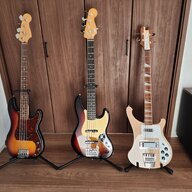
Pretty sure I could buy a p, j and a mm for the same price as that bass. Yeah, id only have to carry one bass to a gig, but come on. . . That's 3 basses! 3 is a bigger number than 1.
Im trying to be funny btw
Im trying to be funny btw
I completely understand. Basses are not one size fits all. I was playing StingRays but suddenly found myself moving in a different direction musically.Just to be clear, I'm not knocking Fodera in the least. Everyone has his/her own preferences and requirements. Especially as a singing bassist in a mostly supportive bass role, I need lighter basses with good tone that can be dialed in quickly and stay in tune. That's why I'm digging Sadowsky MetroLine PJs and StingRay Specials.
I think I told you that I once had a chance to grab a Yin Yang. It was possibly the best playing bass I've ever touched! But I only rarely kick myself for passing it up.
Complex chords , more jazz and classical inspired music and sometimes choirs needs a different type of bass that plays well up and down the neck with clarity .
This also involves more recording and playing with orchestra instruments.
If I was playing standing up, the Fodera would not work for me.
It’s all about what works for you.
Oh I don't know, I like both if I could afford bothAlways funny to see a bunch of guys who hate active basses gather together to talk about how high-end basses a useless trash.
Okay dude, we get it, you don't want to replace your P-bass with flats with a high-end singlecut boutique bass. Good for you.
My P bass with flats…
My imitation high-end single-cut active boutique bass with fanned frets…
Last edited:
I will say, about that Fodera ...
Putting my band-geek, former Tubist hat on. The kind with Warhammer pieces stashed inside (NERD!!!!)
I got good enough on a cheap Yamaha BBb Student horn, to get myself into Berklee and OCU, which I attended on a full-ride.
When I took a 8k loan to get a custom 4/4 Miraphone, that difference of quality really was next-level, and made me the best tubist a tubist could ever hope to be.
The Fodera did the same thing to me. It directly transmitted every fault/nuance of my left-hand, and was more comfortable to play than any neck I've played before/since.
But ... coming from the chunky Fender world ... I didn't necessarily prefer that when it comes to the 'hand-on' nature of playing the bass.
I like that my flat-strung P's (Fender/Olinto) have notes that are thinner/beefier than other notes. I love the inconsistency, and play into it.
My P homies know what I'm about to say, if you have the right P:
You start the Gmin groove, an octave up on the D-string. Your P is fat enough that it sounds great in the mix/with the band. Guitar players who hate you and hit on your girlfriend actually smile at you.
You then sneak in that Low G on the E-string (you know the one) at the right moment, and the entire room fills with warm spray foam.
Nothing like it.
One more Fodera aside: I couldn't possibly tell you the settings, but on the one I had, the neck-pickup only sound, in a mix, was my favorite version of 'that sound', on a double-humbucker-ish setup. Not exactly a P-bass, but sitting in a similar part of the mix.
Putting my band-geek, former Tubist hat on. The kind with Warhammer pieces stashed inside (NERD!!!!)
I got good enough on a cheap Yamaha BBb Student horn, to get myself into Berklee and OCU, which I attended on a full-ride.
When I took a 8k loan to get a custom 4/4 Miraphone, that difference of quality really was next-level, and made me the best tubist a tubist could ever hope to be.
The Fodera did the same thing to me. It directly transmitted every fault/nuance of my left-hand, and was more comfortable to play than any neck I've played before/since.
But ... coming from the chunky Fender world ... I didn't necessarily prefer that when it comes to the 'hand-on' nature of playing the bass.
I like that my flat-strung P's (Fender/Olinto) have notes that are thinner/beefier than other notes. I love the inconsistency, and play into it.
My P homies know what I'm about to say, if you have the right P:
You start the Gmin groove, an octave up on the D-string. Your P is fat enough that it sounds great in the mix/with the band. Guitar players who hate you and hit on your girlfriend actually smile at you.
You then sneak in that Low G on the E-string (you know the one) at the right moment, and the entire room fills with warm spray foam.
Nothing like it.
One more Fodera aside: I couldn't possibly tell you the settings, but on the one I had, the neck-pickup only sound, in a mix, was my favorite version of 'that sound', on a double-humbucker-ish setup. Not exactly a P-bass, but sitting in a similar part of the mix.


versatile enough that I even take it to my local dive bar gigs!
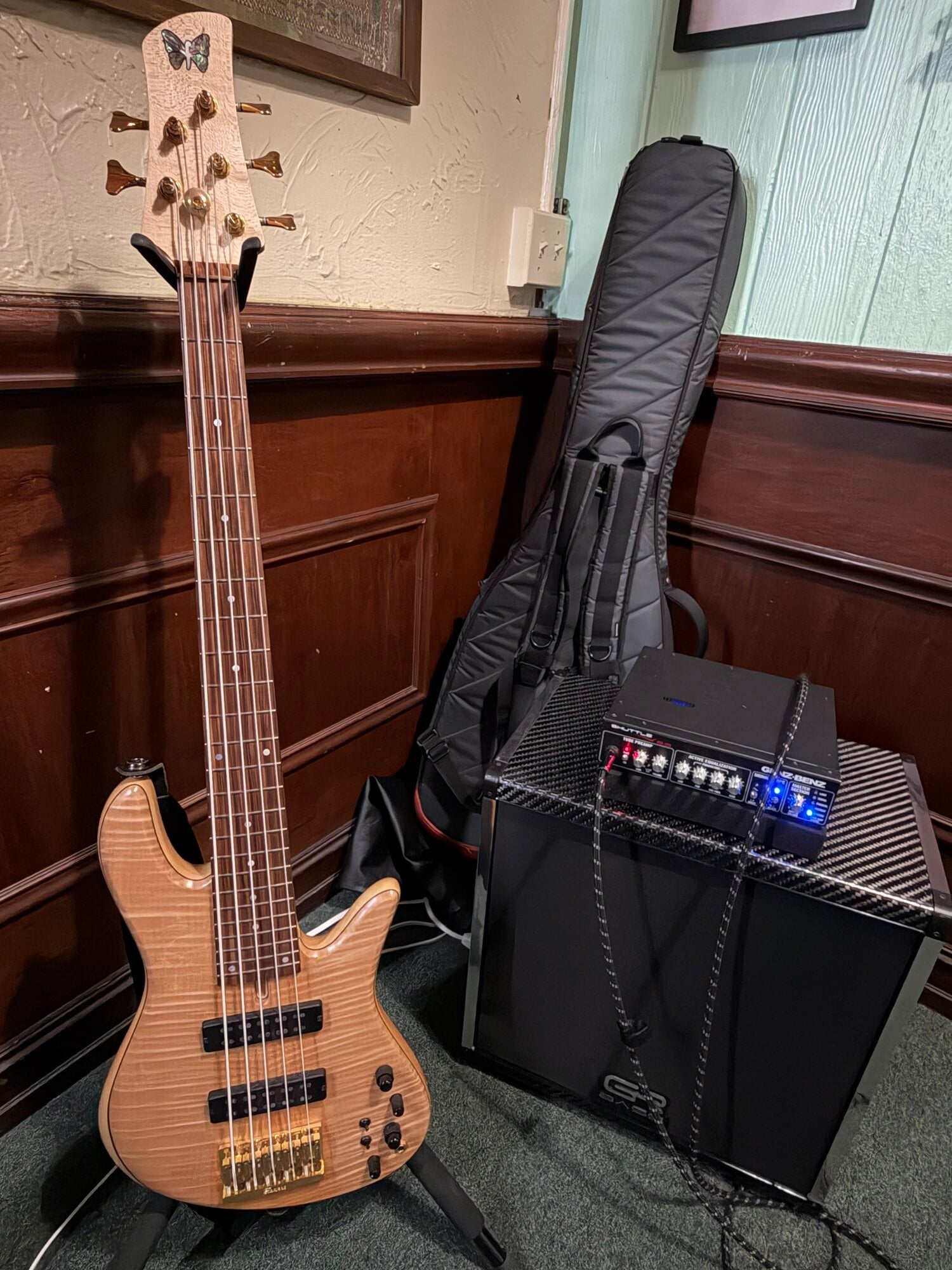
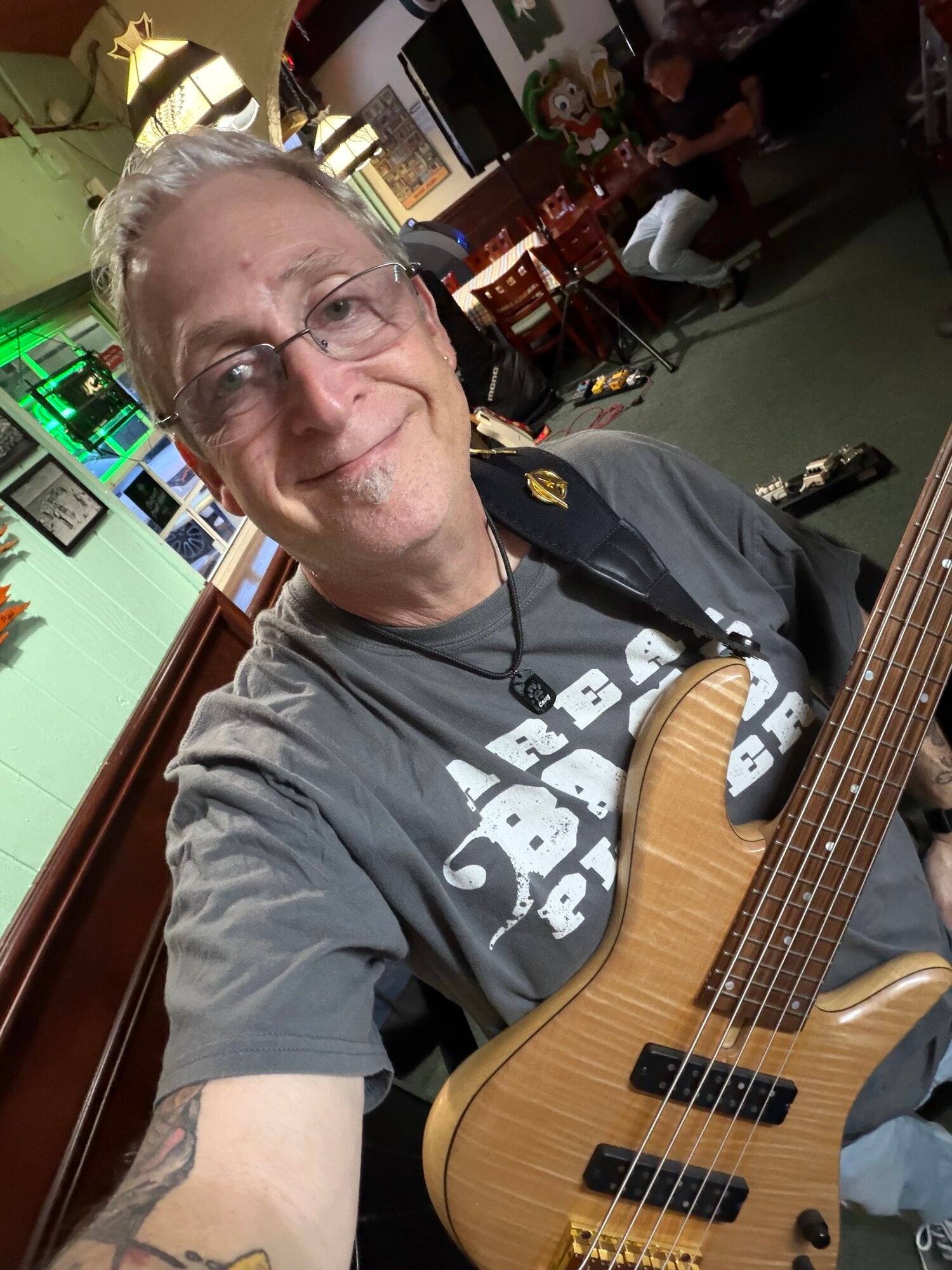
For around $10K + or -, it better be versatile and sound like angels singing in heaven.
Mine does!!!For around $10K + or -, it better be versatile and sound like angels singing in heaven.
No sense having it if you don't play it outversatile enough that I even take it to my local dive bar gigs!
View attachment 7494642View attachment 7494643

The neck is the best I’ve ever held in my hands.I will say, about that Fodera ...
Putting my band-geek, former Tubist hat on. The kind with Warhammer pieces stashed inside (NERD!!!!)
I got good enough on a cheap Yamaha BBb Student horn, to get myself into Berklee and OCU, which I attended on a full-ride.
When I took a 8k loan to get a custom 4/4 Miraphone, that difference of quality really was next-level, and made me the best tubist a tubist could ever hope to be.
The Fodera did the same thing to me. It directly transmitted every fault/nuance of my left-hand, and was more comfortable to play than any neck I've played before/since.
But ... coming from the chunky Fender world ... I didn't necessarily prefer that when it comes to the 'hand-on' nature of playing the bass.
I like that my flat-strung P's (Fender/Olinto) have notes that are thinner/beefier than other notes. I love the inconsistency, and play into it.
My P homies know what I'm about to say, if you have the right P:
You start the Gmin groove, an octave up on the D-string. Your P is fat enough that it sounds great in the mix/with the band. Guitar players who hate you and hit on your girlfriend actually smile at you.
You then sneak in that Low G on the E-string (you know the one) at the right moment, and the entire room fills with warm spray foam.
Nothing like it.
One more Fodera aside: I couldn't possibly tell you the settings, but on the one I had, the neck-pickup only sound, in a mix, was my favorite version of 'that sound', on a double-humbucker-ish setup. Not exactly a P-bass, but sitting in a similar part of the mix.
I’ve never had a bass where the notes sound so rich and full and even. It definitely makes you play better. There is something so refined about it that it reminds me of a hand built professional level classical guitar.
The way you describe your PBass is the way I’ve heard Marcus Miller describe the nuances of his Fender Jazz.


