

Enjoy the benefits of a premium membership!
Upgrade Account
-
TalkBass has been independent since 1998. Add your voice.
Create a free account to reply to discussions, view embedded media, and browse with fewer display ads.
Join free Log in
Want zero display ads or expanded classifieds tools? Compare plans.
You are using an out of date browser. It may not display this or other websites correctly.
You should upgrade or use an alternative browser.
You should upgrade or use an alternative browser.
I think I've decided I'm more of a 4-string guy...
- Thread starter Menorahman
- Start date
More options
Who Replied?
I'm sure they have their narrow minded contingent that think all you need is a kick, snare and high-hat.What about when a drummer adds more drums or symbols?
Is this acceptable?


Mr.Ace
Bass players rule!
- Sep 8, 2015
- 1,120
- 1,050
- 49
- Disclosures
- Endorsed by Fusion ( maker of killer gig bags)
Well said sirI'm sure they have their narrow minded contingent that think all you need is a kick, snare and high-hat.

I'm old and boring. Not only am I pretty much a strict 4 banger these days, I also am passive only.
In fact I am pretty much exclusively a P guy anymore, though over the years I've owned several actives, 5- and 6-string basses (even an 8-string.)
In fact I am pretty much exclusively a P guy anymore, though over the years I've owned several actives, 5- and 6-string basses (even an 8-string.)
Mr.Ace
Bass players rule!
- Sep 8, 2015
- 1,120
- 1,050
- 49
- Disclosures
- Endorsed by Fusion ( maker of killer gig bags)
I could be wrong, but I don't think that every musician wants you speaking for them.Sooner or later every musician comes to the conclusion that "less is more". It's better if you figure this out early.
I've been playing passive four string bass's for the past 22 years. Just this year I bought a new four string American deluxe active jazz bass, and an active five string USA Lakeland. I plan to use all my bass's in the studio and in live performances. I also played acoustic upright for years. I hope to always grow as a musician, and Believe me, my two new axes have got me inspired. I guess some of us just never learn. Also feel free to correct any spelling, or punctuation errors that are up to your standards.
Mr.Ace
Bass players rule!
- Sep 8, 2015
- 1,120
- 1,050
- 49
- Disclosures
- Endorsed by Fusion ( maker of killer gig bags)
Whenever anyone says that one thing is best for everyone and every situation, I immediately know they are wrong.I could be wrong, but I don't think that every musician wants you speaking for them.
I've been playing passive four string bass's for the past 22 years. Just this year I bought a new four string American deluxe active jazz bass, and an active five string USA Lakeland. I plan to use all my bass's in the studio and in live performances. I also played acoustic upright for years. I hope to always grow as a musician, and Believe me, my two new axes have got me inspired. I guess some of us just never learn. Also feel free to correct any spelling, or punctuation errors that are up to your standards.

Mr.Ace
Bass players rule!
- Sep 8, 2015
- 1,120
- 1,050
- 49
- Disclosures
- Endorsed by Fusion ( maker of killer gig bags)
My next Bass will be an F bass or a Dingwall. Right now I'm really leaning towards the F Bass.drooldrool
FF
Although I agree with you, I have to ask you do you believe that in order to grow as a musician that it takes different characteristic instruments? Reason I asked this is because when watching interviews with woodwind and brass jazz musicians, they say the same thing but it does not include an (for lack of better term) "upgraded" instrument. But with electric bass players, it seems more often than not to be inclusive of "upgraded" instruments. Not just to you, but to anybody willing to help out with discussion. ThanksI could be wrong, but I don't think that every musician wants you speaking for them.
I've been playing passive four string bass's for the past 22 years. Just this year I bought a new four string American deluxe active jazz bass, and an active five string USA Lakeland. I plan to use all my bass's in the studio and in live performances. I also played acoustic upright for years. I hope to always grow as a musician, and Believe me, my two new axes have got me inspired. I guess some of us just never learn. Also feel free to correct any spelling, or punctuation errors that are up to your standards.
FF
Although I agree with you, I have to ask you do you believe that in order to grow as a musician that it takes different characteristic instruments? Reason I asked this is because when watching interviews with woodwind and brass jazz musicians, they say the same thing but it does not include an (for lack of better term) "upgraded" instrument. But with electric bass players, it seems more often than not to be inclusive of "upgraded" instruments. Not just to you, but to anybody willing to help out with discussion. Thanks
I think that's because those instruments have been around much longer than electric bass and have already gone through the upgrades. Most woodwind players play more than one woodwind instrument (tenor, alto, soprano sax, clarinet, flute), as do brass players. That's more or less the equivalent of extended range basses.
Mr.Ace
Bass players rule!
- Sep 8, 2015
- 1,120
- 1,050
- 49
- Disclosures
- Endorsed by Fusion ( maker of killer gig bags)
This is an excellent question. I don't believe that it takes a different characteristic instrument to grow as a musician. Personally I think I would continue to develop my craft regardless. I do think that different, and or "upgraded" instruments probably alter the overall trajectory.Although I agree with you, I have to ask you do you believe that in order to grow as a musician that it takes different characteristic instruments? Reason I asked this is because when watching interviews with woodwind and brass jazz musicians, they say the same thing but it does not include an (for lack of better term) "upgraded" instrument. But with electric bass players, it seems more often than not to be inclusive of "upgraded" instruments. Not just to you, but to anybody willing to help out with discussion. Thanks
FF
This is an excellent question. I don't believe that it takes a different characteristic instrument to grow as a musician. Personally I think I would continue to develop my craft regardless. I do think that different, and or "upgraded" instruments probably alter the overall trajectory.
Well said. Pros and cons to both approaches IMO. Having one instrument you know inside and out could help a player focus, but some people want a bunch of tools in their arsenal thinking they will stretch out more...cover more bases (no pun...)
Both schools of thought are perfectly valid as far as I'm concerned, and it depends on the taste, experience and goals of the individual.
One thing I do NOT buy, however, is that you have to spend X amount of money or play a certain brand, etc.
I also think the idea that there are "one trick pony" electric instruments or that you "need" 12 different basses to play 12 different types of music or emulate 12 different players is complete nonsense, but it is none of my business what others play, or why.
And I would qualify the above statement by saying obviously it is a somewhat different matter if a player wants to pursue, say, fretless 4 string as well as 6 string, or what have you.
Fortunately, my own time on the "Gear Merry Go Round" is long over. I know what I like and need and can keep it minimal while remaining perfectly happy and satisfied.
For me personally, as someone above alluded to, back when I had 9 basses, a bunch of guitars, multiple amps, tons of recording equipment and drawers stuffed with effects pedals, I found it more of a burdensome chore than a pleasure just owning that much stuff. The mileage of orhers may vary.
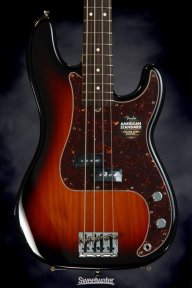
I dunno, 5-strings are cool and all, but at the end of the day they are kinda pointless for most music. Despite every brand saying their B string is the best ever, most just don't sound very good. The only low B's I like are on my Dingwall NG2 and, to a lesser extent, my Ibanez SR 5205 Prestige. Really the Dingwall is the only one that sounds like it truly belongs. Even then, you get 5 extra notes that are kind of a gimmick for most music and the rest of the string will still sound better played on the low E. Then there are all the drawbacks...
- heavier
- 35'' scale usually
- more muting required
- more expensive to buy and maintain
I just find it funny when people say they need a 5-string for a certain situation, and then they hit the B two or three times. Sure there ARE times when a 5 is useful, but if it isn't using fanned frets it will likely be suboptimal, especially for recording.
I look in classifieds because I regret selling my 4 string Zon Sonus sometimes. All I ever see for sale used are 5 strings.

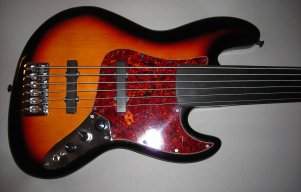
I could be wrong, but I don't think that every musician wants you speaking for them.
I've been playing passive four string bass's for the past 22 years. Just this year I bought a new four string American deluxe active jazz bass, and an active five string USA Lakeland. I plan to use all my bass's in the studio and in live performances. I also played acoustic upright for years. I hope to always grow as a musician, and Believe me, my two new axes have got me inspired. I guess some of us just never learn. Also feel free to correct any spelling, or punctuation errors that are up to your standards.
Yes, you could be wrong. I'm not speaking for every musician and your satire meter clearly needs attention.
What does a credential war prove? I've been playing bass since the early 60s and started on acoustic upright. I've got a large bass collection of 4,5,6,7,8 string fretted and fretless active and passive instruments And I also play drums (which is how I know how to spell cymbals) own 4 kits from a nice Jazz type minimal 4 piece to a huge array with toms from 6" to 18" mounted on a Drumframe. Yes,I use all this stuff on occasion otherwise why keep it? I've heard the less is more thing from a wide variety of players over the years and there is a certain validity to it. For example one drumming trick when one reaches a creative block is to take away all the extra drums get down to a couple basic things (kick, snare, hat, crash) and then work with that to try to make it work in spite of the limitations. And the block is soon lost in the flow of new ideas. But does that mean that "less is more" is some kind of irrefutable truth that is never wrong. No. Yet you hear it over and over from various people just as you hear "all you need is 4 strings" from people here. Sure Mies van der Rohe was a big proponent of "less is more" and artists over time have to explore that. I remember when Peter Erskine got the "less is more bug" and went on a preaching rampage over it. I was much less than impressed as it being the end all of art even though I have used the "take away most of the kit" trick myself on numerous occasions. Yes, Dream Theater drumming is cool and indeed is part of music. I would ask Peter Erskine if "less is always more" then what in hell was BeBop? Nothing?
Point is you and I see eye to eye on this. Sometimes less is more. Sometimes the music is in the space between the notes, Sometimes more is more. A musician is always learning and nobody knows it all. Hence getting a new Lakland or fretless or shortscale or whatever is an education. Everybody can use an education. So maybe if "all a person needs is 4 strings" means they aren't working on those new things, it is OK if they are working on other new things. But to play the same old bass, the same old way, with the same old music (which I know lots of guys who do) isn't being like Jaco, it's what I call stagnation. Is that speaking for everyone? I think not, but there is some good in there someplace.
Although I agree with you, I have to ask you do you believe that in order to grow as a musician that it takes different characteristic instruments? Reason I asked this is because when watching interviews with woodwind and brass jazz musicians, they say the same thing but it does not include an (for lack of better term) "upgraded" instrument. But with electric bass players, it seems more often than not to be inclusive of "upgraded" instruments. Not just to you, but to anybody willing to help out with discussion. Thanks
FF
And this is an interesting point too. I noted above that one can be developing and learning even playing the same old bass. You just are working on other details of the performance. But the point I'd make about electric basses vs say woodwinds or brass is that those instruments are "developed". They have huge history behind them and many many years of trial and error perfecting them. Hence the progress is a student starts out with an "entry level" instrument and then as they progress they move up to better and better quality until they have an instrument if not the "best" if pretty near the top of what you can get. You don't have other weird instruments to try. (well maybe Dizzy's bent horn...)
But when instruments are new and just invented, nobody knows what configurations are "best". So everybody tries different things searching for things that work. Even in my lifetime I've seen this same kind of development and experimentation in the drum kit which is also a relatively new instrument. When I started playing bass guitar there were no 5 string or 6 string or (God help us!) 7 string "basses". A fretless bass was an upright. And all that development that happened while I watched was by people who just had the thought that maybe less was not more and just maybe they "needed" something more than 4 strings. And how do you find out what you "need"? Well you buy one and live with it for a while. Pretty soon you know exactly what it can and cannot do.
I don't think anyone would argue that the notes down there aren't useful.
It's just that most 5-string basses don't cut it sound wise.
I don't care if the low B is 'tight bro' or too floppy, it needs to sound good. Plenty of basses are 'good enough' though. As long as it sounds inspiring so you feel inspired. If the key is not optimal for a 4-string, you can always layer in some synth bass to fatten things up. Pop music is the only music that really matters anyway.
It's just that most 5-string basses don't cut it sound wise.
I don't care if the low B is 'tight bro' or too floppy, it needs to sound good. Plenty of basses are 'good enough' though. As long as it sounds inspiring so you feel inspired. If the key is not optimal for a 4-string, you can always layer in some synth bass to fatten things up. Pop music is the only music that really matters anyway.

. Pop music is the only music that really matters anyway.


I got my first 5 string around 15 years ago, and had it defretted a short time later. I took to playing fivers like the proverbial duck to water, and it immediately felt very natural to me - could be due to everything being centred around the A string. I also use the B string sufficiently that it has become integral to my playing.
I still play four strings extensively, in fact since my GB Rumour 5 is currently having an electonics upgrade and total setup by Bernie Goodfellow, it's maker, and since my fretless is not suitable for my current band, and my Squier P5 is also in bits for some mods, I'm currently gigging with my 73 Rick 4001 and my Epi T-Bird. I feel a little constrained because I can't use the lower notes that I've woven into my lines, and have to play some stuff an octave higher.
I also have a six string, that I've flirted with but find less useful. It's great for noodling around at home, but I find it less useful in a band context.
For me, 5 is just right, so whilst I still have my four strings I no longer consider anything but 5s for any future purchases.
I still play four strings extensively, in fact since my GB Rumour 5 is currently having an electonics upgrade and total setup by Bernie Goodfellow, it's maker, and since my fretless is not suitable for my current band, and my Squier P5 is also in bits for some mods, I'm currently gigging with my 73 Rick 4001 and my Epi T-Bird. I feel a little constrained because I can't use the lower notes that I've woven into my lines, and have to play some stuff an octave higher.
I also have a six string, that I've flirted with but find less useful. It's great for noodling around at home, but I find it less useful in a band context.
For me, 5 is just right, so whilst I still have my four strings I no longer consider anything but 5s for any future purchases.
Last edited:

I played 5's exclusively from 1991 to about the early 2000's. I switch back and forth but if I'm playing music that has no need to go below low E, I prefer to play my 4 string. I think I played my 5 string only once since last year. I have a gig coming up where I'll bring both since they tend to downtune songs.
Mr.Ace
Bass players rule!
- Sep 8, 2015
- 1,120
- 1,050
- 49
- Disclosures
- Endorsed by Fusion ( maker of killer gig bags)
Multiple valid points sir. I guess I'm still learning what works best for different occasions.Yes, you could be wrong. I'm not speaking for every musician and your satire meter clearly needs attention.
What does a credential war prove? I've been playing bass since the early 60s and started on acoustic upright. I've got a large bass collection of 4,5,6,7,8 string fretted and fretless active and passive instruments And I also play drums (which is how I know how to spell cymbals) own 4 kits from a nice Jazz type minimal 4 piece to a huge array with toms from 6" to 18" mounted on a Drumframe. Yes,I use all this stuff on occasion otherwise why keep it? I've heard the less is more thing from a wide variety of players over the years and there is a certain validity to it. For example one drumming trick when one reaches a creative block is to take away all the extra drums get down to a couple basic things (kick, snare, hat, crash) and then work with that to try to make it work in spite of the limitations. And the block is soon lost in the flow of new ideas. But does that mean that "less is more" is some kind of irrefutable truth that is never wrong. No. Yet you hear it over and over from various people just as you hear "all you need is 4 strings" from people here. Sure Mies van der Rohe was a big proponent of "less is more" and artists over time have to explore that. I remember when Peter Erskine got the "less is more bug" and went on a preaching rampage over it. I was much less than impressed as it being the end all of art even though I have used the "take away most of the kit" trick myself on numerous occasions. Yes, Dream Theater drumming is cool and indeed is part of music. I would ask Peter Erskine if "less is always more" then what in hell was BeBop? Nothing?
Point is you and I see eye to eye on this. Sometimes less is more. Sometimes the music is in the space between the notes, Sometimes more is more. A musician is always learning and nobody knows it all. Hence getting a new Lakland or fretless or shortscale or whatever is an education. Everybody can use an education. So maybe if "all a person needs is 4 strings" means they aren't working on those new things, it is OK if they are working on other new things. But to play the same old bass, the same old way, with the same old music (which I know lots of guys who do) isn't being like Jaco, it's what I call stagnation. Is that speaking for everyone? I think not, but there is some good in there someplace.
And this is an interesting point too. I noted above that one can be developing and learning even playing the same old bass. You just are working on other details of the performance. But the point I'd make about electric basses vs say woodwinds or brass is that those instruments are "developed". They have huge history behind them and many many years of trial and error perfecting them. Hence the progress is a student starts out with an "entry level" instrument and then as they progress they move up to better and better quality until they have an instrument if not the "best" if pretty near the top of what you can get. You don't have other weird instruments to try. (well maybe Dizzy's bent horn...)
But when instruments are new and just invented, nobody knows what configurations are "best". So everybody tries different things searching for things that work. Even in my lifetime I've seen this same kind of development and experimentation in the drum kit which is also a relatively new instrument. When I started playing bass guitar there were no 5 string or 6 string or (God help us!) 7 string "basses". A fretless bass was an upright. And all that development that happened while I watched was by people who just had the thought that maybe less was not more and just maybe they "needed" something more than 4 strings. And how do you find out what you "need"? Well you buy one and live with it for a while. Pretty soon you know exactly what it can and cannot do.


