• TalkBass has been independent since 1998. Add your voice.
    Create a free account to reply to discussions, view embedded media, and browse with fewer display ads.
    Join freeLog in
    Want zero display ads or expanded classifieds tools? Compare plans.

I think I've decided I'm more of a 4-string guy...

Menorahman

Inactive
Aug 13, 2015
1,358
931
36
Nashville, TN
I dunno, 5-strings are cool and all, but at the end of the day they are kinda pointless for most music. Despite every brand saying their B string is the best ever, most just don't sound very good. The only low B's I like are on my Dingwall NG2 and, to a lesser extent, my Ibanez SR 5205 Prestige. Really the Dingwall is the only one that sounds like it truly belongs. Even then, you get 5 extra notes that are kind of a gimmick for most music and the rest of the string will still sound better played on the low E. Then there are all the drawbacks...

- heavier
- 35'' scale usually
- more muting required
- more expensive to buy and maintain

I just find it funny when people say they need a 5-string for a certain situation, and then they hit the B two or three times. Sure there ARE times when a 5 is useful, but if it isn't using fanned frets it will likely be suboptimal, especially for recording.
 
I use an octave pedal when I need lower than the E. I have small hands and I haven't found a 5 string neck that I like. I have used hipshot D-tuners before. You could do like Ross Vallory and used a 4 string tuned BEAD. To me, if I had a 5 stringer I think I'd use a high C more often.
 
I do like playing up a string instead of going down the neck. It's just so much easier having the extra notes in hand without having to shift.
FWIW, the B strings on my SBMM Ray35 and Yamaha BB1025x both sound awesome and are 34" scale. I've played some horrid B strings before, though, and I'm not sure if that was a function of low tension strings or just poor construction but it's pretty unexcuseable in our modern times.
 
My 7 string is 10lbs on the nose. All of my 6 string basses are under 10lbs.

35" scale may be needed on low end to intermediate basses, but not an absolute requirement to sound good. I have 34" scale and 32" scale basses with a very good B string.

Using the B string isn't impossible. It makes for a very easy to find inverted 5th when playing on the E string.
 
I own both a Fender MIA P4 and an MIA P5. I very much enjoy the P5 when using standard tuning and we're covering a song that was recorded using 1/2 step down tuning. For example, Lie To Me by Johnny Lang, is recorded using 1/2 step down tuning. When playing this song using standard tuning you're in the key of A# instead of B. When playing in the key of B using standard tuning you have a fat sounding 4th using the open E string. Unless you consider a D# on the 6th fret of the A string a fat sounding 4th then playing the song in A# using standard tuning you don't have that fat sounding 4th with a 4-string. When using my P5, using standard tuning, in the key of A# I can access a fat sounding 4th using the D# on the 4th fret of the B string. Also, using my P5, I enjoy the deep notes I get while transitioning into another chord. Yes, playing my open B string does sound a bit awkward especially with out using palm muting and/or effective left hand fingering tecnique. However, when I apply what I consider effective B string technique my P5 sound very great.
 
  • Like
Reactions: Not yet
I dunno, 4-strings are cool and all, but at the end of the day they are kinda pointless for most music. Despite every brand saying their G string is the best ever, most just don't sound very good. The only high G's I like are on my Dingwall NG2 and, to a lesser extent, my Ibanez SR 5205 Prestige. Really the Dingwall is the only one that sounds like it truly belongs. Even then, you get 5 extra notes that are kind of a gimmick for most music and the rest of the string will still sound better played on the D. Then there are all the drawbacks...

- heavier
- 35'' scale usually
- more muting required
- more expensive to buy and maintain

I just find it funny when people say they need a 4-string for a certain situation, and then they hit the G two or three times. Sure there ARE times when a 4 is useful, but if it isn't using fanned frets it will likely be suboptimal, especially for recording.

 
I dunno, 4-strings are cool and all, but at the end of the day they are kinda pointless for most music. Despite every brand saying their G string is the best ever, most just don't sound very good. The only high G's I like are on my Dingwall NG2 and, to a lesser extent, my Ibanez SR 5205 Prestige. Really the Dingwall is the only one that sounds like it truly belongs. Even then, you get 5 extra notes that are kind of a gimmick for most music and the rest of the string will still sound better played on the D. Then there are all the drawbacks...

- heavier
- 35'' scale usually
- more muting required
- more expensive to buy and maintain

I just find it funny when people say they need a 4-string for a certain situation, and then they hit the G two or three times. Sure there ARE times when a 4 is useful, but if it isn't using fanned frets it will likely be suboptimal, especially for recording.
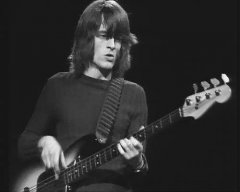
I'm tired of you show-offs with your fancy 3 string basses. JacNo only needed two strings! :D
 
I have an unfortunate tendency to overplay with a 5 or 6-string. I've long since shifted back to primarily playing 4-strings, with no regrets on my part, nor complaints from fellow band members for me making the switch.

And since I seldom need anything other than an occasional low D, a drop tuner installed on the E string gives me all that I really need without needing an extra string. So it's only rarely I'll use my Spector 5-string these days.
 
I own both but only use the 5 on Sunday's. The biggest laugh I had last couple years is when I was asked to audition for a dance/wedding band. Band leader asked me if I had a 5 string. I replied yes but why do you ask. He came up with some silly response. I then picked up the list of songs he asked me to learn and their master list. Pretty much all were recorded with a 4 string bass. Lol

Every instrument is a tool and has its purpose but nothing is absolute and 100% necessary. Ive played a 4 in rock bands, dance bands and for a worship band. All I hear is "sounds great".
 
I played a 5 string for about five years and I never could get comfortable with it. Most of my bands have tuned to drop tunings (C, C#, and B) and I never could figure out what to do with the B string. If I tuned it down it would get floppy and I didn't like tuning my bass up. I eventually got a 4 string and all was right in the world.

That seems backward. If your band is drop tuning, you don't have to tune down if you have a B string. You already have all those notes. But when your lowest string is an E, you lose them.
 
I own both but only use the 5 on Sunday's. The biggest laugh I had last couple years is when I was asked to audition for a dance/wedding band. Band leader asked me if I had a 5 string. I replied yes but why do you ask. He came up with some silly response. I then picked up the list of songs he asked me to learn and their master list. Pretty much all were recorded with a 4 string bass. Lol

Every instrument is a tool and has its purpose but nothing is absolute and 100% necessary. Ive played a 4 in rock bands, dance bands and for a worship band. All I hear is "sounds great".

Word, it's like people thinking they need a certain bass or pickup for one style over another. Except in those cases you are always utilizing the different feature, whereas most people I see playing 5's almost never hit the low B.
 
Just got my first 5 string. A Lakland 55-14 from tb'r
Zachbass02. Been playing electric 4 string right at 22 years. I play with several new country bands around town. Really kind of liking the extended range, and the lo B is anything but floppy. No more drop D is nice. I have never felt limited on a 4 string that's for sure.
 
  • Like
Reactions: FlatwoundFunk