
Enjoy the benefits of a premium membership!
Upgrade Account
-
TalkBass has been independent since 1998. Add your voice.
Create a free account to reply to discussions, view embedded media, and browse with fewer display ads.
Join free Log in
Want zero display ads or expanded classifieds tools? Compare plans.
You are using an out of date browser. It may not display this or other websites correctly.
You should upgrade or use an alternative browser.
You should upgrade or use an alternative browser.
Double Bass i want to know my old double bass source
- Thread starter hongseungmin
- Start date
More options
Who Replied?



You posted this in the Bass Guitar area of the website. You will get more support if you post in the Double Bass area.



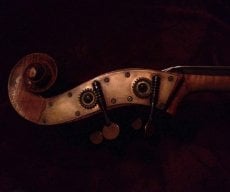
The outline and machines are nearly identical to my 1890ish German bass. What wood is the neck made from? Maple or beech?
i think maple ! have your bass machines picture?The outline and machines are nearly identical to my 1890ish German bass. What wood is the neck made from? Maple or beech?
I heard that the shop decided to renew the Old Flatback instrument, and that the neck and torso of the 4/4 size instrument were integral, cut off the shoulders, and heat treated.German.
The head machine and fingerboard are original. I heard that the fingerboard is Mpingo.
Can you tell me the characteristics of the outline of the German instrument?The outline and machines are nearly identical to my 1890ish German bass. What wood is the neck made from? Maple or beech?
As I understand it, a beech neck would indicate "Tyrolean/Bohemian" and maple German. Bottom line: does it sound good and play well? If it does, enjoy it and don't worry about where it's from. These issues are of much less concern on the DB side of TB unless we're dealing with a high end instrument with a label and provenance.
Regarding what you "heard" about the shop modifying the bass, it's highly unlikely that any modern luthier would cut down a bass. I've never heard the term "heat treating" applied to a double bass. Also, an "original" FB on an old German bass would be ebony, not an African hardwood like Mpingo/African blackwood.
Regarding what you "heard" about the shop modifying the bass, it's highly unlikely that any modern luthier would cut down a bass. I've never heard the term "heat treating" applied to a double bass. Also, an "original" FB on an old German bass would be ebony, not an African hardwood like Mpingo/African blackwood.

Regarding what you "heard" about the shop modifying the bass, it's highly unlikely that any modern luthier would cut down a bass. I've never heard the term "heat treating" applied to a double bass. Also, an "original" FB on an old German bass would be ebony, not an African hardwood like Mpingo/African blackwood.
I'm sure there are still a few out and about doing the old "cut down the shoulders to make it more playable" madness on some old instruments. Don't be too quick to assume that all the word choices here are going to make sense from what we'd all be used to, either, given that we're working around a language barrier here.
"Neck and torso were integral, cut off the shoulders, and heat treated" to me sounds like "this thing was a blockless wonder, so they gave it a neck block, but rather than leave it with the original humped outline they also cut the shoulders down and re-bent the ribs so it looked normal at the block." A lot more than would ever normally be done in a blockless restoration, but I'm sure there are crazy people out there that would do it.
Normally you'd expect two-on-a-plate hatpegs for tuning machines on such a thing rather than four individuals without the hatpegs, but there's always variance and the possibility that they aren't the originals.

I'm sure there are still a few out and about doing the old "cut down the shoulders to make it more playable" madness on some old instruments. Don't be too quick to assume that all the word choices here are going to make sense from what we'd all be used to, either, given that we're working around a language barrier here.
"Neck and torso were integral, cut off the shoulders, and heat treated" to me sounds like "this thing was a blockless wonder, so they gave it a neck block, but rather than leave it with the original humped outline they also cut the shoulders down and re-bent the ribs so it looked normal at the block." A lot more than would ever normally be done in a blockless restoration, but I'm sure there are crazy people out there that would do it.
Normally you'd expect two-on-a-plate hatpegs for tuning machines on such a thing rather than four individuals without the hatpegs, but there's always variance and the possibility that they aren't the originals.
thanks to Reply
another luthier says "I think maybe Eastern Europe old bass, czech varnish ,The tuning machine may not be original."
Looking closer at the scroll pic shows possible evidence of different machines, and the varnish overall is very reminiscent of my "Olde Tyrolean" bass. I can't tell if the top is purfled, but closeups of the shoulders and neck area front and back would give better info. Eli's translation makes sense, although it would be nuts to do all that during a block conversion.
There's a lot of nuts people out in the world. Wouldn't surprise me if that's been done before, but going off of some language barrier imperfect translations and trying to make sense of it all, that's the best I can guess.
I don't think I'd really say Eastern Europe, but when we normally talk of old German Tyrolean basses, Tyrol is just a bit south of the Markneukirchen-area/Czech-border German shop basses that are also super common. Central European. "Eastern Europe" for Basses is more like Hungarian and Romanian to my mind. Other side of Austria from Tyrol.
thanks to Reply
another luthier says "I think maybe Eastern Europe old bass, czech varnish ,The tuning machine may not be original."
I don't think I'd really say Eastern Europe, but when we normally talk of old German Tyrolean basses, Tyrol is just a bit south of the Markneukirchen-area/Czech-border German shop basses that are also super common. Central European. "Eastern Europe" for Basses is more like Hungarian and Romanian to my mind. Other side of Austria from Tyrol.
Looking closer at the scroll pic shows possible evidence of different machines, and the varnish overall is very reminiscent of my "Olde Tyrolean" bass. I can't tell if the top is purfled, but closeups of the shoulders and neck area front and back would give better info. Eli's translation makes sense, although it would be nuts to do all that during a block conversion.
I'll give you another pic!


anotherHere!
Attachments


Sorry to be so picky, but what's needed is straight on pics of the front showing the shoulders and neck area. What needs to be shown is whether the purfling goes all the way from the top of the C bout to the side of the neck joint. If it's intact, the bass hasn't been cut. Pics of the scroll (both sides and one straight on from the front) showing both machines would be useful as well.
Last edited:
Sorry to be so picky, but what's needed is straight on pics of the front showing the shoulders and neck area. What needs to be shown is whether the purfling goes all the way from the top of the C bout to the side of the neck joint. If it's intact, the bass hasn't been cut. Pics of the scroll (both sides and one straight on from the front) showing both machines would be useful as well.
Here!


