• TalkBass has been independent since 1998. Add your voice.
    Create a free account to reply to discussions, view embedded media, and browse with fewer display ads.
    Join freeLog in
    Want zero display ads or expanded classifieds tools? Compare plans.

Identical??

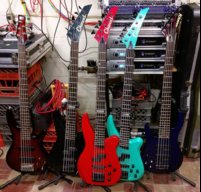
I recently bought a Black Cherry Hofner Icon,I carry the red hof and red LTD EC with my 4 10's and the green hof and black jazz with my 15 G-K,well identical Icons but the red one smokes the green one for sound much much punchier brighter totally different animal.I know that a Hofner afficianado could not believe the axe and compared it to the 2 G Hof.The dealer I bought it from says it is a fluke,He is my friend and gave me a sweet deal.How common is it that 2 identical basses sound so different??any techies out there?:hyper::bassist:
 
I bought a Jazz Plus V back in 90 that was an absolute dog. Was about half the volume of other plus 5's I tried it against later. I sent it back to Fender and they said everything was to specs and blew me off. I traded it for a yamaha attitude standard five string that even passive blew it out of the water tone and volume wise. So, in my opinion..yes two identical basses can be that different.
 
Wow funny you say that Mr Perkidan (you can call me Percocet) truth be told the green is fine and I was well pleased,Its just the red one, and 3 different bands I play with noticed the difference it just boggled my mind.I know alot of bassist either love or hate the Hofner.I have a bad back and looked for a light axe,I do like the solid ones but even for moving around on stage for an old dude the hof or dano cant be beat,
 
How common is it that 2 identical basses sound so different??

Basses made of wood can sound different even if they are otherwise identical. Wood varies over a range and so does it's expected level of performance.

If an instrument is made of more than one piece or type of wood (most are) the probability of variation is greater.

Usually an instrument will fall into a range of what's expected of instruments of that type, materials, and construction but that range can be fairly wide so instruments at the extremes of that range can sound very different.

I've found that a tweak of the amp eq is usually sufficient to more closely match the tones in that case.
 
mongo you are so right.I do a cable access show at a music store and the owner said the wood is a big deciding factor but what about may pickups and stings as this louder better sounding bass came with flats you seem knowledgable about this thanx for the EQ tip
 
mongo you are so right.I do a cable access show at a music store and the owner said the wood is a big deciding factor but what about may pickups and stings as this louder better sounding bass came with flats you seem knowledgable about this thanx for the EQ tip

IME currently manufactured pickups of a particular brand and type are considerably less variable than wood, though history shows us there can be some oddballs that stand out for one reason or another. If you change brands or type of pickup the tone can change quite a bit.

Same with strings, different brands, types and gauges of string can sound very different, but the same brand, type and gauge of string should be relatively consistent from pack to pack.

Don't discount the effects of setup especially the distance from the strings to the pickup poles.
 
I also have a few "true" identical basses, ( including 2 in the same year/color ) and I am in the same situation, they look identical, but do not sound the same, even with the same bridge, strings height from pups/string brand/string age, and setups being as similar as I can get them.

so yes, beyond the strings having variance, I believe in the "wood" being a good factor, as mongo2 pointed out, there is no such thing as an identical piece going into another body, even if it was from the original tree stock they cut it out of.
 
Ain't no such thing as two identical wood basses. Different chunks of wood are going to respond to finishing, string vibrations, etc. differently. Play the two basses side-by-side unamplified to eliminate the effect of different PUP windings, electrical tolerances, etc. on the sound you hear. That's the natural sound of that particular bass. I'm assumng of course that both basses have the same sets of strings that have the same amount of playing time. And that the pickups are adjusted exactly the same. Otherwise, you've thrown a lot of other variables into the equation.

Sorry, but after 30+ years of playing, working on, repairing, "upgrading (though most changes are NOT upgrades), and selling solid body electric instruments, I find that wood is the single most important item for getting a great sound. If it ain't in the wood, no amount of hardware, string, and/or electrical changes are going to make it great. You might make it better, but if the sound ain't in the wood, I just get another instrument now. It's cheaper (both time and money) and it's less frustrating.

jte