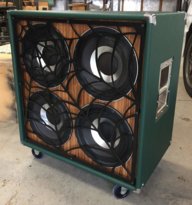
That's cool! So you could amplify the sound coming from the resonator, correct?
I'd love to hear it with a fretted bass.
I'd love to hear it with a fretted bass.

TalkBass has been independent since 1998. Add your voice.
Create a free account to reply to discussions, view embedded media, and browse with fewer display ads.
Join free Log in
Want zero display ads or expanded classifieds tools? Compare plans.
Yes indeed, there is a coil/magnet attached to the bass bars. (They should end up on the inside at some point, this is easier prototyping).

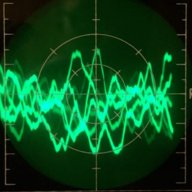


It's true, it could add it's vibrations to just about anything. Testing on a Cajon is not a bad idea at all, although I woud guess it will have a heavy-mid response, and may not have much acoustic resonanceThat's a new take on "how do I get my electric to sound like an upright?"
I also think that you might be able to get more speaker efficiency because you aren't necessarily tied to the shape and size of a Double bass.
What if you attached the resonator to something like a Cajon?
That's very true, I tried it with a guitar and I liked that too, but you can amplify anything. Or add effects, I added a bit reverb on the signal before amplifying it.I nominate you for the 2025 Talkbass Hero of Innovation medal.
reamp it! I want to hear it with vocals drums and synth.
It's concept is close in form to an old plate reverb. It could be easily used on an auxiliary out to send any or all elements of a mix to.
It's definitely how it started, I used to be a double bass player, but I have developed back problems so I gave up on it. So I was indeed chasing an upright sound with a fretless. However at this point I think this could evolve in a very interesting acoustic sound on its own. It sounds totally different with a fretted bass with roundwound strings for instanceThe best answer yet.
This is really cool concept.
Those are interesting points you make. Now I have more to experiment withExternal VS Internal is likely to change the tone and response quite a bit AFAIK.
The image on the left is the same one I posted above except a black post has been added to represent an internal sound post. This setup should cause the front and back panel to move in the same direction like a dipole. This results in cancellation at low frequencies
The image on the right is with the transducer inside. With this setup the panels will move in opposite directions like a bipole. This results in summation at low frequencies.
View attachment 7365742
View attachment 7365752

The cavity of the body in combination with the size of the soundholes create a so called Helmholtz resonance. It's a resonance made by the air in the body. It can be decreased by make the holes larger indeed. Most of the acoustic character comes from the vibrations in the plates which start to resonate in different directions and on different frequencies. This can be tuned by adding/removing mass and stiffness.I wonder if there is a way to measure the resonant frequency of an irregular box like this or the body of an upright bass, violin, etc. If you could then it seems you could tune the resonant frequency precisely by adjusting the size of the f holes sort of like tuning a ported speaker cab.