• TalkBass has been independent since 1998. Add your voice.
    Create a free account to reply to discussions, view embedded media, and browse with fewer display ads.
    Join freeLog in
    Want zero display ads or expanded classifieds tools? Compare plans.

Instant Classic Basses

steinbergers are horrifying.

As far as Fodera, of course they're incredible basses, but almost nobody plays them due to the price tag. I'd say a classic bass would have to be at least reasonably priced to qualify; plus popular aesthetic taste varies so much, who knows what body shapes will catch on? I'd imagine the guitar buyers of tomorrow will be pretty much the same as the guitar buyers of today. A few will be looking for top-of-the-line instruments with techonological advancements out the wazoo (that's a technical term), but most will be seeking the same ol' workhorses.
 
to me, the 90's Ibanez ATK have the potential to become a classic, the way the other classics made it: it is well build, sounds good and have a sound of its own, it is relatively common (a classic is something anyone knows about, not something you'll never have a chance to touch and play) and it's starting to respond to trends in the used market ...

and it is so popular that they had to reissue it !! only classics have reissues !!
 
If you want a classic model, get a bass, and give it to a bunch of famous, high profile, players.

Maybe then...
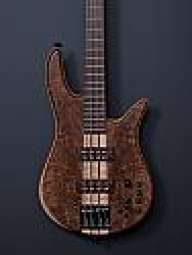

I believe Lakland fits that bill, although most of their really famous players play fender 'copies'.

A new p or j isn't gonna happen. At least that's what I think. Back in the day, those were the only option if u wanted to have a professional instrument. They even called the electric bass a 'fender bass'. Now you have so much competition and choices. there's not one instrument or brand that's gonna be as big a fender. And leo's initial design was so great, that a lot of the modern basses are 'improved' copies (even fenders own basses).
 
I think a big part of instruments becoming classics is artists using them in pop music. The Foderas and similar basses are fantastic instruments... but IMO they just don't have that much pop exposure. A bass approaches being a classic when people who aren't bass players know about it...

I'd like to say my M5-24 is unique enough to become a classic, and I'm sure it will always hold some value, but I don't think enough people use them to attain classic status.

I honestly don't see the classics changing too much from what they already are. At least not in my scope of the future... who knows about 100 years down the road though...
 
I agree with the "pop culture" statements in this thread. Therein my vote is Warwick. They seem to dump themselves on any "pro" who will pick one up. And they out advertise in publications at quite a high rate. So when players want to recreate that 90's, 2000's, or what ever sound we will chase in 20 years. And all the "vintage" magazines (our current) will be filled with Warwick ads. Just by looking at 40 endorsors listed in the magazine allone. People will pay the high dollar prices for an "old" Warwick. You look at the new Warwicks. And they sure do make a mid 90's model look great. Putting a dye job on regular woods won't make them great. imo But I understand the need to keep costs down also.
 
Interesting, there are 10 times as many Foderas and twenty times as many Sadowskys as there are Stradivarius violins....
Ahh, well, things don't work like that nowadays.

Actually, it's interesting you bring that up, because I believe, in some people's minds, a Stradivarius is what a violin should sound like. What does the consuming masses think an electric bass should sound like? A Fender. (Or, rather, a pre-CBS Fender.)
 
Remember that times change.

When I was a kid just starting out on bass 20 years ago almost NOBODY played a Jazz. Almost everybody played a Precision. In rock, Geddy Lee used a J a bit and Mike Levine of Triumph used one but that was about it.

Now everybody wants a Jazz or a high end Jazz clone like a Lull, Sadowsky, etc.

I think Reverend is a new design that could be classic. Also Lakland 55-02/55-94 are different than the usual P or J.
 
Yeah, a large part of the reason the ones that are classic now is because there wasn't a ton of choice back in the day - certainly not quality. Nowadays, it's amazing the quality you can get for $300, far more choices.

Kinda like how you won't see TV ratings as high, rock acts selling out stadiums, record sales, etc. So much more available in so many different ways.

As someone else posted, the measure of a 'classic' is what someone who doesn't play bass thinks of when they hear the word. To me, anyway. There may be some vague image of a high-end, natural wood 6-string beast seeping into the culture these days, but I don't know that any one is going to stand above the others as a 'classic'.
 
I think it can only be defined a true classic if it spawns a host of clones, after all imitation is the sincerest form of flattery, or enjoys constant production over a prolonged period. There won't be many. The P and J designs are both good enough to sustain not just Fender, but a huge amount of other companies who specialise in interpretations of those instruments. I wouldn't classify a J variation (Sadowsky, Bacchus, Lull, etc) as a classic, the original J is the classic, the clones only serve to reaffirm that. The only other one you see a lot of copies of is the Stingray.

Of the very recent batch... Lakland's MM + J configuration is a winner but I'm not sure we'll see clones of the overall design any time soon. I think Steinberger's Spector/Streamer design is a classic since two companies have built it very satisfactorily for over 20 years. Will we see SX Streamers? I dunno. The L-2000 is a great bass but I don't see anyone copying them now or in the future.

The Bongo is the dark horse. Will it survive or go the way of the Kubicki?