• TalkBass has been independent since 1998. Add your voice.
    Create a free account to reply to discussions, view embedded media, and browse with fewer display ads.
    Join freeLog in
    Want zero display ads or expanded classifieds tools? Compare plans.

interesting comparison between my VOX NuTube hybrid & USB-interface

Does yours have a tone pot in passive mode?

Mine is first-gen, just two positions on the mid-frequency switch & no treble-cut function when passive. That's fine for me however, I wouldn't use it & it's why I got mine on clearance when the gen-two models came out.


I've found passive has much more top end than in active, even when the active EQ is set flat

That's unusual & may indicate something is amiss with the wiring.
Mine sounds the same in passive or active, when EQ is flat. The only time I've noticed a difference is on low-Impedance inputs, like in this situation or when I plugged directly into the Effects-Return on my Rumble Studio 40.
In this case (thread topic) & the Studio 40 situation the bass was just louder with the switch set to Active. Once I turned down the Volume or Gain, it was the same.
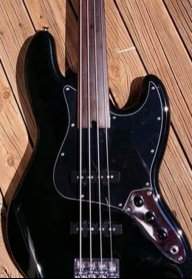
 
Thanks for that. I just did a test and you are correct. The active and passive sounds are the same, or as close as my ears can tell. I must have had some active EQ present when I switched to active the other day. Thanks!
 
I since got my GSR100EX out from under the bed & it's similar to the Mikro on the USB interface.
I've since learned that my USB interface is only:

Speakerpriority%20%281%29.jpg

48kHz

Apparently that's almost the lowest bitrate setting on a REAL USB interface, like a Scarlett:

Scarlett 2i2 | Focusrite

upload_2020-10-8_13-29-6.png
 
  • Like
Reactions: DJ Bebop
The difference in bit depth between 16 and 24 will only equate to a tiny difference in the level of the noise floor, which will still be WAY below a normal recording level. 48khz is plenty high for sampling. Nyquist theory states that 48khz can reliably recreate frequencies up to 24khz (i.e. half of the sampling rate). Without getting into the finer points of low pass filtering, dither, oversampling, etc. rest assured that 16-bit, 48khz will be just fine for most applications.
 
Ironic that the USB interface w/o any EQ manipulation is more pleasing to me.
It's a very polarizing thing. There are many folks, myself included, that love the sound of a bass direct to a recording interface through a set of monitors. There are also many folks that cry foul at the very notion and detest it since it "doesn't sound like I do on stage." I'll say this; If I'm working in my studio, or doing a session at someone else's studio and they say that all the bass is going to get is a DI, they'll never get a complaint from me about it :smug:
 
It's a very polarizing thing. There are many folks, myself included, that love the sound of a bass direct to a recording interface through a set of monitors. There are also many folks that cry foul at the very notion and detest it since it "doesn't sound like I do on stage." I'll say this; If I'm working in my studio, or doing a session at someone else's studio and they say that all the bass is going to get is a DI, they'll never get a complaint from me about it :smug:

Yep, it is polarizing. I love the sound of a DI straight in for live gigs, but not always so much for recording...;)
 
  • Like
Reactions: DJ Bebop
On a live gig, as long as my amp sounds good on stage or I have a good monitor mix I'm happy. I could care less how it sounds out front. That's for those peons in the audience :p

Haha, love that. Recording has never been a priority for me, I've only done it sporadically for the children...er, I mean fans.
 
The difference in bit depth between 16 and 24 will only equate to a tiny difference in the level of the noise floor, which will still be WAY below a normal recording level. 48khz is plenty high for sampling. Nyquist theory states that 48khz can reliably recreate frequencies up to 24khz (i.e. half of the sampling rate). Without getting into the finer points of low pass filtering, dither, oversampling, etc. rest assured that 16-bit, 48khz will be just fine for most applications.
Yes, most CD's are mastered to a slightly lower level. 16 bit 44Khz. Using the double top frequency (20Khz) and adding 20% contingency. So 48Khz has an even higher contingency at the treble end.
I find it intersting that on an analogue recording (tape or LP), bass sucks up all the bandwidth. Ironically on a digital recording it's the treble freqencies that uses all the bandwidth. Bass guitars barely produce anything over 8Khz. Most adult human ears struggle to hear anything over 16Khz. The bit rate defines the resolution, 16 bit depth is fine for nearly everything. Often it's the quality of the processing that's more important than higher bit depths.