As someone who is trying to become a proffesional bass player, is it worth it to learn playing the guitar, or should he invest all his time in bass playing?

Enjoy the benefits of a premium membership!
Upgrade Account
-
TalkBass has been independent since 1998. Add your voice.
Create a free account to reply to discussions, view embedded media, and browse with fewer display ads.
Join free Log in
Want zero display ads or expanded classifieds tools? Compare plans.
You are using an out of date browser. It may not display this or other websites correctly.
You should upgrade or use an alternative browser.
You should upgrade or use an alternative browser.
Is it worth to learn guitar?
- Thread starter StarAttraction
- Start date
More options
Who Replied?
My primary interest was in bass and it's the only instrument I gig on. But I think there's a value to thinking of oneself as a musician first, and to have a deeper appreciation of music through the perspective of different instruments. I started fiddling with guitar a couple of years after taking up bass, first with my wife's old acoustic from when she was a teenager. Eventually, owing to other people leaving, I wound up as the guitarist for my church's services and these days I probably am actually pulling out the acoustic (my own, now) more often than a bass. But I have no pretensions to being a professional.
I did find learning guitar useful for two specific things in band settings; it helps one to write music (working out chord progressions), and it helps to be able "follow hands" so you can tell what your guitarist is playing and improvise a bass part to match.
I did find learning guitar useful for two specific things in band settings; it helps one to write music (working out chord progressions), and it helps to be able "follow hands" so you can tell what your guitarist is playing and improvise a bass part to match.


I am 59 and I would say yes. I would also add that piano probably is a better choice for a second instrument. I play guitar and piano and wish I was better on piano.
There are many factors. I think if you want to be "that" studio guy you will need to be well versed in many techniques and genres. This will take a ton of time to master. Are you only willing to play Dream Theater type stuff? These are things to think about. However in my case I played in various cover and original bands over the years and really only used a small portion of what I knew.
It also depends how much time you have. How many hours do you practice a day?
Learning another instrument can only be beneficial to you.
Lastly, in hindsight, my biggest regret was not working on my voice. You are more likely to get work if you can sing, IMHO of course.
There are many factors. I think if you want to be "that" studio guy you will need to be well versed in many techniques and genres. This will take a ton of time to master. Are you only willing to play Dream Theater type stuff? These are things to think about. However in my case I played in various cover and original bands over the years and really only used a small portion of what I knew.
It also depends how much time you have. How many hours do you practice a day?
Learning another instrument can only be beneficial to you.
Lastly, in hindsight, my biggest regret was not working on my voice. You are more likely to get work if you can sing, IMHO of course.
Assuming you can already sing and play piano, then I would say guitar is a valuable next step to learn after that.

Another yes vote. If nothing else to be able interpret the fingering a guitarist uses when playing them but also for expanding your knowledge of harmony and chord theory. The latter is probably one of the most transferable skills I’ve picked up when I move between instruments and play with others. I don’t see a downside other than opportunity cost of time spent on guitar vs bass. But it’s not an all or nothing proposition.

^ this, entirely.Assuming you can already sing and play piano, then I would say guitar is a valuable next step to learn after that.

You could try what I did, and turned my 6 string bass into a piccolo bass. It has definitely helped expand knowledge of the fretboard, and understanding chord voicings better.
Trying something different: piccolo 6 string bass
Trying something different: piccolo 6 string bass
I too think a little ability on the piano is good for any musician. It doesn't have to be a grand piano. even hooking a controller keyboard up to a computer will be useful. With the piano it is easier to grasp music theory which then becomes very useful for stringed instruments like the bass, guitar, banjo, whatever.
Chuck Berry’s song inspired me to learn a second instrument.
“Deep down in Louisiana close to New Orleans
Way back up in the woods among the evergreens
There stood a log cabin made of earth and wood
Where lived a country boy named Johnny B. Goode
Who never ever learned to read or write so well
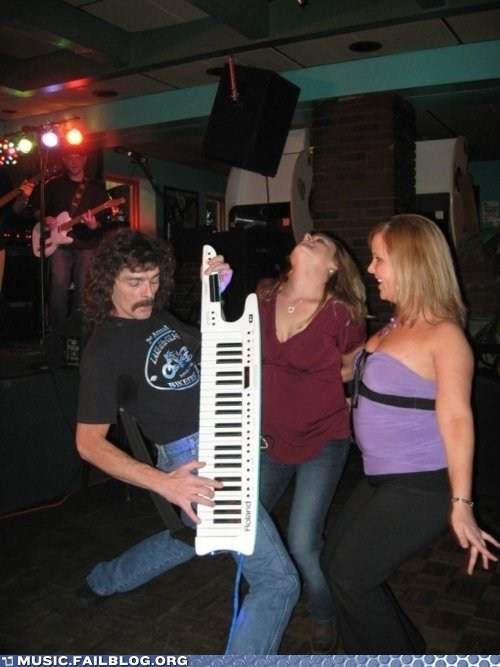
But he could play a keytar just like a-ringin' a bell”
Be the best “you” you can be! Now go and inspire others!
“Deep down in Louisiana close to New Orleans
Way back up in the woods among the evergreens
There stood a log cabin made of earth and wood
Where lived a country boy named Johnny B. Goode
Who never ever learned to read or write so well
But he could play a keytar just like a-ringin' a bell”
Be the best “you” you can be! Now go and inspire others!

I started on a wide neck nylon string classical guitar, it was the late 60s or very early 70s so Mom said " no rock and roll"
high school networking got me rocking.
took many years to pick up a bass, but, all but one gig, and there's been many were bass.
so id say sure but one at a time.
high school networking got me rocking.
took many years to pick up a bass, but, all but one gig, and there's been many were bass.
so id say sure but one at a time.

Understanding chord structures and progressions by playing another instrument (guitar or piano, usually) is a good thing and will only help with your bass playing.
Man, it is pretty funny to see that there are some people out there that think regular session work is still a thing. For maybe five people yeah, but they have what's left of the work locked up.
Yes, learning guitar is extremely important. I play professionally on both instruments. Guitar is a more difficult instrument from a conceptual point of view, and it saddles you with the responsibility for the harmony of the song.
However, the point at which you decide to pivot your practice time to another instrument is important, I think. If your goal is to play bass professionally, then you need to make sure that you have your repertoire and the prerequisite skills to execute that repertoire together before spending serious time on another instrument. When you do pick up the guitar, start learning everything you know on bass on the guitar, because you've heard those songs and those parts a million times already.
I would also strongly recommend working piano into your routine as well, once you get there.
Yes, learning guitar is extremely important. I play professionally on both instruments. Guitar is a more difficult instrument from a conceptual point of view, and it saddles you with the responsibility for the harmony of the song.
However, the point at which you decide to pivot your practice time to another instrument is important, I think. If your goal is to play bass professionally, then you need to make sure that you have your repertoire and the prerequisite skills to execute that repertoire together before spending serious time on another instrument. When you do pick up the guitar, start learning everything you know on bass on the guitar, because you've heard those songs and those parts a million times already.
I would also strongly recommend working piano into your routine as well, once you get there.
As someone who is trying to become a proffesional bass player, is it worth it to learn playing the guitar, or should he invest all his time in bass playing?
The obvious question that no one seems to have asked is why, and how, do you think learning to play the guitar is going to help you in being a professional bass player?
The obvious question that no one seems to have asked is why, and how, do you think learning to play the guitar is going to help you in being a professional bass player?
Learning a harmonic instrument makes you a better musician, and that feeds into being a better bass player.
24862432[/URL], member: 52256"]Learning a harmonic instrument makes you a better musician, and that feeds into being a better bass player.
I agree. Although I would argue learning the basic mechanics of the piano is far more beneficial in developing that understanding of harmony which helps us become better musicians.
There are many a professional bass player that can’t play the guitar, myself being one of them.
Never the less that while you and I agree on the benefit of doing so I noticed from the responses there were different interpretations of the reasoning behind the question. Understanding why the OP feels the guitar is going to help in being a professional bass player still remains unanswered. I asked because I feel understanding the OP’s thought process would allows us to focus on giving them a better educated response.


