• TalkBass has been independent since 1998. Add your voice.
    Create a free account to reply to discussions, view embedded media, and browse with fewer display ads.
    Join freeLog in
    Want zero display ads or expanded classifieds tools? Compare plans.

Is the Internet destroying society?

A hammer is really nothing more than a hammer.... How a person uses that hammer is what gives that hammer it’s meaning in that moment. Prior to it being used, it is possesses nothing more than possibility. It could be used to build shelter or it can be used to crack a skull. It’s the same as the internet. It’s value lies in how it is used, not in what it is.
True, but not relevant. Hammers have defined and rather limited uses that are easily determined. If hammers were used primarily for skull cracking, hammer regulation would ensue. We are really not yet aware of the impact the internet can and will have and yet there is little effort to provide any adult supervision. When cars became common and fast, we got speed limits.
 
  • Like
Reactions: fdeck
Pretty sure blue meant in the western world, as those are where his cited examples transpired.

Moot point to discuss the web’s impact on totalitarian nations.
Why is it moot? The facial recognition being deployed will likely see totalitarian regimes become more totalitarian and better able to maintain control over their citizens. Could we now have an "Arab Spring" or future moves toward freedom and democracy?
 
True, but not relevant. Hammers have defined and rather limited uses that are easily determined. If hammers were used primarily for skull cracking, hammer regulation would ensue. We are really not yet aware of the impact the internet can and will have and yet there is little effort to provide any adult supervision. When cars became common and fast, we got speed limits.

No argument here. I will get back to playing my bass now. I’m not good at this stuff. Lol.
 
  • Like
Reactions: walking Bass
Pretty sure blue meant in the western world, as those are where his cited examples transpired.

Moot point to discuss the web’s impact on totalitarian nations.
The web is a tool of totalitarian nations. How is it a moot point? Every totalitarian or authoritarian regime has a program to exploit the Internet, both to control their own population, and to destabilize free nations.
 
The web is a tool of totalitarian nations. How is it a moot point? Every totalitarian or authoritarian regime has a program to exploit the Internet, both to control their own population, and to destabilize free nations.

If we speak of a censored, monitored and propaganda laden internet, is it really “the internet” as we know and understand it?

The answer to the OP’s question in this context is that the government is destroying society, not the internet.
 
If we speak of a censored, monitored and propaganda laden internet, is it really “the internet” as we know and understand it?

The answer to the OP’s question in this context is that the government is destroying society, not the internet.
If you mean "the internet" as originally envisioned by idealists, probably not. If you mean "the internet" as a raw technology platform, then yes. The only thing that's really surprising is the scale of what's being done, not that it's possible.
 
  • Like
Reactions: walking Bass
The internet is among only a relatively few inventions that fundamentally changed all of human society. It was in its infancy only 30 years ago but now, it gives anyone with a cheap, readily available device access to virtually any information in the world that someone decided is worth making available.

I would say that the internet is at least as important as the invention of the technology that brought us the power of electricity. From 1890 to 1920, we made electric lights widely available and put telephones in homes everywhere. Factories were powered by generators and industrial equipment was made to run on electric power. These three decades are now described by historians as The 2nd Industrial Revolution.

There's no question that this technology, and everything that followed from it, raised the standard of living of most of humanity. But at what cost? Our modern technology is what allows us to reproduce as a species to more than a billion individuals. We passed up that number awhile ago and are now getting within reach of 10 billion. Is that really a good thing? I don't know.
 
The internet is among only a relatively few inventions that fundamentally changed all of human society. It was in its infancy only 30 years ago but now, it gives anyone with a cheap, readily available device access to virtually any information in the world that someone decided is worth making available.

I would say that the internet is at least as important as the invention of the technology that brought us the power of electricity. From 1890 to 1920, we made electric lights widely available and put telephones in homes everywhere. Factories were powered by generators and industrial equipment was made to run on electric power. These three decades are now described by historians as The 2nd Industrial Revolution.

There's no question that this technology, and everything that followed from it, raised the standard of living of most of humanity. But at what cost? Our modern technology is what allows us to reproduce as a species to more than a billion individuals. We passed up that number awhile ago and are now getting within reach of 10 billion. Is that really a good thing? I don't know.

I would add to this that we should also think beyond the privileged First World here. Cell phone towers brought phone service (and internet with it) to places in Africa and elsewhere that never had a landline. There's a whole level of connectedness and access going on beyond what westerners experience.

On population, I would argue that the main issue is not numbers of people but levels of consumption. A minority of the world's population devours the bulk of its energy, and with it the burning of fossil fuels, pollution, etc., that energy production entails. Population growth is mostly happening in the poorer parts of the world where energy consumption is lower (but now starting to increase). The environmental impact of food production is mostly not in producing bare necessities of life for larger numbers of people but in consumption to taste - I'm thinking specifically of mass cattle farming in Latin America that incentivizes massive deforestation in order to serve rich countries' inordinate demand for beef. The planet could support 10 billion people just fine but not all eating big steaks, packaging everything in plastic and burning jet fuel on family vacations.
 
There is a principle in evolutionary biology which says that the more a species is "specialized" to its environment, the more susceptible it is to becoming extinct. At first, they become very successful in exploiting an environmental niche that is otherwise unoccupied. But if that environment changes in such a way that their specialized resource goes away, t the species no longer has the ability to "generalize" back into the main environment and can't compete with other established species.

Humans are about as specialized as it's possible be because more than 90% of us are completely dependent on modern technology to survive. We live in dense population centers where food and water are supplied by complex idustrial processes. Many people live where the climate is inhospitable without energy intensive heating and air conditioning machinery. Most people over the age of 50 are dependent on modern medicine to simply stay alive and in good health.

Most of the human race survives because of an incredibly complex system of socio-political-economic organization that is increasingly based on computer technology and instant global communication. What's alarming is we don't know how stable - or fragile - this system really is. We've built it up over the last 2 centuries, piece by piece, under the assumption that everything will always continue to work.

What would happen if the internet failed? A very large solar flare could easily take it down, at least for awhile. A week without the internet would make a huge portion of the world economy grind to a halt. Thirty years ago, it would have been inconsequential, but now losing the internet would certainly trigger an international recession. How bad would it be? How long would it last?

We should probably be more concerned about answering these questions sooner rather than later.
 
Last edited:
  • Like
Reactions: hrodbert696
There is a principle in evolutionary biology which says that the more a species is "specialized" to its environment, the more susceptible it is to becoming extinct. At first, they become very successful in exploiting an environmental niche that is otherwise unoccupied. But if that environment changes in such a way that their specialized resource goes away, t the species no longer has the ability to "generalize" back into the main environment and can't compete with other established species.

Humans are about as specialized as it's possible be because more than 90% of us are completely dependent on modern technology to survive. We live in dense population centers where food and water are supplied by complex idustrial processes. Many people live where the climate is inhospitable without energy intensive heating and air conditioning machinery. Most people over the age of 50 are dependent on modern medicine to simply stay alive and in good health.

Most of the human race survives because of an incredibly complex system of socio-political-economic organization that is increasingly based on computer technology and instant global communication. What's alarming is we don't know how stable - or fragile - this system really is. We've built it up over the last 2 centuries, piece by piece, under the assumption that everything will always continue to work.

What would happen if the internet failed? A very large solar flare could easily take it down, at least for awhile. A week without the internet would make a huge portion of the world economy grind to a halt. Thirty years ago, it would have been inconsequential, but now losing the internet would certainly trigger an international recession. How bad would it be? How long would it last?

We should probably be more concerned about answering these questions sooner rather than later.

A week without the internet? How about a week without Facebook? If Zuckerberg decided to shut it down for a week with no warning, for whatever reason, the economy would suffer. So many businesses rely on it for their revenue at this point. If the entire internet shut down for a week, I can't imagine what the consequences would be. Extended or permanent shutdown would result in chaos.
 
A week without the internet? How about a week without Facebook? If Zuckerberg decided to shut it down for a week with no warning, for whatever reason, the economy would suffer. So many businesses rely on it for their revenue at this point. If the entire internet shut down for a week, I can't imagine what the consequences would be. Extended or permanent shutdown would result in chaos.
I'm willing to give it a go. You? :laugh:
 
  • Like
Reactions: redwingxix
A week without the internet? How about a week without Facebook? If Zuckerberg decided to shut it down for a week with no warning, for whatever reason, the economy would suffer. So many businesses rely on it for their revenue at this point. If the entire internet shut down for a week, I can't imagine what the consequences would be. Extended or permanent shutdown would result in chaos.

this is the insidious part about it, its only been around about 30 years to the general public and were so joined at the hip with it that having it suddenly vanish would cause total pandemonium. It might be worth it though if that F***'n twitter thing would cease. I shutter to think what new ridiculous way we can be even stupider thanks to the marvelous Internet and its vast array of mind numbing apps and such.
Someone asked me the other day how I would find some particular location without a smartphone, I said I've been doing it just fine without it for about 50 years now, do you really think I should rely on the google map app to tell me how to get there when I already know how?
 
this is the insidious part about it, its only been around about 30 years to the general public and were so joined at the hip with it that having it suddenly vanish would cause total pandemonium. It might be worth it though if that F***'n twitter thing would cease. I shutter to think what new ridiculous way we can be even stupider thanks to the marvelous Internet and its vast array of mind numbing apps and such.
Someone asked me the other day how I would find some particular location without a smartphone, I said I've been doing it just fine without it for about 50 years now, do you really think I should rely on the google map app to tell me how to get there when I already know how?

It is scary how reliant people are on it. My kid will not drive anywhere without entering the directions into his phone.

"It's three miles away and you've been there a dozen times!!!!" He's only sixteen and been driving for six months but FFS!!!

That might be the most insidious thing about it is how that since we no longer have to learn and remember things then our brains simply don't.
 
a horrible tool in the hands of humans

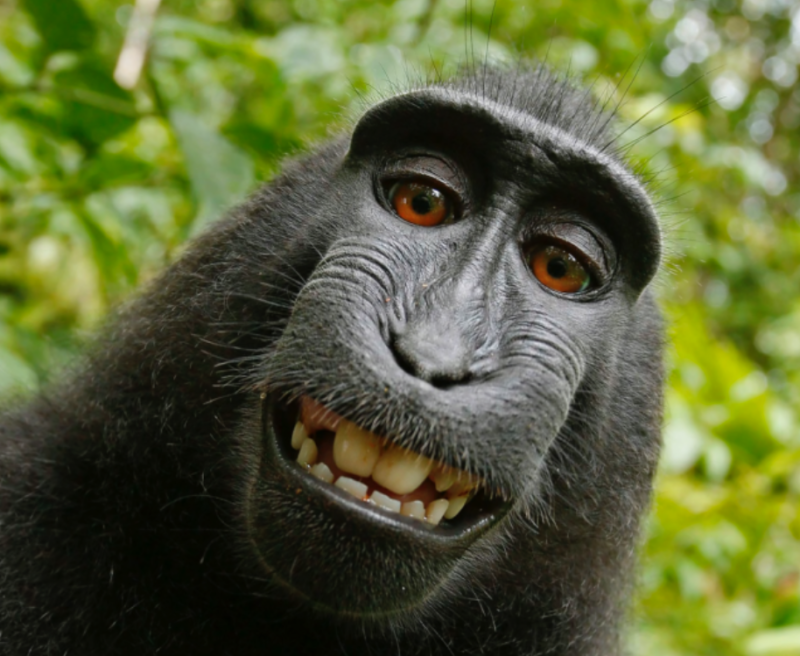
Way better to put it in the hands of gibbons.

naruto-800x656.png
 
  • Like
Reactions: xroads64