• TalkBass has been independent since 1998. Add your voice.
    Create a free account to reply to discussions, view embedded media, and browse with fewer display ads.
    Join freeLog in
    Want zero display ads or expanded classifieds tools? Compare plans.

Is there a reason everyone doesn't use quick connections?

I'vr seen a few companies do quick connections but it doesn't seem to popular for people swapping pickups. Seems a lot easier that soldering every time. Even if you only plan of swapping pickups once, just cutting and putting on a set of connectors still seems easier than soldering.
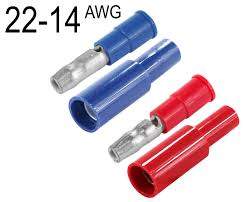
download.jpeg

Is there a reason this hasn't seemed to catch on? I'm going to try it if I ever swap pu's it the future.
 
Aside from the fact that there probably are solder purists out there, most guitars and basses come stock with soldered OEM parts and most people are satisfied with this setup.
Believe me i’m a solderless fanatic too, I just learned how to solder like 2 months ago.

There could well be flying cars in 200 years but there will still be old school wiring harnesses on guitars. Lol
 
When I'm in a restless, pickup swapping phase, screw terminals on the wiring harness sound like a great idea.
When I have a "search over" pickup, I'm perfectly happy to leave it soldered in forever. (Hopefully I achieve this state with a minimum of swapping - ideally zero.)
I'm not completely opposed to the idea of quick connects, but you might have a hard time getting the wires in & out the narrow holes on many bodies with a bulky crimp-on connector on each lead. (The EMG system looks fairly slim but not so convenient for other makes.)
 
  • Like
Reactions: Killed_by_Death
When I'm in a restless, pickup swapping phase, screw terminals on the wiring harness sound like a great idea.
When I have a "search over" pickup, I'm perfectly happy to leave it soldered in forever. (Hopefully I achieve this state with a minimum of swapping - ideally zero.)
I'm not completely opposed to the idea of quick connects, but you might have a hard time getting the wires in & out the narrow holes on many bodies with a bulky crimp-on connector on each lead. (The EMG system looks fairly slim but not so convenient for other makes.)
I have had to file out a couple cavity holes from older basses so the EMG QC's fit through. Small price to pay IMHO.
 
  • Like
Reactions: Volker Kirstein
as someone who's actually handy with a soldering iron these quik-connect gadgets make pickup installs slower not quicker

also guitar circuits are low voltage/high impedance, meaning the tiniest bit of oxidation or whatever in a mechanical contact can block the signal; unstressed solder connections are far more reliable
 
  • Like
Reactions: kodiakblair
as someone who's actually handy with a soldering iron these quik-connect gadgets make pickup installs slower not quicker

also guitar circuits are low voltage/high impedance, meaning the tiniest bit of oxidation or whatever in a mechanical contact can block the signal; unstressed solder connections are far more reliable
I've yet to have that happen in any of my EMG quick connector equipped basses, and I've been using them for about 9 years. But if soldering is easier for you, that's a different story. Me, I suck at it.
 
as someone who's actually handy with a soldering iron these quik-connect gadgets make pickup installs slower not quicker

also guitar circuits are low voltage/high impedance, meaning the tiniest bit of oxidation or whatever in a mechanical contact can block the signal; unstressed solder connections are far more reliable
I'm decent at soldering but i can't imagine it being faster. It would take longer for my iron to heat up that it would to use a quick connect. You have a fair point about corrosion but the impact on tone would be minimal. Also various connectors are used everywhere in far more demanding applications, it don't think reliability would be an issue. But mainly, i just don't like soldering. If you do, there's not as much as a benefit using connectors.
 
Of all the times I used connectors on electronics or even car wiring, thinking that it would be more convenient the next time I removed them, I never removed them more than once and always ended going back to solder them. Far more compact and electrically reliable. I generally don't like to use thin gauge wire with crimping or clamping methods. Heavy gauge wire is the opposite - difficult and impractical to solder, much better to make a cold weld with a hydraulic crimp. But we are talking single digit gauge wire, nothing you come across in instruments.

Like many things, the quality of your tools determines how easy the job is. When you have a proper temp controlled iron, proper electronics flux and good quality multi rosin core solder, soldering is quick, easy and the most compact.
 
  • Like
Reactions: walterw
I cant solder (I should practice on junk parts I have) so just use shrink tubing as needed.

Bought a solderless varitone harness and it was easy to install.

Also just play in bedroom so if something comes loose and fails no biggy. Yet hasn't happened yet.

Only time something happens is when I have just been messing with innards and I notice immediately.