

Enjoy the benefits of a premium membership!
Upgrade Account
-
TalkBass has been independent since 1998. Add your voice.
Create a free account to reply to discussions, view embedded media, and browse with fewer display ads.
Join free Log in
Want zero display ads or expanded classifieds tools? Compare plans.
You are using an out of date browser. It may not display this or other websites correctly.
You should upgrade or use an alternative browser.
You should upgrade or use an alternative browser.
Is there really a benefit with "sting-thru" vs toploading?
- Thread starter vindibona1
- Start date
More options
Who Replied?
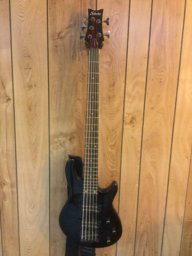
I have a Schecter 4 str and have used both top load and string thru with different types of strings. I never noticed any difference in tone or sustain except due to the strings themselves. I picture the strings tightly holding the bridge down on the body with string thru but with no practical difference in function In MHO.
Waitaminnit. Just noticed the thread is about "sting-thru". I use only non-venomous strings, so the previous comment may not apply.

TL;DR - But, I imagine that, as with every other time this subject's come up, there are many pages worth of the usual responses from the the usual responders. Although the one from Gsnorgathon was new - and perceptive. Thank you... Anyhow, on to my usual response;
My '06 Carvin LB-20 is my only bass with the string-thru/top load option. I tried string-thru once. It was a royal PITA. I didn't like it. It made no difference to the bass' tone/playability whatsoever. I never tried it again. But, if you like it/want to try it? Knock yerself out...
Anyhow, on to my usual response;My '06 Carvin LB-20 is my only bass with the string-thru/top load option. I tried string-thru once. It was a royal PITA. I didn't like it. It made no difference to the bass' tone/playability whatsoever. I never tried it again. But, if you like it/want to try it? Knock yerself out...

- Sep 9, 2007
- 5,309
- 4,977
- Disclosures
- Endorsing Artist: Eventide, GHS Strings, G&L Guitars, NS Design, Tsunami Cables
I see everyone say this, and while I assume it is true, I 100% feel a difference on my p bass. I just got a jazz that has both as an option I feel a difference on this as well, but only when played over the bridge pickup.
What you're feeling is a difference in stiffness/flexibility, and not tension.

Waitaminnit. Just noticed the thread is about "sting-thru". I use only non-venomous strings, so the previous comment may not apply.
The last time I tried the "sting-thru" method on one of my basses, it went into an anaphylactic shock. I think top-loading is safer.


The advantage I find to having a string-through option is if I have an E string (on a 4-string bass, obviously the B string on a 5-string bass) that the speaking length is longer than the distance from the ball anchor top load to the middle of the tuner post, so I can run that extra inch of length through the body to take up the slack so only the silk or taper goes around the tuner post.

What you're feeling is a difference in stiffness/flexibility, and not tension.
I'm careful not to refer to it as tension when discussing this topic. I know how technical we all like to be on TB.
Whatever we are calling it, the difference is palpable.

Here's my speculation (and maybe it was already said...):
I think the thru-body bridge has absolutely nothing to do with tone or playability, and everything to do with the construction of the instrument.
By stringing through the body, the bridge will have no string tension pulling on it. The strings will actually be putting downward pressure on the bridge, making the construction of the bass more stable. Perhaps, in 1951, Leo looked at the bridge, and recognized that the strings will pull a lot of weight, and maybe just securing that bridge with a few little screws wouldn't be sufficient. By stringing through the body, those little screws would no longer have to support the pulling-weight of the strings.
The same is true on the other end of the string. Tuning machines are mounted from the back of the headstock through to the front. I suppose a tuning machine could be designed to be mounted on the front of the headstock, but why would you? Since it's mounted from the back, there is no way a string is going to break a tuning machine from its mount.
And...as time progressed, bridge design changed, and we realized that top-mounting bridges could support the weight of the strings if designed correctly.
Or...I'm completely wrong, but it's still fun to speculate.
I think the thru-body bridge has absolutely nothing to do with tone or playability, and everything to do with the construction of the instrument.
By stringing through the body, the bridge will have no string tension pulling on it. The strings will actually be putting downward pressure on the bridge, making the construction of the bass more stable. Perhaps, in 1951, Leo looked at the bridge, and recognized that the strings will pull a lot of weight, and maybe just securing that bridge with a few little screws wouldn't be sufficient. By stringing through the body, those little screws would no longer have to support the pulling-weight of the strings.
The same is true on the other end of the string. Tuning machines are mounted from the back of the headstock through to the front. I suppose a tuning machine could be designed to be mounted on the front of the headstock, but why would you? Since it's mounted from the back, there is no way a string is going to break a tuning machine from its mount.
And...as time progressed, bridge design changed, and we realized that top-mounting bridges could support the weight of the strings if designed correctly.
Or...I'm completely wrong, but it's still fun to speculate.

So string thru goes back to the beginning?Here's my speculation (and maybe it was already said...):
I think the thru-body bridge has absolutely nothing to do with tone or playability, and everything to do with the construction of the instrument.
By stringing through the body, the bridge will have no string tension pulling on it. The strings will actually be putting downward pressure on the bridge, making the construction of the bass more stable. Perhaps, in 1951, Leo looked at the bridge, and recognized that the strings will pull a lot of weight, and maybe just securing that bridge with a few little screws wouldn't be sufficient. By stringing through the body, those little screws would no longer have to support the pulling-weight of the strings.
The same is true on the other end of the string. Tuning machines are mounted from the back of the headstock through to the front. I suppose a tuning machine could be designed to be mounted on the front of the headstock, but why would you? Since it's mounted from the back, there is no way a string is going to break a tuning machine from its mount.
And...as time progressed, bridge design changed, and we realized that top-mounting bridges could support the weight of the strings if designed correctly.
Or...I'm completely wrong, but it's still fun to speculate.

Yep. First the Telecaster, then the Precision.So string thru goes back to the beginning?
Yes. A 1951 Precision was string-thru. It didn't even have the option to top-mount.So string thru goes back to the beginning?
Yeah I can totally picture it on the slab. I guess I just usually picture an old Fender with those ball ends poking out at the bridge. Probably because those ferrules get lost and people stop stringing through.
- Sep 9, 2007
- 5,309
- 4,977
- Disclosures
- Endorsing Artist: Eventide, GHS Strings, G&L Guitars, NS Design, Tsunami Cables
I'm careful not to refer to it as tension when discussing this topic. I know how technical we all like to be on TB.
Whatever we are calling it, the difference is palpable.
Technical, yes. But they are two different things.
Tension is the amount of pulling weight that is exerted on the bass when you tune the string to pitch. That can be measured. There is no discrepancy involved in it; it's formulaic. There is no arguing that a .045 string has the same amount of tension between string-thru and top-load. That part is not and has not ever been part of the equation.
What you are describing is stiffness, which can't be measured and is based on feel. And there is definitely a difference, as the break angle of the string is changed between string-thru and top-load.
Not really. You either strung thru, like basses produced from 51 to early 57, or from later in 57 on you strung thru the bridge. There was no other option, it was one of the other depending on the year of the bass. Only decades later did Fender offer bridges [& string ferrules] that gave you a choice.Yeah I can totally picture it on the slab. I guess I just usually picture an old Fender with those ball ends poking out at the bridge. Probably because those ferrules get lost and people stop stringing through.
Ah, so string thru was gone for a while. When did the dual option design show up?Not really. You either strung thru, like basses produced from 51 to early 57, or from later in 57 on you strung thru the bridge. There was no other option, it was one of the other depending on the year of the bass. Only decades later did Fender offer bridges [& string ferrules] that gave you a choice.
Pretty sure the option showed up at Fender's Custom Shop first. Eventually it was also offered on some of Fender's higher end basses.Ah, so string thru was gone for a while. When did the dual option design show up?

That hurt.Never felt it made any kind of difference aside from extra ugly holes in the bass.
That hurt.
lol, sorry no offense meant. I do think they deter from the beauty of a finished back somewhat, but not enough to not buy a bass that has them to be honest with you.


