I can't hear any difference between the 2. And I can't feel any difference when playing either.
Tension is the same, you can't argue with science and simple physics.
You can tie one end of the string to the Eiffel tower and the other to the statue of liberty and the tension of the string on 34" scale with always be the same ( if using same gauge and material component of said string.) when tuned to the same note ...for example.....an open A in standard tuning.
Look up the wiki of the equation to calculate all this...I'm too lazy to find the link this morning.
Edit.... here's the link with all the math for all the naysers.
If you want to argue, don't poke me. Go poke all the genius people who made all those SCIENCE not belief equations.
String vibration - Wikipedia
This applies for perfectly rigid anchor points. At rest you can set the tension with a wide range of end point rigidity. As the string vibrates, the anchor points will also vibrate and remove energy from the vibrating strings depending on how rigid they are. Is it possible that the differences in rigidity and the natural vibrational modes and frequencies of the different type of anchors affect the tone and sustain? I think that's what we're debating here. Since the "direction" of tension is perpendicular to the vibration direction, my guess is that ability of the anchor points to color the tone is fairly minimal. But if you put a spectrum analyzer on it I'm sure there will be some differences.
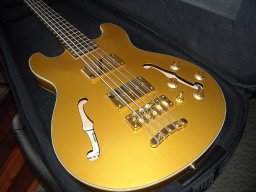
Early pianos had wood frames holding the strings under tension. By the time of Beethoven steel string instruments were being made with significant improvements in tone and sustain. I think the claim is that top load vs. thru-body is a similar type of improvement. Someone could easily test the sustain question if they had a way to evenly pluck strings, maybe with a spring loaded arm with a pick attached. Maybe I'll add that to my to-do list. My bass can be strung both ways.

 No change in tone.