I was more arguing against being forced to learn the upright bass to be taken seriously in jazz, than learning the upright in general. if it's your thing then more power to youThat would be the wrong reason to learn upright. The reason why I learn upright is because I love playing upright. Secondarily, upright seems to fit my background and interests. I've got a fair amount of classical training on cello and bass, and continue to play classical at home. I make extensive use of the bow in jazz. And my kids are taking string lessons, so it's a family thing to practice along with them on a bowed instrument.
My old Kay looked horrible, and my electric is a metallic blue Ibanez. Nobody gave me any trouble about either of those instruments. When they found out that I played both, they typically requested upright. But I have to admit that I am probably a better player on upright. I could correct that by heading back into the shed with my electric, but at my stage in life, with a demanding day job and hectic family life, it's hard enough for me to serve one mistress, much less two.
I'll repeat, you can play jazz on any instrument. Trying to imitate a sound or an image is -- at the very least -- putting the cart before the horse. More important priorities include:
Fall in love with jazz
Learn jazz, including its traditions, not to imitate but just to know the shared language
Develop skills that are important for jazz
Master your instrument
Some instruments are more common than others in jazz. How many jazz combos have an oboe, or french horn?

Enjoy the benefits of a premium membership!
Upgrade Account
-
TalkBass has been independent since 1998. Add your voice.
Create a free account to reply to discussions, view embedded media, and browse with fewer display ads.
Join free Log in
Want zero display ads or expanded classifieds tools? Compare plans.
You are using an out of date browser. It may not display this or other websites correctly.
You should upgrade or use an alternative browser.
You should upgrade or use an alternative browser.
Jazz and the Bass Guitar
- Thread starter HaVIC5
- Start date
More options
Who Replied?
Forgot to say: Adam, great article. Clear, no byass, good argumentation. A bit defensive, maybe. The bass guitar is a big success, fabulously played by some, giving pleasure to many more. If straight jazz guys give you an awkward look, so what? 
Let's not forget about a number of similar discussions. The saxophone was frowned upon for a long time. The accordeon, the electronic organ, the first electiric guitars, the valve trombone...
They all met with general conservatism at first, became widely accepted and respected later, forcing the conservatives into their well-defended niches.
I say lock'm up right there.
Let's not forget about a number of similar discussions. The saxophone was frowned upon for a long time. The accordeon, the electronic organ, the first electiric guitars, the valve trombone...
They all met with general conservatism at first, became widely accepted and respected later, forcing the conservatives into their well-defended niches.
I say lock'm up right there.

Forgot to say: Adam, great article. Clear, no byass, good argumentation. A bit defensive, maybe. The bass guitar is a big success, fabulously played by some, giving pleasure to many more. If straight jazz guys give you an awkward look, so what?
Let's not forget about a number of similar discussions. The saxophone was frowned upon for a long time. The accordeon, the electronic organ, the first electiric guitars, the valve trombone...
They all met with general conservatism at first, became widely accepted and respected later, forcing the conservatives into their well-defended niches.
I say lock'm up right there.
+1 Also, it is interesting that some get into a little bit of a circular argument, almost defining the genre by the 'look and instrumentation'.... e.g., that's not swinging or 'straight ahead' more because of the instrumentation than the music or feel IMO.
Again, if one uses that tight of a definition, and as you posted earlier (e.g. taking one small slice of the jazz era, lets say early 50's hard bop), use that as the one and only definition of swing, or straight ahead, or whatever, then of course the debate is over.
I agree with Narud's comment though that if you don't take into account gigging, CD and MP3 sales, and remove all but the handful of 'top' players, then yes, the only way to play old (i.e., 50 to 60 year old) jazz tunes in a small group format is probably with traditional instrumentation. I guess you could extend that to the classical world, with some ensembles using 'period' instruments for baroque music, for example.
So yes, if you want to kind of 'put jazz in a museum' like Wynton Marsalis did (I think he defines it as 'America's classical music), more looking back than forward, then 'rules' like these (i.e., you should only use certain instruments to make certain types of music) take hold.
That, IMO, results in 'Jazz and Lincoln Center', and virtually every other jazz venue closing, and record sales dropping to almost nothing. However, it will keep the 'art' pure


Love electric bass in 'real' Jazz...never liked the stand-up sound, look, and transportation. A good electric tone is needed however. Lots of bottom and mids but NOT BRIGHT..please. Thank you

I like a lot about this thread, especially comments about sound. What is equally interesting is the fact about showing up to the gig with the "wrong" instrument and just lugging around an upright.
So what do you say to players who show up with an EUB? I'm also a sax player who (obviously) hires bassists for jazz gigs. I have to admit that I'm somewhat surprised when the bassist (who I know is a great upright player) shows up with an EUB. I would think that with jazz gigs few and far between these players would want to bring the upright to a "real" jazz gig.
So what do you say to players who show up with an EUB? I'm also a sax player who (obviously) hires bassists for jazz gigs. I have to admit that I'm somewhat surprised when the bassist (who I know is a great upright player) shows up with an EUB. I would think that with jazz gigs few and far between these players would want to bring the upright to a "real" jazz gig.
- Apr 24, 2004
- 1,359
- 53
- Disclosures
- Designer Fodera Guitars/Michael Pope Design, Inc., Trickfish Amplification
Mike,
Could you expand on this idea some? I'd like to hear your thoughts on it.
It's a vague idea, really. But I've found very few electric bass players that swing if they don't also play upright.
Please note, "FEW", and not "NO". This thread is starting to sound a little defensive by some. This is my perpsective from my experience and isn't a matter of debate...just how I feel based on my experience and, no, I'm not feeling a need to rethink it. For whomever cares, here it is.
If they play upright, even if it's not as proficiently as they play electric, and we're playing a musical language that was written in the voice of the upright bass, then I want to hear upright. There are guys...like Kenny Davis whom I mentioned earlier...who can really swing hard enough on electric to make it feel great. But people like him are FEW and FAR between. And they are often adapting the way the play electric to make it feel more acoustic. More than TONE, they are changing the touch and space between the notes and where they put the notes in the beat to give it a more acoustic feel. It's something very few who don't also play DB reasonably well can do on electric bass.
That said, if you want to get into definitions of styles, I say leave that to the record companies and the people stuffing CD's in the bins at Sam Goody.
Fusion was a "for lack of a better term" word for years until someone decided it was a style. And then a lot of it started to suck. At some point jazz became "any music that didn't have words". And the music with no words that didn't have any improvisation became "new age" or "world music" if there were lots of drums in it.
I'm pretty sure you're supposed to play bridge pickup in fusion, and new age, but world music requires acoustic bass guitar to be authentic
I'm in the middle of rehearsals for a gig at Carnegie hall this weekend with the Baltimore Symphony. The show we're doing is a gospel version of Handel's Messiah, called "Too Hot to Handel". It's really pretty cool. There are 3 bass books. One orchestral book, one jazz DB book, and one EB book. In the past, they hired an acoustic player and an electric player. The past couple years they've hire me. Initially I was supposed to double since some of it is swinging....very jazz oriented. We discovered that the transitions were way too short for me to be able to switch, plus the stage was way too tight. So I played the whole thing on electric. And guess what...it was totally cool. The guy who wrote/arranged the music was using acoustic on the swinging stuff because that was what he heard. But in this case musicality trumped instrumentation and the EB did a satisfactory job for everyone.
- Apr 24, 2004
- 1,359
- 53
- Disclosures
- Designer Fodera Guitars/Michael Pope Design, Inc., Trickfish Amplification
I like a lot about this thread, especially comments about sound. What is equally interesting is the fact about showing up to the gig with the "wrong" instrument and just lugging around an upright.
So what do you say to players who show up with an EUB? I'm also a sax player who (obviously) hires bassists for jazz gigs. I have to admit that I'm somewhat surprised when the bassist (who I know is a great upright player) shows up with an EUB. I would think that with jazz gigs few and far between these players would want to bring the upright to a "real" jazz gig.
The last tour I did with Sanborn, I brought an EUB because traveling with the DB wasn't feasible financially....even for him. The gig was about 60% DB 40% EB. As much as I like my BSX Allegro, we ended up renting DB's, and if they weren't satsifactory I did the whole gig on EB. EUB's cover a wide range tonally. In a lot of ways I almost think the old baby bass is the most useful in an "instead of the DB" setting. I'm not super up on what all is out there anymore in terms of EUB's.
It's a vague idea, really. But I've found very few electric bass players that swing if they don't also play upright.
Please note, "FEW", and not "NO". This thread is starting to sound a little defensive by some. This is my perpsective from my experience and isn't a matter of debate...just how I feel based on my experience and, no, I'm not feeling a need to rethink it. For whomever cares, here it is.
If they play upright, even if it's not as proficiently as they play electric, and we're playing a musical language that was written in the voice of the upright bass, then I want to hear upright. There are guys...like Kenny Davis whom I mentioned earlier...who can really swing hard enough on electric to make it feel great. But people like him are FEW and FAR between. And they are often adapting the way the play electric to make it feel more acoustic. More than TONE, they are changing the touch and space between the notes and where they put the notes in the beat to give it a more acoustic feel. It's something very few who don't also play DB reasonably well can do on electric bass.
That said, if you want to get into definitions of styles, I say leave that to the record companies and the people stuffing CD's in the bins at Sam Goody.
Fusion was a "for lack of a better term" word for years until someone decided it was a style. And then a lot of it started to suck. At some point jazz became "any music that didn't have words". And the music with no words that didn't have any improvisation became "new age" or "world music" if there were lots of drums in it.
I'm pretty sure you're supposed to play bridge pickup in fusion, and new age, but world music requires acoustic bass guitar to be authentic
I'm in the middle of rehearsals for a gig at Carnegie hall this weekend with the Baltimore Symphony. The show we're doing is a gospel version of Handel's Messiah, called "Too Hot to Handel". It's really pretty cool. There are 3 bass books. One orchestral book, one jazz DB book, and one EB book. In the past, they hired an acoustic player and an electric player. The past couple years they've hire me. Initially I was supposed to double since some of it is swinging....very jazz oriented. We discovered that the transitions were way too short for me to be able to switch, plus the stage was way too tight. So I played the whole thing on electric. And guess what...it was totally cool. The guy who wrote/arranged the music was using acoustic on the swinging stuff because that was what he heard. But in this case musicality trumped instrumentation and the EB did a satisfactory job for everyone.
I'd love to hear that.
It always amazes me when I think about players like you, Tommy Kennedy, Patitucci, Genus, McBride, who are completely legit and top notch on both EB and DB (across various styles and contexts on both instruments).
Pretty inspiring. I remember seeing Genus (who I had only heard on EB with Brecker and that crew previously) playing DB in one of Chicks bands (that kind of 'post Acoustik band group with Bob Berg and I think Novak). I thought 'man, Genus is going to get his a** kicked on this' (I was actually disappointed when I showed up since Patitucci was on the studio recording), and of course, he TOTALLY smoked it!
Fun thread!

- Apr 24, 2004
- 1,359
- 53
- Disclosures
- Designer Fodera Guitars/Michael Pope Design, Inc., Trickfish Amplification
Genus is a bit of a sleeper sometimes. Once in a while he just pulls stuff out of his @$$ and suprises people. He is one of my favorite players.
Genus is a bit of a sleeper sometimes. Once in a while he just pulls stuff out of his @$$ and suprises people. He is one of my favorite players.
I still remember seeing you the first time live at the Duck Room in St. Louis with Stern all those years ago, and no offense... kind of thinking the same thing... who is this guy???
No problem after the first two barsTime flies. I remember ordering those strange new 'Epifani' cabs to use with my Walter after I saw you.

Anyway... nice thread... interesting discussion, and fun to have one of the 'cats' take part. Thanks.
Also, amazing to think that the first time I saw Patitucci all those years ago, he was slappin' the living bejeebus out of a 4 string J Bass (Sadowsky, I think), playing the heck out of those Marcus parts with Sanborn.
The fun of this thread: new questions keep coming up.
F.e.: EUB vs. DB+piezo vs. DB+microphone... or... DB natural.
I mean: if amplified in any manner, any instrument will change character. Even with the ultimate equipment, the sound will come from speakers, not from the instrument, and will always be 'unnatural'.
Which takes us to the issue of amping an acoustic piano... Apart from the top stages, IMHO, a failure in 90% of the cases. Why bother to bring a DB to a gig with a mediocre piano sound, or a keyboard player?
There can be only one good reason for that. Your own preference.
F.e.: EUB vs. DB+piezo vs. DB+microphone... or... DB natural.
I mean: if amplified in any manner, any instrument will change character. Even with the ultimate equipment, the sound will come from speakers, not from the instrument, and will always be 'unnatural'.
Which takes us to the issue of amping an acoustic piano... Apart from the top stages, IMHO, a failure in 90% of the cases. Why bother to bring a DB to a gig with a mediocre piano sound, or
a keyboard player? There can be only one good reason for that. Your own preference.
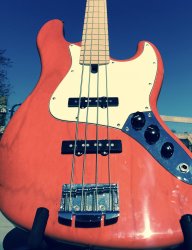
Yeah! I've been thinking about mentioning him in this thread but I haven't done the looking to find a good video to back it up, yet.
Dario can bop like nobodies business.
- Apr 24, 2004
- 1,359
- 53
- Disclosures
- Designer Fodera Guitars/Michael Pope Design, Inc., Trickfish Amplification
I still remember seeing you the first time live at the Duck Room in St. Louis with Stern all those years ago, and no offense... kind of thinking the same thing... who is this guy???
Time flies. I remember ordering those strange new 'Epifani' cabs to use with my Walter after I saw you.
Anyway... nice thread... interesting discussion, and fun to have one of the 'cats' take part. Thanks.
Also, amazing to think that the first time I saw Patitucci all those years ago, he was slappin' the living bejeebus out of a 4 string J Bass (Sadowsky, I think), playing the heck out of those Marcus parts with Sanborn.
And sometimes singing backgrounds with Hiram

The fun of this thread: new questions keep coming up.
F.e.: EUB vs. DB+piezo vs. DB+microphone... or... DB natural.
...don't forget the acoustic bass guitar + piezo pickup. I use a fretless 4 string Tacoma Thunderchief and when I put a SIB Fatdrive pedal in front, it sounds like an upright. Funny, I play it like an upright, too, with neck pointed straight up. Way more portable than the double bass I used to own. Here's another case where you can get the sound and feel but not the look.
Excellent article, not sure about the Upright solo comment, but everything else is spot on. Good read and examples.
I've heard similar debates with fretted vs fretless as well.
My take was to do both, take them and use both to your advantage.
Some folks seem to stick with one, that's great as well(Jaco Manring etc.......upright greats etc). Upright is a big commitment in space and cost vs most electrics.
But.......the sound and feel.
Certainly worth it.
I still think there is a synergisitic effect when a player can use acoustic upright and electric upright or amplified upright, or fretted and fretless, or pick and finger or tap and double thumb
I understand many fall into their own likes and focus strongly on one type of instrument, I think that singular focus really helps those instruments and expands the Bass as a whole.
So all these folks are helping, each in their own, but different way. That means the whole is much greater than the parts.
I've heard similar debates with fretted vs fretless as well.
My take was to do both, take them and use both to your advantage.
Some folks seem to stick with one, that's great as well(Jaco Manring etc.......upright greats etc). Upright is a big commitment in space and cost vs most electrics.
But.......the sound and feel.
Certainly worth it.
I still think there is a synergisitic effect when a player can use acoustic upright and electric upright or amplified upright, or fretted and fretless, or pick and finger or tap and double thumb
I understand many fall into their own likes and focus strongly on one type of instrument, I think that singular focus really helps those instruments and expands the Bass as a whole.
So all these folks are helping, each in their own, but different way. That means the whole is much greater than the parts.

- May 30, 2000
- 4,707
- 257
- Disclosures
- Creator of: iGigBook Sheet Music Manager
I was more arguing against being forced to learn the upright bass to be taken seriously in jazz, than learning the upright in general. if it's your thing then more power to you
I don't know of any double bass players that were forced to learn it, okay perhaps there's some kid somewhere and the parents are forcing him to take lessons.

It's a vague idea, really. But I've found very few electric bass players that swing if they don't also play upright.
Please note, "FEW", and not "NO". This thread is starting to sound a little defensive by some. This is my perpsective from my experience and isn't a matter of debate...just how I feel based on my experience and, no, I'm not feeling a need to rethink it. For whomever cares, here it is.
If they play upright, even if it's not as proficiently as they play electric, and we're playing a musical language that was written in the voice of the upright bass, then I want to hear upright. There are guys...like Kenny Davis whom I mentioned earlier...who can really swing hard enough on electric to make it feel great. But people like him are FEW and FAR between. And they are often adapting the way the play electric to make it feel more acoustic. More than TONE, they are changing the touch and space between the notes and where they put the notes in the beat to give it a more acoustic feel. It's something very few who don't also play DB reasonably well can do on electric bass.
That said, if you want to get into definitions of styles, I say leave that to the record companies and the people stuffing CD's in the bins at Sam Goody.
Fusion was a "for lack of a better term" word for years until someone decided it was a style. And then a lot of it started to suck. At some point jazz became "any music that didn't have words". And the music with no words that didn't have any improvisation became "new age" or "world music" if there were lots of drums in it.
I'm pretty sure you're supposed to play bridge pickup in fusion, and new age, but world music requires acoustic bass guitar to be authentic
I'm in the middle of rehearsals for a gig at Carnegie hall this weekend with the Baltimore Symphony. The show we're doing is a gospel version of Handel's Messiah, called "Too Hot to Handel". It's really pretty cool. There are 3 bass books. One orchestral book, one jazz DB book, and one EB book. In the past, they hired an acoustic player and an electric player. The past couple years they've hire me. Initially I was supposed to double since some of it is swinging....very jazz oriented. We discovered that the transitions were way too short for me to be able to switch, plus the stage was way too tight. So I played the whole thing on electric. And guess what...it was totally cool. The guy who wrote/arranged the music was using acoustic on the swinging stuff because that was what he heard. But in this case musicality trumped instrumentation and the EB did a satisfactory job for everyone.
Great post, Mike. It really adds to the discussion when a cat that is in the scene can offer his insight.
I'm sure I know the answer to this question but would you suggest that an aspiring jazz bassist at least have a working knowledge of the DB?
Also, when you write your own music, do you write it with EB or DB in mind or do you see which instrument works better down the road?
This is a great thread.
Nice! Once again, Dario just kills and that '66 Jazz is one of my favorite basses.
- Apr 24, 2004
- 1,359
- 53
- Disclosures
- Designer Fodera Guitars/Michael Pope Design, Inc., Trickfish Amplification
My teacher took me on as a student on the condition that I'd start studying the acoustic bass. Note, not that I'd have to "switch", but that he felt to be a well rounded player you needed to do both. And with that I strongly agree. To be a REALLY well rounded bass musician, obviously the more you can do, the more well rounded you are. So playing both instruments sort of comes with the territory IMO.


