Hi there. I’m a newbie to this forum and to the upright bass. I've never played an instrument in my life (over 50 crowd), bluegrass is my main interest as I have been listening and going to festivals and shows since 1976!! Still love it all. I was convinced this past September 2019, at a festival in Maine, to learn the bass. So here I am. Totally clueless, but loving it. Purchased a very beginner book called “Upright Bass Primer” with online video and audio. I’ve gravitated to the tab way of learning, oh well, but still enjoying it for only a month now. Comments, suggestions, help wanted. thanks tons, nanci

Enjoy the benefits of a premium membership!
Upgrade Account
-
TalkBass has been independent since 1998. Add your voice.
Create a free account to reply to discussions, view embedded media, and browse with fewer display ads.
Join free Log in
Want zero display ads or expanded classifieds tools? Compare plans.
You are using an out of date browser. It may not display this or other websites correctly.
You should upgrade or use an alternative browser.
You should upgrade or use an alternative browser.
Double Bass Just acquired a 3/4 bass
- Thread starter nanci
- Start date
More options
Who Replied?

Hi @nanci, welcome to TalkBass.
I presume you don't read music, thus the tabs.
More knowledgeable help will come. In the mean time, welcome and enjoy this wonderful instrument. It is a challenge to play, but it's worth it.
I presume you don't read music, thus the tabs.
More knowledgeable help will come. In the mean time, welcome and enjoy this wonderful instrument. It is a challenge to play, but it's worth it.
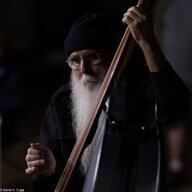
Congrats on the decision and on the new bass!
If your bass hasn't been already setup for your comfort in playing, it would probably be a good thing to have done professionally. Bass specialists are worth their weight in gold and they can do magic with your bass to make it play better and sound better.
Then, whether you want ongoing lessons or not, having a lesson or two or three or..., or at least a few sit-ins with a long-term, strong and experienced player would help you a lot, and might even avoid some injuries for you. Being so large, double basses are very physical instruments to play and to transport, and there are foundational techniques that can help you last for years with it, as opposed to straining something early on and having to take time off to heal. Good teachers know this kind of stuff, as do most long-term, strong, experienced bassists.
And musically, there is a huge world of things a person can learn if they want to. Bluegrass is great for double bass, but there are also lots of other genre that make great use of these instruments; it's a big world out there.
Be careful, but mostly, have fun!!!
If your bass hasn't been already setup for your comfort in playing, it would probably be a good thing to have done professionally. Bass specialists are worth their weight in gold and they can do magic with your bass to make it play better and sound better.
Then, whether you want ongoing lessons or not, having a lesson or two or three or..., or at least a few sit-ins with a long-term, strong and experienced player would help you a lot, and might even avoid some injuries for you. Being so large, double basses are very physical instruments to play and to transport, and there are foundational techniques that can help you last for years with it, as opposed to straining something early on and having to take time off to heal. Good teachers know this kind of stuff, as do most long-term, strong, experienced bassists.
And musically, there is a huge world of things a person can learn if they want to. Bluegrass is great for double bass, but there are also lots of other genre that make great use of these instruments; it's a big world out there.
Be careful, but mostly, have fun!!!
Yeah man (the hippy man, not man man. I see you're a lady, which is even MORE cool. Not enough lady pickers!), welcome!
UB is awesome, but it can be tough for newbs, but worth it in the end. I'm still a newb pretty much actually...
My advice would be play along with songs your fellow pickers play as much as possible, and when you're ready, jam with other musicians as much as you can. No replacement for jamming with other folks...definitely the quickest way to improve.
UB is awesome, but it can be tough for newbs, but worth it in the end. I'm still a newb pretty much actually...
My advice would be play along with songs your fellow pickers play as much as possible, and when you're ready, jam with other musicians as much as you can. No replacement for jamming with other folks...definitely the quickest way to improve.
Welcome to the dark side! At least a couple of lessons with a experienced teacher is a wise thing to do, that might prevent learning unhealthy habits, as we are all dealing with one of the most physical instruments. Good luck and enjoy!!!
After playing upright in both bluegrass and country settings for a few years, I finally learned the fingerboard on all four strings. That was over 25 years ago, and the skill has served me well. I don’t read music and have never gravitated to tabs. My advice would be to develop you ear skills, common chord patterns in the most used keys, and intonation accuracy. Plus, play with people better than you.
Thank you. You are absolutely correct. I do not read music, I have no idea what it means. New language to me. ObrigadoHi @nanci, welcome to TalkBass.
I presume you don't read music, thus the tabs.
More knowledgeable help will come. In the mean time, welcome and enjoy this wonderful instrument. It is a challenge to play, but it's worth it.
Thanks to all of you for your support! Everybody is so kind and positive and that’s what I need, we all need positive vibes. My biggest fan is Kona, my daughters dog. That’s all that really matters, nonjudgmental audience.
Thank you. You are absolutely correct. I do not read music, I have no idea what it means. New language to me. Obrigado
De nada!

I’m a newbie to this forum and to the upright bass.
Welcome, Nanci. We'd like to hear about your bass and how you're going about learning to play it.
Reading music is handy sometimes, but honestly, you're going to learn a lot of tunes by ear, live in person. Believe it or not, learning to recognize the shape of a guitar chord is a valuable skill. Learning to account for the capo makes it extra tricky!
Here's a bunch of songs with bass lines written out in notation and tablature. You will encounter these songs at many bluegrass jams. https://www.amazon.com/50-Tunes-Bass-Traditional-Bluegrass/dp/0786693967
Keeping a steady tempo is your number one job. That's true for bass players in every genre, but especially when there's no drummer.
Find yourself some friendly folks to play with, as soon as possible. Don't be afraid to ask for help. Most groups are grateful to have a bass player!
Here's a bunch of songs with bass lines written out in notation and tablature. You will encounter these songs at many bluegrass jams. https://www.amazon.com/50-Tunes-Bass-Traditional-Bluegrass/dp/0786693967
Keeping a steady tempo is your number one job. That's true for bass players in every genre, but especially when there's no drummer.
Find yourself some friendly folks to play with, as soon as possible. Don't be afraid to ask for help. Most groups are grateful to have a bass player!
As an Amazon Associate, TalkBass may receive commissions from qualifying purchases made via links on this site.
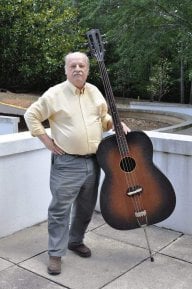
Welcome, Nanci! You have just discovered one of the best justifications to buy a Volvo station wagon.
Reading music is handy sometimes, but honestly, you're going to learn a lot of tunes by ear, live in person. Believe it or not, learning to recognize the shape of a guitar chord is a valuable skill. Learning to account for the capo makes it extra tricky!
Here's a bunch of songs with bass lines written out in notation and tablature. You will encounter these songs at many bluegrass jams. https://www.amazon.com/50-Tunes-Bass-Traditional-Bluegrass/dp/0786693967
Keeping a steady tempo is your number one job. That's true for bass players in every genre, but especially when there's no drummer.
Find yourself some friendly folks to play with, as soon as possible. Don't be afraid to ask for help. Most groups are grateful to have a bass player!
Hi neon, are all songs in that book applicable to the upright bass? Meaning reading and playing along to the tab? That again for understanding the simple questions of a TRUE beginner.Reading music is handy sometimes, but honestly, you're going to learn a lot of tunes by ear, live in person. Believe it or not, learning to recognize the shape of a guitar chord is a valuable skill. Learning to account for the capo makes it extra tricky!
Here's a bunch of songs with bass lines written out in notation and tablature. You will encounter these songs at many bluegrass jams. https://www.amazon.com/50-Tunes-Bass-Traditional-Bluegrass/dp/0786693967
Keeping a steady tempo is your number one job. That's true for bass players in every genre, but especially when there's no drummer.
Find yourself some friendly folks to play with, as soon as possible. Don't be afraid to ask for help. Most groups are grateful to have a bass player!
As an Amazon Associate, TalkBass may receive commissions from qualifying purchases made via links on this site.

Dear Nanci,
It is wonderful news to read that you have chosen the bass violin.
Now, the only advice that I give to you is to take baby steps at first and with time everything will come together.
Imagine that you are working on a thousand piece jig-saw puzzle.
Rama
Oww.. and please do enjoy the process in its entirety, unlike a puzzle learning music never ends!
It is wonderful news to read that you have chosen the bass violin.
Now, the only advice that I give to you is to take baby steps at first and with time everything will come together.
Imagine that you are working on a thousand piece jig-saw puzzle.
Rama
Oww.. and please do enjoy the process in its entirety, unlike a puzzle learning music never ends!
Old time and bluegrass are the most welcoming genres for a newbie bass player.
Though you don't need to read music (dots) to succeed you will find it very helpful to understand a bit about chords. If you can work with I, II, IV, V then learning new tunes becomes dramatically easier. Since you're writing in English I'm assuming you can count and line up 1-2-3-4-5- etc with the letters of the alphabet. A little more detailed info and some practice and you'll be able to understand most of the basic song/chord structures that standard popular music is built from. I won't get into all of it here.
I would suggest "the Parking Lot Picker's" book, bass version. Lots of good tunes there, many of which are quite easy to learn.
Find a bluegrass jam (or old-time, but those are rarer) near you and go constantly. Bass players are generally very cool with switching out and helping a newcomer.
As to actually playing the thing, knowing how to pull a good sound is quite important. I would definitely recommend a few lessons with a real bass player to learn about position, plucking methods, left hand position, etc.
Don't forget, chicks can be cats, too. No one cares about that stuff any more.
Though you don't need to read music (dots) to succeed you will find it very helpful to understand a bit about chords. If you can work with I, II, IV, V then learning new tunes becomes dramatically easier. Since you're writing in English I'm assuming you can count and line up 1-2-3-4-5- etc with the letters of the alphabet. A little more detailed info and some practice and you'll be able to understand most of the basic song/chord structures that standard popular music is built from. I won't get into all of it here.
I would suggest "the Parking Lot Picker's" book, bass version. Lots of good tunes there, many of which are quite easy to learn.
Find a bluegrass jam (or old-time, but those are rarer) near you and go constantly. Bass players are generally very cool with switching out and helping a newcomer.
As to actually playing the thing, knowing how to pull a good sound is quite important. I would definitely recommend a few lessons with a real bass player to learn about position, plucking methods, left hand position, etc.
Don't forget, chicks can be cats, too. No one cares about that stuff any more.
Where are you from? If near Maine I might know some people...Hi there. I’m a newbie to this forum and to the upright bass. I've never played an instrument in my life (over 50 crowd), bluegrass is my main interest as I have been listening and going to festivals and shows since 1976!! Still love it all. I was convinced this past September 2019, at a festival in Maine, to learn the bass. So here I am. Totally clueless, but loving it. Purchased a very beginner book called “Upright Bass Primer” with online video and audio. I’ve gravitated to the tab way of learning, oh well, but still enjoying it for only a month now. Comments, suggestions, help wanted. thanks tons, nanci
These are generally fiddle tunes that you might encounter at an old-time or bluegrass jam. The melodies are not given in the book, only the bass lines. The accompanying CD has recordings of the tunes with a band, so you can play along with them. So, yes, they are all applicable to the upright bass. In fact, the notes given in the book are only applicable to the bass. There are separate versions of this book for fiddle and guitar that give the melodies and chords also.Hi neon, are all songs in that book applicable to the upright bass? Meaning reading and playing along to the tab? That again for understanding the simple questions of a TRUE beginner.
Hi turf. I’m from the south shore Boston area. That would be cool if you do know of peeps interested in teaching me anything. Thanks tonsWhere are you from? If near Maine I might know some people...
There used to be a jam at a pizza place in Plymouth run by a guy who has an Americana-ish band. He’s a good guy. PM if your interested and I’ll see if I can find out more information.
Welcome (tho, as much as I love the bass and acknowledge that I AM a bassist, surely I can't be the only one of us who occasionally thinks wistfully that I might have fallen in love w/ a more portable instrument!  )
)
When I wanted to join a rock band in college, my roommate gave me a couple of lessons on bass guitar. His first lesson was to teach me the G major scale, his second lesson was to show me how to play 1/4/5 in that scale, and his third lesson was how to play the major scale pattern on the 4 and the 5. He then told me that principal transferred to songs in any key. Some 40 years later, I can still remember him telling me that I was now ready to play something like 90% of all rock and blues songs.
Now that I'm playing mostly BG/oldtime/Americana, what cracks me up is how often I'll be playing with someone who is quite accomplished at their instrument, and after all their years of experience, they'll comment on their brilliant breakthrough/discovery - of something encapsulated in those 1st 3 lessons I described above!
Now that I'm trying to develop skills OTHER than simply being solid, I'm working on learning to read bass clef, improving at various scales, and figuring out the fingerboard above 1st and 2d positions. But I frequently think how fortunate I was to have my roommate boil things down so effectively when I began.
Sometimes I kinda regret, tho, when I KNOW where the "correct" note is on my fingerboard, but I'll have to stop and think about it before I can name that note. And then I have to think even harder to figure out the theory as to why that is the correct note.
I agree that a steady tempo is likely job #1. It is often said that it is more important for the bass to play A note at the right time, rather than the right note at the wrong time.
And altho there is no drummer, there IS (optimally) a mando. Or at least a solid guitarist whose boom-chuck you can lock in with. Work on distinguishing the 1-3 beats, from the 2-4s. And (one of my pet peeves) - play ASSERTIVELY! I HATE it when I encounter a jam where the bassist is playing tentatively.
)When I wanted to join a rock band in college, my roommate gave me a couple of lessons on bass guitar. His first lesson was to teach me the G major scale, his second lesson was to show me how to play 1/4/5 in that scale, and his third lesson was how to play the major scale pattern on the 4 and the 5. He then told me that principal transferred to songs in any key. Some 40 years later, I can still remember him telling me that I was now ready to play something like 90% of all rock and blues songs.
Now that I'm playing mostly BG/oldtime/Americana, what cracks me up is how often I'll be playing with someone who is quite accomplished at their instrument, and after all their years of experience, they'll comment on their brilliant breakthrough/discovery - of something encapsulated in those 1st 3 lessons I described above!
Now that I'm trying to develop skills OTHER than simply being solid, I'm working on learning to read bass clef, improving at various scales, and figuring out the fingerboard above 1st and 2d positions. But I frequently think how fortunate I was to have my roommate boil things down so effectively when I began.
Sometimes I kinda regret, tho, when I KNOW where the "correct" note is on my fingerboard, but I'll have to stop and think about it before I can name that note. And then I have to think even harder to figure out the theory as to why that is the correct note.
Keeping a steady tempo is your number one job. That's true for bass players in every genre, but especially when there's no drummer.
I agree that a steady tempo is likely job #1. It is often said that it is more important for the bass to play A note at the right time, rather than the right note at the wrong time.
And altho there is no drummer, there IS (optimally) a mando. Or at least a solid guitarist whose boom-chuck you can lock in with. Work on distinguishing the 1-3 beats, from the 2-4s. And (one of my pet peeves) - play ASSERTIVELY! I HATE it when I encounter a jam where the bassist is playing tentatively.
Last edited:


