Who cares about the body, you got the important parts right! Very nice bass. You could do a refinish on the body, upgrade any non-OEM parts, like the pots and/or the bridge, and not lose any value.Well… just got the whole story. I live in Seattle so I was able to go down to Emerald city guitars [the instruments and amplifiers they have there is insane].
They disassembled the bass for a full inspection
64 neck. Approximate value $2500
65 pickups new leads so possibly rewound. Approximate value $1000
Body NOT FenderApproximate value $ 00

Enjoy the benefits of a premium membership!
Upgrade Account
-
TalkBass has been independent since 1998. Add your voice.
Create a free account to reply to discussions, view embedded media, and browse with fewer display ads.
Join free Log in
Want zero display ads or expanded classifieds tools? Compare plans.
You are using an out of date browser. It may not display this or other websites correctly.
You should upgrade or use an alternative browser.
You should upgrade or use an alternative browser.
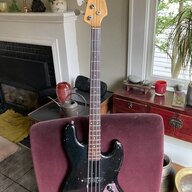
Just got a 61 Jazz from a friend
- Thread starter Stephen
- Start date
More options
Who Replied?

Whatever the details, you got a nice semi vintage bass and a nice reminder of your friend.
Treasure it and enjoy.
Treasure it and enjoy.

What I heard (back when working in a Fender warranty shop) was that Fender first called the 1980s reissues "62" (rather than, say, "60") was the fingerboards switched from slab to curved construction in '62 so it left open the option to switch if they later decided to.
I think I read that it was a marketing decision, to keep the naming in line with the 62 P, and 62 Strat. Likely both are true.

I think I read that it was a marketing decision, to keep the naming in line with the 62 P, and 62 Strat. Likely both are true.
Certainly true to keep it in line with the others. Also, my understanding (coming from the warranty perspective) was there was concern in the early 80s about possible neck warping with going back to slab boards. A common misunderstanding with the move to curved boards was that it was Leo being characteristically cheap, but the early curved boards used no less rosewood to begin with as the boards were milled to shape, not bent. It was to address returns and thought to be more stable. Clearly a more complicated and expensive process than just gluing two flat surfaces. So, by calling them "62" they could switch if it became a problem.

This is a community of friends, you have many.I wish I had a friend.
Looks great to me. Love it, play it, keep it!


Now THAT’s ^^^ interesting!Certainly true to keep it in line with the others. Also, my understanding (coming from the warranty perspective) was there was concern in the early 80s about possible neck warping with going back to slab boards. A common misunderstanding with the move to curved boards was that it was Leo being characteristically cheap, but the early curved boards used no less rosewood to begin with as the boards were milled to shape, not bent. It was to address returns and thought to be more stable. Clearly a more complicated and expensive process than just gluing two flat surfaces. So, by calling them "62" they could switch if it became a problem.

I don't think she is 61J.Just got a 61 Jazz from a friend. Been refinished.
Pots have been replaced.
Not sure about the pick ups.
Any thoughts or comments would be appreciated.
Especially the neck pocket wood look crazy fresh than some 2000s fender bass.
Read the earlier posts in this thread where it's all explainedI don't think she is 61J.
Especially the neck pocket wood look crazy fresh than some 2000s fender bass.

@Yahboy - OP resolved the mystery: '64 neck & pickups, non-F replacement body.I don't think she is 61J.
Especially the neck pocket wood look crazy fresh than some 2000s fender bass.


