Hi all,
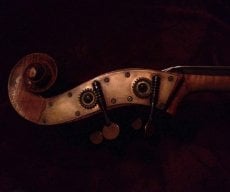
Not sure if this is the right place to post this, but any help would be appreciated. I recently bought my first double bass. It's a '58 M-1 Kay. I noticed that it wasn't sustaining particularly well, wasn't as "bassy sounding" as I had in my head, and that it was harder to play than I expected. After looking for answers, I measured the scale length and realized the previous owner had moved the bridge closer to the neck so the scale length was 40 inches. I checked the soundpost and noticed that it was further away from the treble-side bridge foot than what I read was recommended so concluded that the previous owner had moved the bridge but hadn't adjusted the soundpost. I moved the bridge back so that it was approximately centered between the inner f hole notches, and now the bass sounds like what I was expecting, is a delight to play, and I'm having a great time with it.
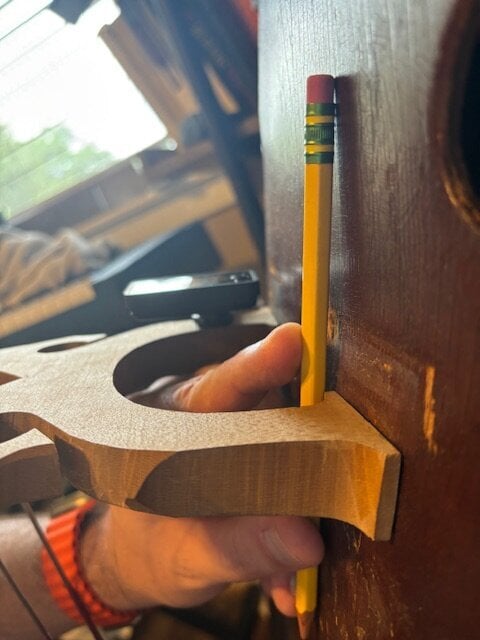
The only issue now is that it appears that because the soundpost was not adjusted, the top is sagging on the treble side because the soundpost wasn't moved, so there's slope into the f hole. Because it sags, the treble bridge foot isn't perfectly fit against the top anymore. The bridge was already warped--I boiled it to straighten it out as best I could--so I was planning on having a luthier install a new one when one is available.
All of this to ask; it is possible to just install a new bridge partially fitted to the warped top if I'm happy with the sound (I'm an enthusiast with no professional ambitions), or does the top need to be fixed because the sag could lead to longer term problems? What would the process look like to fix the sag? I understand that top repairs can be expensive--my bigger concern is just not having my bass around waiting for the repair.
Thanks! Apologize in advance if I misused any terms of art. Photos are a bit distorted by the wide angle lens but I hope they can provide some context.

Not sure if this is the right place to post this, but any help would be appreciated. I recently bought my first double bass. It's a '58 M-1 Kay. I noticed that it wasn't sustaining particularly well, wasn't as "bassy sounding" as I had in my head, and that it was harder to play than I expected. After looking for answers, I measured the scale length and realized the previous owner had moved the bridge closer to the neck so the scale length was 40 inches. I checked the soundpost and noticed that it was further away from the treble-side bridge foot than what I read was recommended so concluded that the previous owner had moved the bridge but hadn't adjusted the soundpost. I moved the bridge back so that it was approximately centered between the inner f hole notches, and now the bass sounds like what I was expecting, is a delight to play, and I'm having a great time with it.
The only issue now is that it appears that because the soundpost was not adjusted, the top is sagging on the treble side because the soundpost wasn't moved, so there's slope into the f hole. Because it sags, the treble bridge foot isn't perfectly fit against the top anymore. The bridge was already warped--I boiled it to straighten it out as best I could--so I was planning on having a luthier install a new one when one is available.
All of this to ask; it is possible to just install a new bridge partially fitted to the warped top if I'm happy with the sound (I'm an enthusiast with no professional ambitions), or does the top need to be fixed because the sag could lead to longer term problems? What would the process look like to fix the sag? I understand that top repairs can be expensive--my bigger concern is just not having my bass around waiting for the repair.
Thanks! Apologize in advance if I misused any terms of art. Photos are a bit distorted by the wide angle lens but I hope they can provide some context.